
































In just a few years, we’ve seen many notable developments, including a steady move toward value-based care, more widespread EHR adoption and a greater provider focus on patient engagement; not to mention technology advancements — from security to robotics to virtual reality — that are truly beginning to take shape. It’s an exciting time to be in healthcare, and I can see the industry as a whole taking big leaps ahead to improve patient care and outcomes.
More specifically, the amount of healthcare data we see today will continue to grow. We are in a world where data is in excess and we have yet to truly harness its true potential. In 2015, we saw steps taken with consumer wearables leaping into popularity and healthcare companies partnering to make the resulting data actionable. We’re in the early stages of using and understanding of all this data, and 2016 will be the year we take it to the next level.
This will be the year of the Healthcare Data Evolution—and it will impact all providers, from those just starting out with harnessing data, to those who are using data analytics platforms to harness deeper insights. I anticipate the following four trends to take hold in 2016:
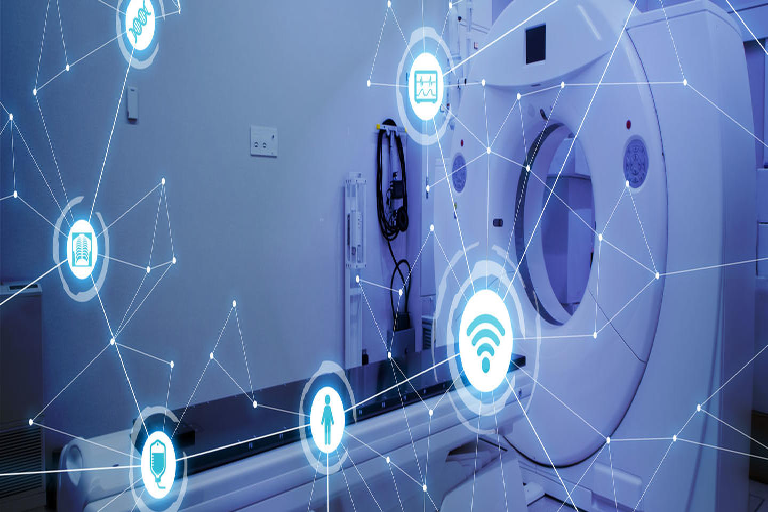
Data will become interoperable. Healthcare data is rapidly growing, and has been estimated to be evengreater than 150 Exabytes. Wearables, DNA, environmental factors and other health factors will drive an exponential increase in data. To make it actionable for clinicians, the industry will continue to see interoperability as the key ingredient to foster the seamless flow of data across the enterprise in a secure environment, enabling actionable intelligence to help improve patient care. Data will need to flow fluidly and securely between multiple information sources—ranging from EHRs, tablets and patient monitoring devices — giving providers access information that is pertinent to a given clinical situation, no matter where they are.
Hospitals will invest in new enterprise-wide healthcare IT infrastructure to mine the data in the EMR and other clinical systems. EHR adoption is largely complete. Now the question is how do we mine this data and make it useful for clinicians in ways that enable them to manage the cognitive load. This will require new thinking regarding enterprise HIT architecture, large investments in infrastructure, staff resources and a new way of working for clinicians. In 2016, providers will start to put the pieces in place to build the healthcare IT system of the future – one that can accommodate advances in genomics, smart computing, analytics, operational intelligence and other emerging clinical and technology innovations, while increasing security to protect patient health data and enabling the real-time, interoperable health system.
Data will drive “smart technology” for clinicians. We’re living in an era where every major consumer technology brand has their own “Siri” or “Cortana” to serve as our own virtual assistant, reminding us of appointments, researching weather patterns and answering questions about the ratio of pints to gallons. Clinicians are constantly juggling increasing amounts of information, so technology that can filter out what’s important (and what’s just noise) will allow them to do their jobs more efficiently and confidently. This kind of technology will make a big impact in healthcare in 2016, giving clinicians the data and insights they need, right when they need it.
IoT will expand the use of wearables. The Internet of Things (IoT) is beginning to play a role in the evolution of wearables by making the data wearables create interoperable and actionable. Right now, people are beginning to use consumer wearables to take health and fitness tracking into their own hands. As wearables become more sophisticated (e.g., tracking body temperature, heart rate, oxygen levels, glucose and other key metrics), there will need to be an easier way for health practitioners to receive and harness this enormous and growing amount of patient data. The IoT and cloud are making this kind of data collection possible, but applications need to be built to make sense of that data, and algorithms will need to trigger action and kick off new processes that improve care delivery—like automatically scheduling a visit to test for diabetes, or adjusting a prescription for cholesterol.
The year ahead will be pivotal for healthcare IT, and the growth in data will touch more than just CIOs and IT professionals — it will impact physicians and patients too. It will be key for all stakeholders —from technology innovators to healthcare executives and providers — to mine this data in ways that make it useful to clinicians and patients alike.


