



















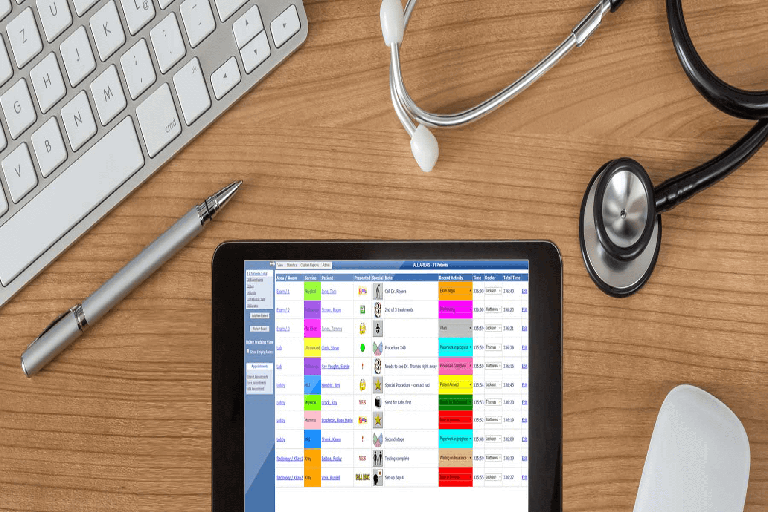









Using an Electronic Health Record (EHR) system to automate the immunization data shared between health providers and public health agencies enables physicians to assist individual patients faster and more effectively, while also providing more immediate, cohesive community data to the agencies tasked with promoting public health.
Those are the findings of a new study conducted by researchers from Columbia University School of Nursing and partner institutions. The researchers also found that automated reporting reduced the lag time historically associated with data submitted on vaccinations and, in some cases, reduced the paperwork and staff time traditionally devoted to managing these required submissions. In short, a robust records automation program increased knowledge about both individuals and communities, allowing medical and public health officials at all levels to make more informed decisions.
“The efficiency offered by automation has significant implications for managing public health, whether it is by informing a local physician on the health of an individual or informing policymakers on health trends within a whole community,” said lead researcher and CU Nursing professor Jacqueline Merrill, RN, MPH, DNSc. “For example, EHRs greatly enhance our ability to help at-risk populations for whom up-to-date immunizations are critical, such as children, immunosuppressed individuals, or the chronically ill. Before automated registries, reporting was less structured and data submittal was less consistent.”
Currently, health officials in the U.S. recommend that the public be immunized against 17 vaccine-preventable diseases. However, tracking vaccinations is difficult, especially among underserved populations whose care is often managed by multiple providers. Various state and local health agencies set up immunization registries to consolidate scattered patient records and thus reduce unnecessary vaccinations; however, registries frequently report slow and incomplete data submission by health providers, who in many areas still submit information via paper files. Automated reports via EHRs provide readily available immunization histories and thus can help officials and providers determine which patients have been adequately immunized. Registries also track and provide the basis for decisions on vaccine formulations, vaccine supplies and delivery schedules.
The study analyzed 1.7 million records submitted by 217 primary care practices to the NY Citywide Immunizations Registry between January 2007 and June 2011 — both before and after the launch of automated reporting via an EHR. The study examined differences in records submitted by day, by lag time, and by documentation of eligibility for subsidized vaccines.
Among the findings: although mean submissions per day did not change, the patterns of submission changed significantly. Automated submissions of new and historical records increased by 18% and 98%, respectively. The number of submissions within 14 days (as required in NYC) also increased, as did the number of submissions within 2 days. Median lag time was reduced from 13 to 10 days.
These findings give an idea of the benefits of health information technology. The launch of automated reporting via an EHR prompted significant improvements in use of the registry and in the efficiency of reporting from the field.
“Automating the process appears very successful,” said Merrill. “In fact, it’s so successful that we believe it would be beneficial to retrofit data from the past so it can also be included in the EHR.”
The process of setting up healthcare data so it can be exchanged electronically is well underway in NYC and in NYS. It is, in fact, integral to the technology transformation occurring within health reform — activities intended to make healthcare more efficient for patients and providers and to help the overall system create better conditions for keeping people healthy.
Merrill’s current research focuses on understanding the processes of public health organizations, and this is one of the first (if not the first) studies of registry efficiency and EHR-based reporting. The article, which appears as a “Case Report” in the journal Applied Clinical Informatics (www.aci-journal.org), documents the efficiencies provided by automated reporting to a registry that tracks immunizations for the NYC Department of Health and Mental Hygiene. The study was conducted by researchers from Columbia University, MGH Institute of Health Professions, and Weill Cornell Medical College. Source


