













































Experimental Treatments for Glioblastoma
The state-of-the-art treatments for glioblastoma fall far short of what oncologists would like to offer their patients, though outcomes are gradually improving. The median length of survival in the 1990s was 8 to 10 months. Only a few patients lived five years. Now the median length of survival is 15 to 18 months — twice what it was 20 years ago.
A variety of experimental treatments are also now under study. These treatments offer the hope of a much better future for patients with glioblastoma.
Why Is Glioblastoma So Hard to Treat?
Some of the potential options were discussed recently by Mark Gilbert, MD, a senior investigator and chief of the National Institutes of Health’s (NIH) Neuro-Oncology Branch. He was joined by Terri Armstrong, PhD, a senior investigator at the NIH. The Neuro-Oncology Branch is a joint program of the National Cancer Institute (NCI) and the National Institute of Neurological Disorders and Stroke.
Before describing the experimental treatments, Dr. Gilbert and Dr. Armstrong explained why glioblastoma is so hard to treat. There are three main reasons:
First, the brain denies entry to many chemicals — including potential treatments — with the blood-brain barrier, a network of capillaries that governs what reaches the brain. That’s generally a good thing; it protects the brain from toxins and infections. But it becomes a problem when researchers want to get certain chemicals into the brain.
Second, glioblastoma tumors are made up of different kinds of cells, some of which respond to chemotherapy drugs, and some of which don’t.
Third, the brain rests like a stiff pudding inside a hard, closed shell. Some chemotherapy drugs cause the brain to swell, and that can be dangerous, because there is no place for the brain to expand into. Swelling can compress tissue and lead to death of brain cells.
What Are the Current Treatments for Glioblastoma?
“Surgery within a few days of imaging or of presenting symptoms — to remove as much of the tumor as possible — is the first treatment for the majority of glioblastoma patients,” Gilbert says. And “after surgery, patients generally receive a 30-dose course of radiation over a six-week period and daily treatment with the chemotherapy drug Temodar (temozolomide) to treat malignant cells that couldn’t be removed with surgery.”
The problem is that even if a surgeon removes every visible trace of the tumor, the scattered few cells that remain continue to grow. Surgery, therefore, can slow the tumor growth, but not stop it. These treatments “rarely cure the cancer, because of microscopic tumors that remains after surgery,” says Armstrong.
What New Treatments Are Being Studied?
According to Gilbert, there are two main experimental approaches aimed at better treatment of glioblastoma. One is the use of immunotherapy — that is, manipulating the body’s own immune system to attack and kill the tumor cells, including the ones the surgeons can’t see. The other is to target certain signaling pathways that are thought to control the growth of the tumor cells.
One immunotherapy approach is the development of what are called dendritic cell vaccines. Doctors harvest a patient’s immature immune cells and coax them into growing into dendritic cells, which can boost the immune system’s response to a cancer.
Once these cells have been produced, they are modified to train your own immune system’s T cells to attack certain proteins, or antigens, on the surface of the tumor cells that do not show up on the surface of normal cells. In theory, these dendritic cells would enable your immune cells to attack tumors without harming normal cells. “Studies testing these vaccines have so far involved only small numbers of patients, but some studies have suggested that the vaccines may be able to improve how long patients with advanced glioblastoma live, although these results are preliminary and further testing is needed,” Gilbert says.
CAR T Cell Treatment: Harnessing the Immune System
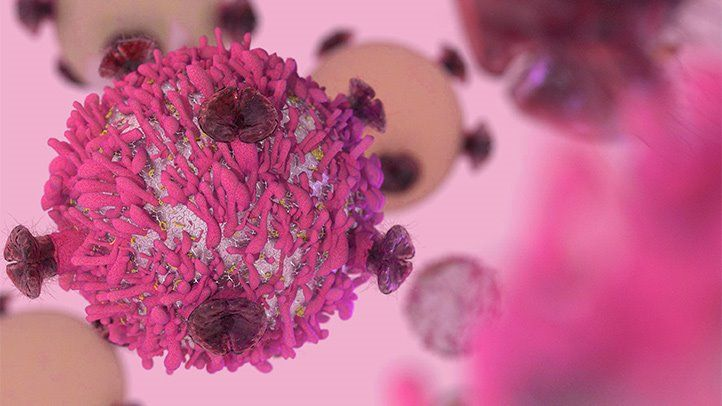
Researchers are also looking at the use of so-called CAR T cell therapy, an immunotherapy being tested against a variety of cancers. The therapy harvests a patient’s own white blood cells, and alters a patient’s immune cells in the laboratory, creating what is sometimes referred to as a “living drug.”
The treatment enhances the immune system’s attack cells — called T cells — so they will do a better job of recognizing and destroying cancer cells.
CAR T cell therapy (CAR stands for “chimeric antigen receptor”) has shown promising results in two cancers for which they are approved by the Food and Drug Administration (FDA).
In August 2017 the FDA approved Kymriah (tisagenlecleucel) for some children and adults with advanced B cell leukemias. In October 2017, the FDA approved the second CAR T cell therapy, Yescarta (axicabtagene ciloleucel), for use in certain patients with B-cell lymphomas. (2)
These immune therapies, intended to harm only tumor cells, do have side effects. Some patients experience very high fevers or dangerously low blood pressure after receiving CAR T cell therapy. But oncologists are working on ways to manage those problems.
CAR T cell treatment is being tested against breast cancer, Hodgkin lymphoma, neuroblastoma, pancreatic cancer, and, notably, glioblastoma. It’s not yet known whether this therapy could lead to long-term cures, but researchers are moving quickly to find out. (3)
Advances in Surgery Improve Odds of Removing More Tumor
Walter J. Curran Jr., MD, a radiation oncologist and executive director of Winship Cancer Institute at Emory University in Atlanta, notes that researchers are making progress in efforts to better see where glioblastomas end and normal tissue begins, meaning surgeons can get more of the tumor cells out of there.
The FDA recently approved an agent that the patient can swallow prior to surgery, and which gives surgeons a better look at the tumor. “That’s the first FDA approval relevant to surgical management of patients with glioblastoma in years,” Dr. Curran says. “It was, I think, an important step forward.” (4)
Researchers have also developed chemotherapy drugs that can be applied to the tumor during surgery to kill cells that surgeons miss. The drugs are not used widely now, Curran says, but offer a potentially useful addition to glioblastoma treatments.
Two other well known immunotherapies — Keytruda (pembrolizumab) and Opdivo (nivolumab) are also being studied for use in glioblastoma. (5)
He agreed that the vaccine work was also potentially important. In a trial of one dendritic cell vaccine, “the median survival was approximately 31 months,” he says. And there are now 10-year-or-longer survivors of glioblastoma.


