



















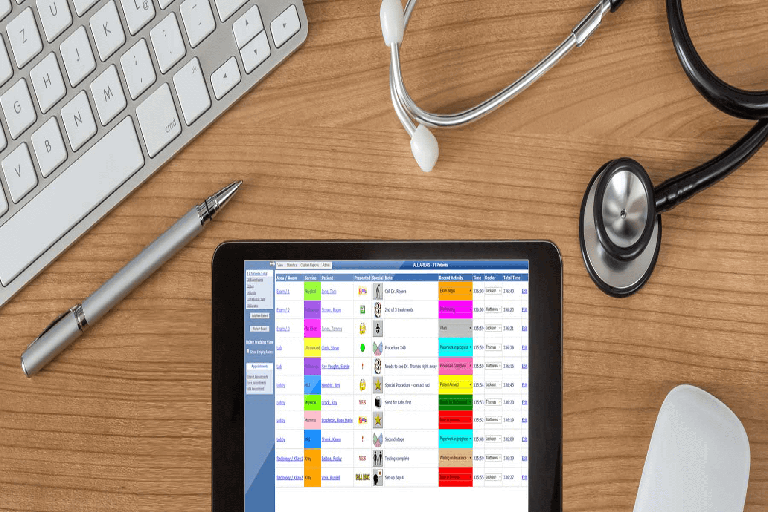









QPID, a Partners HealthCare spinoff, creates a clinical decision support tool to solve physicians’ big gripe about EHRs — buried data.
The sum of “Google, plus CliffsNotes,” might be the formula for making electronic health records software more usable, particularly in large hospital networks that use multiple EHR systems.
That formula is QPID Health CEO Mike Doyle’s shorthand for what his company does. It adds search and summarization technology as a layer on top of EHR software to provide more convenient access to patient data when needed most — the time doctors are making clinical decisions. The EHR world today is like “the Internet 20 years ago when we had all this data but no Google,” Doyle said in an interview. “EHRs have done a great job of capturing all this data, but not at making it particularly useful.”
A few months ago, in a column called Why Doctors Hate EHR Software, I quoted a pediatrician named Dave Denton on his frustration with EHR software and particularly the “treasure hunt” he found himself going on to find which tab of which screen might contain clinically relevant information about any given patient. Denton sits on his hospital’s IT advisory board and believes in the potential of health IT, even as he is dismayed by the reality of it. Although the theory of EHR software is about getting all the information about a patient in one place, finding that information again is harder than it ought to be, he complained.
QPID just might be the map that makes the hunt a lot easier.
[Want more on how some EHRs can be tweaked for easier use? Read Medication Cabinets ‘Talk’ To Cerner EHR. ]
The EHR software designer’s standard strategy for making information easier to retrieve is to add more structured database fields. But if there is anything doctors hate more than wasting time trying to find information in an EHR, it is wasting time checking boxes on a complex data-entry form.
Like Google search, QPID is designed to find information regardless of whether it is neatly tagged and classified or all stored in the same place by using contextual clues.
QPID, which stands for “queriable patient inference dossier” (but is pronounced “cupid,” which you’ve got to love), was developed at Massachusetts General Hospital by Michael Zalis, an interventional radiologist, and Mitch Harris, the computer scientist who led development of the natural language search technology and medical ontology. When trying to find the clinical context for the images he was sent to read, Zalis found he spent too much time trying to dig relevant information out of the hospital’s information systems. He approached Harris, thinking they ought to be able to find a better way.


