




























































EHR, EDR, HITECH, ACA: the alphabet soup goes on and on. But what does each mean and what effects will these abbreviations have for you as a hygienist and for dentistry in general? What should we understand about the new territory we are now entering? Can technology both protect and grow our practices?
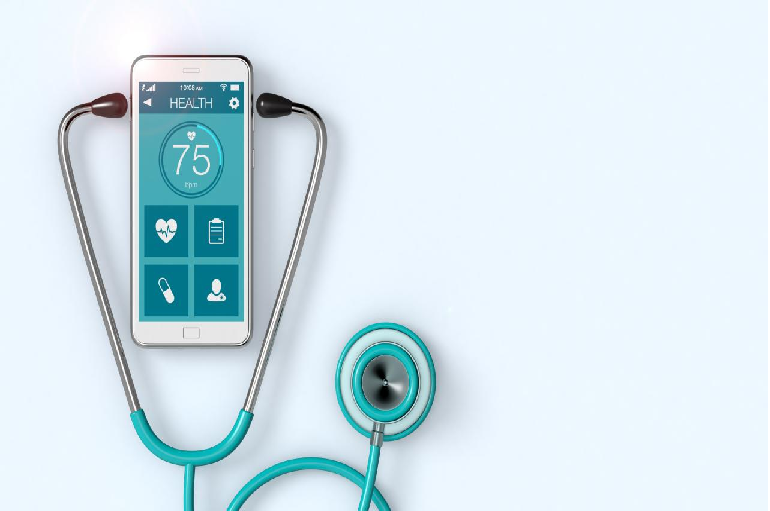
The 2009 American Reinvestment and Recovery Act (the Stimulus Act, or ARRA) contains financial incentives for construction projects, school district aid, expansion of the child-care credit, and the computerization of health records. The portion of the act that involves health care is titled the Health Information Technology for Economic and Clinical Health (HITECH). An estimated $36.5 billion has been invested in creating a nationwide network of electronic health records. This investment was the foundation to launch President Obama’s health-care reform package, the Patient Protection and Affordable Care Act (also known as PPACA, Affordable Care Act, ACA, or Obamacare), which was signed into law in 2010. HITECH and ARRA contain language to accelerate the adoption and meaningful use of certified electronic health records (EHR) by Medicaid and Medicare providers. Meaningful use components include use of a certified EHR:
- In a meaningful manner, such as e-prescribing
- For electronic exchange of health information to improve quality of health care
- To submit clinical quality and other measures
Providers need to show that they are using certified EHR technology in ways that can be measured in quality and quantity. A provider using a certified EHR is eligible for federal funding incentives through the Centers of Medicaid and Medicare Services (CMS). The ultimate goal of meaningful use is to bring about health care that is patient-centered, evidence-based, prevention-oriented, efficient, and equitable. The specifics of meaningful use are categorized by:
- Improvement of care coordination
- Reduction in health-care disparities
- Engagement of patients and their families in health-care decisions
- Improvement of population and public health
- Assurance of adequate privacy and security
To ensure compliance, coordination, and exchange of information, the Obama Administration created within the Department of Health and Human Services the Office of the National Coordinator for Health Information Technology (ONC). The ONC will coordinate the Nationwide Health Information Network (NHIN or NwHIN), which will securely exchange health-care related data. Meaningful use will be rolled out in three stages over a period of time until 2015. Stakeholders ferociously debate each stage’s requirements with Stage 1 finalized in 2010, Stage 2 in 2012, and Stage 3 yet to be finalized. For example, some of the Stage 1 requirements include:
- The use of computerized order entry for medication orders
- Generate and transmit permissible prescriptions electronically
- Record demographics
- Maintain an up-to-date problem list of current diagnoses
- Maintain an active medication list and medication allergy list
- Record and chart changes in vital signs
- Record smoking status for patients 13 years or older
- Provide patients with an electronic copy of their health information upon request
- Report ambulatory quality standards to CMS (such as hospital readmissions within 30 days)
- Provide clinical summaries to patients for each office visit
- Capability to exchange key clinical information electronically among providers and patient-authorized entities
- Incorporate clinical lab results into EHR
- Generate lists of patients by specific conditions to use for quality improvement, reduction of disparities, research, and outreach
- Send reminders to patients per patient preference for preventive and follow-up care
- Identify patient-specific education resources and provide to patient if appropriate
In addition, implementation by Medicaid and Medicare providers of each stage’s requirements offers the provider financial incentives based on strict criteria. A provider is eligible for a maximum of $63,750 in incentives if involved in the maximum payout period of six years. These incentives are per provider but must meet encounter eligibility requirements. An encounter is defined as Medicaid providing payment on behalf of a service being rendered in a particular visit.
In order to receive the incentives, more than 30% of patient visits in the previous year (90-day consecutive time period year to year) must be Medicaid-based. The incentive program runs until 2021 so the latest a provider can enroll to receive the maximum six-year benefit is 2016. Dental practices that meet the 30% Medicaid eligibility requirement can receive the incentives in addition to medical practices. Non-Medicaid dental practices that do not meet the 30% eligibility requirement will not qualify for the incentive programs. However, they should consider using electronic health records to enhance communication, documentation, and other aspects of EHR and meaningful use.
There is no final definition currently for meaningful use in dentistry. The American Dental Association (ADA) has been working with the ONC and CMS to define its framework since 2010. One of the major issues surrounding electronic dental records (EDR) is interoperability – the ability of information to be portable and move with patients across providers and software systems in a manner that is patient-centric and can be used to manage wellness and assist with personal health-care decisions. Dentistry can implement an EHR that has meaningful use certification, yet there is no EDR that is truly interoperable. An interoperable system will:
- Have the ability to have all patient information readily available, including current medication lists
- Be easily searched and customized for clinical documentation and progress notes
- Use information for clinical quality improvement
- Provide clinical templates to standardize care
- Electronically share patient data between referral partners
- Provide patient education at point of care based on diagnosis or treatment
- Improve clinical workflow
- Integrate and transfer images
The use of EDR to assist teams in communication, documentation, and revenue cycle processes (insurance and noninsurance billing) are important components of EDR. The emphasis on the Medicaid or Medicare 30% patient base has many practitioners believing that the EHR/EDR rulings will not affect them. But the opposite is true – with the advent of EHR a number of privacy and security provisions have been implemented.
As of September 23, 2013, new rules and regulations regarding HIPAA, Protected Health Information (PHI), and Personal Health Records (PHR) have taken effect. These new regulations are part of the HIPAA Omnibus Rule. Dentistry is included in these new regulations. Information on business associates, breach notification requirements, information privacy requirement training for team members, patient authorizations, and patient accessibility issues are areas that dental teams need to be aware of. Various training and continuing education programs are available to educate all team members on these new rules and regulations.
Whether an office is currently using an EDR program, considering acquiring one, or converting from one software program to another, several factors need to be considered as part of the evaluation process. Deciding whether to invest in a certified or noncertified EHR/EDR, a number of factors beyond initial investment must be considered.
The initial investment is considerable. Attention should reflect monthly or yearly support costs, along with accessibility and availability of support and training (phone, virtual, and in-office). Other features and consideration should include: ease of use in both practice management and clinical areas, e-prescribing, addition of diagnostic codes to insurance forms and incorporation of future SNODENT codes (Standardized Nomenclature of Dentistry), EZ Codes (which also have yet to be determined), web access, e-referrals, and incorporation of patient education, digital imaging, and digital impressions. Additional optimization tools include practice-marketing options and insurance-related products (real-time insurance eligibility verification and claim status, electronic attachment enhancements, electronic remittance ability), patient portal access, and secure off-site or cloud-based backup. The evaluation process should be geared to the practice’s individual requirements and workflow and not a one-size-fits-all approach.
What is your role as a hygienist in this new era of technology in dentistry? Understanding how technology improves practice management and clinical workflow (workflow is defined as the procedures, steps, tools, and individuals involved in a business process) along with documentation considerations are important to providing safe and secure electronic-record management.
Whether your practice is changing software vendors or evaluating practice-management or clinical software for the first time, one of the best ways to ensure success for the team is to have the team involved right from the initial stages of the consideration and evaluation process. Each person within the practice will be using the software differently (a hygienist will use the information in a different manner and have different requirements than a business team member or even the dentist).
Who is the best person to evaluate their piece of the technology puzzle? The one who is affected by its use. It is ultimately the owner’s decision, but the people who will be required to use it daily should have input into the decision-making process. In this way, the team has actually bought into the technology process and implementation and can see how the new technology can improve practice operations and patient care. Training and use within the first days of a new software program can be frustrating, but once the learning curve is achieved, the benefits outweigh the difficulties. If the team has not been involved from the initial point of contact, the transition can prove to be that much more difficult. In discussing EDR software from a hygiene perspective, ask if the program:
- Offers the ability to chart existing and proposed restorations and treatment plans
- Provides full periodontal charting needs, including probing depths, gingival margin levels, clinical attachment levels, bleeding/suppuration points, mobility levels, and furcation involvement areas
- Allows clinical exams that offer oral cancer, occlusal, TMD, and cosmetic evaluations
- Provides the ability to customize medical and dental history information
- Documents treatment notes and nonclinical patient information easily
- Permits communication with other medical and/or dental professionals and the patient in a secure manner
- Incorporates digital radiographs or intraoral camera images for patient education
- Offers patient education in a multimedia format
Nothing in life is constant – except change. As dental professionals, we need to change as technology changes in order to help our practices continue to thrive. Minnesota is the only state that has mandated that dental EHRs be interoperable by 2015. This mandate will apply to general dental practices, oral surgeons, and orthodontists, although presently there are no penalties for noncompliance. Other states will soon follow; it is a matter of when, not if, this will happen. Electronic health and dental records are here to stay. Educating yourself about all of the rules, regulations, and technological solutions available is the best option for hygienists. EDR/EHR software and technology is a personal practice decision that allows dental professionals the ability to provide the patient with the best possible care for their optimum oral and systemic health needs.
The author would like to thank Patti DiGangi, RDH, BS, for her assistance in reviewing this article.
Disclosure: Ann-Marie De Palma is a technology advisor for Patterson Dental Company. She did not receive any compensation from Patterson Dental for this article.
ANN-MARIE C. DEPALMA, RDH, MEd, FADIA, FAADH, is a Fellow of the American Academy of Dental Hygiene and the Association of Dental Implant Auxiliaries, as well as a continuous member of ADHA. She presents continuing education programs for dental team members on a variety of topics. Ann-Marie is collaborating with several authors on various books for dental hygiene and can be reached at amrdh@aol.com.


