






























































Events Calendar

Mon
Tue
Wed
Thu
Fri
Sat
Sun
M
T
W
T
F
S
S
1
2
6
7
9
10
11
12
13
14
18
19
20
21
23
27
28
30
12:00 AM - Hepatology 2021
31
1
2
3
4
Heart Care and Diseases 2021
2021-03-03    
All Day
Euro Heart Conference 2020 will join world-class professors, scientists, researchers, students, Perfusionists, cardiologists to discuss methodology for ailment remediation for heart diseases, Electrocardiography, Heart Failure, [...]
Gastroenterology and Digestive Disorders
2021-03-04 - 2021-03-05    
All Day
Gastroenterology Diseases is clearing a worldwide stage by drawing in 2500+ Gastroenterologists, Hepatologists, Surgeons going from Researchers, Academicians and Business experts, who are working in [...]
Environmental Toxicology and Ecological Risk Assessment
2021-03-04 - 2021-03-05    
All Day
Environmental Toxicology 2021 you can meet the world leading toxicologists, biochemists, pharmacologists, and also the industry giants who will provide you with the modern inventions [...]
Dermatology, Cosmetology and Plastic Surgery
2021-03-05 - 2021-03-06    
All Day
Market Analysis Speaking Opportunities Speaking Opportunities: We are constantly intrigued by hearing from professionals/practitioners who want to share their direct encounters and contextual investigations with [...]
World Dental Science and Oral Health Congress
2021-03-08 - 2021-03-09    
All Day
About The Webinar Conference Series LLC Ltd invites you to attend the 42nd World Dental Science and Oral Health Congress to be held in March 08-09, 2021 with the [...]
Euro Metabolomics & Systems Biology
2021-03-08 - 2021-03-09    
All Day
Euro Metabolomics 2021 will be a platform to investigate recent research and advancements that can be useful to the researchers. Metabolomics is a rapidly emerging [...]
International Summit on Industrial Engineering
2021-03-15 - 2021-03-16    
All Day
Industrial Engineering conference invites all the participants to attend International summit on Industrial Engineering during March15-16, 2021 Webinar. This has prompt keynotes, Oral talks, Poster [...]
Digital Health 2021
2021-03-15 - 2021-03-16    
All Day
The use of modern technologies and digital services is not only changing the way we communicate, they also offer us innovative ways for monitoring our [...]
Genetics and Molecular biology 2021
2021-03-15    
All Day
Human genetics is study of the inheritance of characteristics by children from parents. Inheritance in humans does not differ in any fundamental way from that [...]
Food Science and Food Safety
2021-03-16 - 2021-03-17    
All Day
Food Safety. It also provides the premier multidisciplinary forum for researchers, professors and educators to present and discuss the most recent innovations, trends, and concerns, [...]
Traditional and Alternative Medicine
2021-03-16 - 2021-03-17    
All Day
Traditional Medicine 2021 welcomes attendees, presenters, and exhibitors from all over the world. We are glad to invite you all to attend and register for [...]
Carbon and Advanced Energy Materials
2021-03-16 - 2021-03-17    
All Day
Materials Science 2021 was an enchanted achievement. We give incredible credits to the Organizing Committee and participants of Materials Science 2021 Conference. Numerous tributes from [...]
Advancements in Tuberculosis and Lung Diseases
2021-03-17 - 2021-03-18    
All Day
Tuberculosis is a communicable disease, caused by the infectious bacterium Mycobacterium tuberculosis. It affects the lungs and other parts of the body (brain, spine). People [...]
Herbal Medicine and Acupuncture 2021
2021-03-22 - 2021-03-23    
All Day
The event offers a best platform with its well organized scientific program to the audience which includes interactive panel discussions, keynote lectures, plenary talks and [...]
Hospital Management and Health Care
2021-03-22 - 2021-03-23    
All Day
Healthcare system refers to the totality of resource that a society distributes with in organization and health facilities delivery for the aim of upholding or [...]
Hematology and Infectious Diseases
2021-03-22 - 2021-03-23    
All Day
Hematology is the discipline concerned with the production, functions, bone marrow, and diseases which are related to blood, blood proteins. The main aim of this [...]
Aquaculture & Marine Biology
2021-03-24 - 2021-03-25    
All Day
The 15th International Conference on Aquaculture & Marine Biology is delighted to welcome the participants from everywhere the planet to attend the distinguished conference scheduled [...]
Artificial Intelligence & Robotics 2021
2021-03-24 - 2021-03-25    
All Day
The Conference Series LLC Ltd organizes conferences around the world on all computer science subjects including Robotics and its related fields. Here we are happy [...]
Tissue Engineering & Regenerative Medicine
2021-03-24 - 2021-03-25    
All Day
Tissue Engineering & Regenerative Medicine mainly focuses on Stem Cell Research and Tissue Engineering. Stem cell Research includes stem cell treatment for various disease and [...]
Nursing Research and Evidence Based Practice
2021-03-25 - 2021-03-26    
12:00 am
Global Nursing Practice 2021 has been circumspectly organized with various multi and interdisciplinary tracks to accomplish the middle objective of the gathering that is to [...]
Earth & Environmental Science 2021
2021-03-26 - 2021-03-27    
All Day
Earth Science 2021 is the integration of new technologies in the field of environmental science to help Environmental Professionals harness the full potential of their [...]
Earth & Environmental Science 2021
2021-03-26 - 2021-03-27    
All Day
Earth Science 2021 is the integration of new technologies in the field of environmental science to help Environmental Professionals harness the full potential of their [...]
Nanomaterials and Nanotechnology
2021-03-26 - 2021-03-27    
All Day
Nanomaterials are the elements which have at least one spatial measurement in the size range of 1 to 100 nanometre. Nanomaterials can be produced with [...]
Smart Materials and Nanotechnology
2021-03-29 - 2021-03-30    
All Day
Smart Material 2021 clears a stage to globalize the examination by introducing an exchange amongst ventures and scholarly associations and information exchange from research to [...]
World Nanotechnology Congress 2021
2021-03-29    
All Day
Nano Technology Congress 2021 provides you with a unique opportunity to meet up with peers from both academic circle and industries level belonging to Recent [...]
Nanomedicine and Nanomaterials 2021
2021-03-29    
All Day
NanoMed 2021 conference provides the best platform of networking and connectivity with scientist, YRF (Young Research Forum) & delegates who are active in the field [...]
Hepatology 2021
2021-03-30 - 2021-03-31    
All Day
Hepatology 2021 provides a great platform by gathering eminent professors, Researchers, Students and delegates to exchange new ideas. The conference will cover a wide range [...]
Events on 2021-03-03
Events on 2021-03-05
Events on 2021-03-17
Events on 2021-03-25
Events on 2021-03-30
Hepatology 2021
30 Mar 21
Latest News

Genetic variation in progesterone receptor tied to prematurity risk

Humans have unexpectedly high genetic variation in the receptor for a key pregnancy-maintaining hormone, according to research led by scientists at the Stanford University School of Medicine. The finding may help explain why some populations of pregnant women have an elevated risk of premature birth.

A paper describing the work was published June 21 in The American Journal of Human Genetics.

The researchers found that East Asian populations have one version of the progesterone receptor gene that appears to protect them against giving birth prematurely, whereas other populations with European or African ancestry have a higher prematurity risk and other versions of this gene. The discrepencies between the populations reflect relatively recent evolution.

Because progesterone and its receptor are so important for pregnancy, the results were unexpected. “People have thought everyone should have a similar version of the progesterone receptor. But our study showed that we have different versions — that there is diversity between individuals and between populations,” said Jingjing Li, PhD, an instructor of pediatrics at Stanford and the paper’s lead author. “It really surprised us.”

Spontaneous premature birth, in which a pregnancy ends more than three weeks early, affects 9 percent of U.S. pregnancies. It is the leading cause of infant death in the United States and the largest contributor to deaths in children younger than 5 worldwide.

“Preterm birth has probably been with us since the origin of the human species, and being able to track its evolutionary history in a way that sheds new light on current discoveries about prematurity is really exciting,” said Gary Shaw, DrPH, a professor of pediatrics at Stanford. Shaw shares senior authorship of the paper with David Stevenson, MD, who is also a professor of pediatrics at Stanford.

A reproductive hormone

Progesterone is a reproductive hormone. Its receptor, a protein expressed in tissues such as the uterus, ovary and cervix, binds to the hormone and sends signals that keep pregnant women from going into labor too soon. Changes in the progesterone receptor near the end of pregnancy help trigger labor.

Progesterone is also used as a medication for pregnant women at risk of delivering too early, such as those who have given birth prematurely before. Still, giving extra progesterone to such women does not always prevent an early delivery. No one knows why.

The new study used data from the 1,000 Genomes Project, a publicly accessible database of complete human genomes from people of different ancestral backgrounds. The researchers compared genetic sequences for the progesterone receptor in three populations: Utah residents with European ancestry; Yoruba people in Nigeria; and Han Chinese in Beijing.

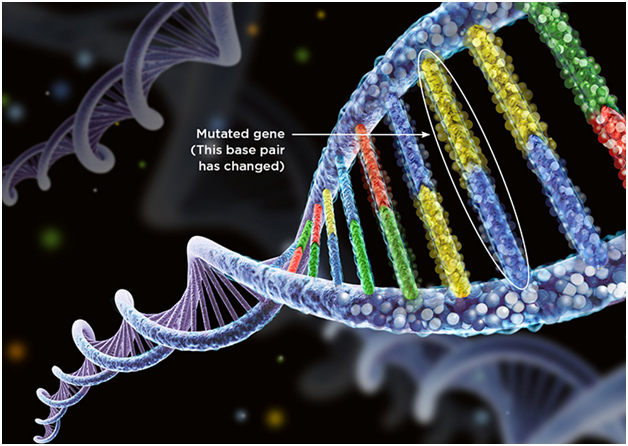
The variations in the progesterone receptor gene — consisting of single nucleotide polymorphisms, or one-letter changes in the genetic code — were found in regions of the gene that regulate when it is switched on and off.

Recent natural selection took the genetic code in different directions as different populations adapted to their local environments, the scientists found. The sequence in Han Chinese populations had an evolutionarily new variation, perhaps reflecting that premature birth would have been especially costly for the small group of ancestral humans who migrated from Africa to East Asia. In contrast, modern populations with European and African ancestry had a greater mixture reflecting new and ancestral versions in the gene.

The findings also predict that the genetic forms of the progesterone receptor seen in East Asians would not necessarily protect against premature birth in other populations. The researchers confirmed this prediction with data from 1,733 African-American women enrolled in a study called the Boston Birth Cohort; of these women, 461 had spontaneous preterm births and 237 had medically indicated preterm births, in which doctors deliver the baby early because of medical problems that have developed during pregnancy for the mother, fetus or both. African-American women who had genetic variants typically seen in East Asian populations had a higher risk of premature birth, the study found.

Genes alone don’t determine risk

The study’s underlying message is that genes that are helpful in one environment may not help in another, Shaw said. “Complex conditions such as prematurity are not likely caused completely environmentally or completely genetically; it’s the confluence of genes and environment that makes the difference in risk,” he said.

The researchers also examined the progesterone receptor in genetic data from four female Neanderthals — one that lived about 122,000 years ago, and three that lived about 52,000 years ago. These individuals had a version of the receptor linked to a high risk of preterm birth. This version of the gene may have been introduced to early human populations by interbreeding between humans and Neanderthals, the findings suggest.

ext, the researchers plan to study pregnant women who have received progesterone to try to prevent premature birth. “We want to determine whether genetic differences in the receptor could explain why giving the hormone prevents premature delivery in some women but not others,” Stevenson said. “This type of information may help us develop personalized approaches to preventing preterm birth.”

Michael Snyder, PhD, professor of genetics, is also a Stanford author of the paper. Shaw, Stevenson and Snyder are members of the Stanford Child Health Research Institute and of Stanford Bio-X. Stevenson is an affiliate of the Stanford Woods Institute for the Environment, and Snyder is a member of the Stanford’s Cardiovascular Institute, its Cancer Institute and its Neurosciences Institute.

Scientists at Johns Hopkins University, Case Western Reserve University and the University of Cincinnati also contributed to the study.

The study was funded by March of Dimes Prematurity Research Center at Stanford University School of Medicine, the National Heart, Lung and Blood Institute (grant RC2 HL101748), the National Institutes of Health (grant 5P50HG00773502) and the California Institute for Regenerative Medicine (grant GC1R-06673-A).

Stanford’s Department of Pediatrics also supported the work.


