

























How to Activate the Vagus, Your Brain’s Incredible Calming Nerve
The vagus nerve is a powerful tool against headaches, depression, and more.
You have trillions of nerves throughout your body, but one holds the potential to impact both minor and serious health conditions and is so intriguing (partly because you can manipulate it yourself, to a certain extent!) that it deserves the spotlight: the vagus nerve.
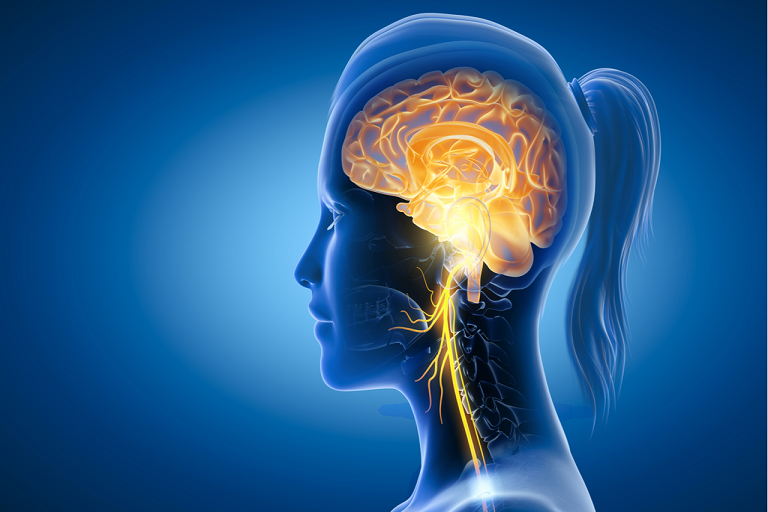
Otherwise known as the 10th cranial nerve, the vagus nerve is the longest one in the body that originates in the brain. Its name stems from the Latin word for “wander,” and for good reason: It meanders from the base of your brain down your neck and through the diaphragm, heart, lungs, and digestive tract. Your vagus nerve plays an integral role in well-being by helping control heart rate, lowering inflammation, and aiding in digestion. What’s more, a growing body of evidence suggests that harnessing its power can improve your health.
What can the vagus nerve do?
Some of the vagus’s best-known functions involve the parasympathetic nervous system, through which it influences alertness and relaxation. When you’re feeling stressed, for example, the vagus nerve can become overstimulated. As a result, your blood pressure and heart rate drop, and you might get lightheaded or even faint.
Your vagus nerve can have the opposite effect too. After a stress response, it can trigger the release of chemicals that help you feel calm and relaxed, keeping your nervous system in balance. Research also shows that people can manipulate the nerve to improve certain health issues. Read on to learn about what health conditions your vagus nerve plays a role in, and how you can activate the vagus nerve to make it work for you.
Ease headaches
In 2018, the Federal Drug Administration (FDA) approved a handheld vagus nerve stimulator for use in the prevention of cluster headaches and migraines in adults. Placed over the nerve in the neck, it delivers mild electrical stimulation. The device can be used daily, either during a period of cluster headaches or year-round, depending on a physician’s recommendation.
Prevent seizures
Vagal stimulation has been an option for some people with epilepsy since 1997, when the U.S. Food and Drug Administration (FDA) approved a pacemaker-like device that sends electrical impulses to the nerve, helping prevent seizures in people whose epilepsy doesn’t respond to other treatments. The key with electrical stimulation: It must be carefully adjusted to walk a fine line between enough and too much.
Treat mental health conditions
Vagus nerve stimulation is also FDA-approved to treat depression and has been found to benefit some people with bipolar disorder and anxiety as well.
Help you recover after a stroke
Some research suggests that when paired with rehabilitation, vagus nerve stimulation may help treat people with long-term moderate to severe arm impairment after a stroke.
How can you activate the vagus nerve?
The simplest way to influence your vagus nerve may be to regularly practice deep breathing. The trick to activating the body’s relaxation response is to make your exhalations twice as long as your inhalations. Try my “4-7-8 Breath”: Inhale through your nose for a count of four, hold your breath for a count of seven, and exhale through your mouth for a count of eight. Do eight cycles of this at least twice a day, especially when stressed.


