





























































Events Calendar

Mon
Tue
Wed
Thu
Fri
Sat
Sun
M
T
W
T
F
S
S
1
2
6
7
9
10
11
12
13
14
18
19
20
21
23
27
28
30
12:00 AM - Hepatology 2021
31
1
2
3
4
Heart Care and Diseases 2021
2021-03-03    
All Day
Euro Heart Conference 2020 will join world-class professors, scientists, researchers, students, Perfusionists, cardiologists to discuss methodology for ailment remediation for heart diseases, Electrocardiography, Heart Failure, [...]
Gastroenterology and Digestive Disorders
2021-03-04 - 2021-03-05    
All Day
Gastroenterology Diseases is clearing a worldwide stage by drawing in 2500+ Gastroenterologists, Hepatologists, Surgeons going from Researchers, Academicians and Business experts, who are working in [...]
Environmental Toxicology and Ecological Risk Assessment
2021-03-04 - 2021-03-05    
All Day
Environmental Toxicology 2021 you can meet the world leading toxicologists, biochemists, pharmacologists, and also the industry giants who will provide you with the modern inventions [...]
Dermatology, Cosmetology and Plastic Surgery
2021-03-05 - 2021-03-06    
All Day
Market Analysis Speaking Opportunities Speaking Opportunities: We are constantly intrigued by hearing from professionals/practitioners who want to share their direct encounters and contextual investigations with [...]
World Dental Science and Oral Health Congress
2021-03-08 - 2021-03-09    
All Day
About The Webinar Conference Series LLC Ltd invites you to attend the 42nd World Dental Science and Oral Health Congress to be held in March 08-09, 2021 with the [...]
Euro Metabolomics & Systems Biology
2021-03-08 - 2021-03-09    
All Day
Euro Metabolomics 2021 will be a platform to investigate recent research and advancements that can be useful to the researchers. Metabolomics is a rapidly emerging [...]
International Summit on Industrial Engineering
2021-03-15 - 2021-03-16    
All Day
Industrial Engineering conference invites all the participants to attend International summit on Industrial Engineering during March15-16, 2021 Webinar. This has prompt keynotes, Oral talks, Poster [...]
Digital Health 2021
2021-03-15 - 2021-03-16    
All Day
The use of modern technologies and digital services is not only changing the way we communicate, they also offer us innovative ways for monitoring our [...]
Genetics and Molecular biology 2021
2021-03-15    
All Day
Human genetics is study of the inheritance of characteristics by children from parents. Inheritance in humans does not differ in any fundamental way from that [...]
Food Science and Food Safety
2021-03-16 - 2021-03-17    
All Day
Food Safety. It also provides the premier multidisciplinary forum for researchers, professors and educators to present and discuss the most recent innovations, trends, and concerns, [...]
Traditional and Alternative Medicine
2021-03-16 - 2021-03-17    
All Day
Traditional Medicine 2021 welcomes attendees, presenters, and exhibitors from all over the world. We are glad to invite you all to attend and register for [...]
Carbon and Advanced Energy Materials
2021-03-16 - 2021-03-17    
All Day
Materials Science 2021 was an enchanted achievement. We give incredible credits to the Organizing Committee and participants of Materials Science 2021 Conference. Numerous tributes from [...]
Advancements in Tuberculosis and Lung Diseases
2021-03-17 - 2021-03-18    
All Day
Tuberculosis is a communicable disease, caused by the infectious bacterium Mycobacterium tuberculosis. It affects the lungs and other parts of the body (brain, spine). People [...]
Herbal Medicine and Acupuncture 2021
2021-03-22 - 2021-03-23    
All Day
The event offers a best platform with its well organized scientific program to the audience which includes interactive panel discussions, keynote lectures, plenary talks and [...]
Hospital Management and Health Care
2021-03-22 - 2021-03-23    
All Day
Healthcare system refers to the totality of resource that a society distributes with in organization and health facilities delivery for the aim of upholding or [...]
Hematology and Infectious Diseases
2021-03-22 - 2021-03-23    
All Day
Hematology is the discipline concerned with the production, functions, bone marrow, and diseases which are related to blood, blood proteins. The main aim of this [...]
Aquaculture & Marine Biology
2021-03-24 - 2021-03-25    
All Day
The 15th International Conference on Aquaculture & Marine Biology is delighted to welcome the participants from everywhere the planet to attend the distinguished conference scheduled [...]
Artificial Intelligence & Robotics 2021
2021-03-24 - 2021-03-25    
All Day
The Conference Series LLC Ltd organizes conferences around the world on all computer science subjects including Robotics and its related fields. Here we are happy [...]
Tissue Engineering & Regenerative Medicine
2021-03-24 - 2021-03-25    
All Day
Tissue Engineering & Regenerative Medicine mainly focuses on Stem Cell Research and Tissue Engineering. Stem cell Research includes stem cell treatment for various disease and [...]
Nursing Research and Evidence Based Practice
2021-03-25 - 2021-03-26    
12:00 am
Global Nursing Practice 2021 has been circumspectly organized with various multi and interdisciplinary tracks to accomplish the middle objective of the gathering that is to [...]
Earth & Environmental Science 2021
2021-03-26 - 2021-03-27    
All Day
Earth Science 2021 is the integration of new technologies in the field of environmental science to help Environmental Professionals harness the full potential of their [...]
Earth & Environmental Science 2021
2021-03-26 - 2021-03-27    
All Day
Earth Science 2021 is the integration of new technologies in the field of environmental science to help Environmental Professionals harness the full potential of their [...]
Nanomaterials and Nanotechnology
2021-03-26 - 2021-03-27    
All Day
Nanomaterials are the elements which have at least one spatial measurement in the size range of 1 to 100 nanometre. Nanomaterials can be produced with [...]
Smart Materials and Nanotechnology
2021-03-29 - 2021-03-30    
All Day
Smart Material 2021 clears a stage to globalize the examination by introducing an exchange amongst ventures and scholarly associations and information exchange from research to [...]
World Nanotechnology Congress 2021
2021-03-29    
All Day
Nano Technology Congress 2021 provides you with a unique opportunity to meet up with peers from both academic circle and industries level belonging to Recent [...]
Nanomedicine and Nanomaterials 2021
2021-03-29    
All Day
NanoMed 2021 conference provides the best platform of networking and connectivity with scientist, YRF (Young Research Forum) & delegates who are active in the field [...]
Hepatology 2021
2021-03-30 - 2021-03-31    
All Day
Hepatology 2021 provides a great platform by gathering eminent professors, Researchers, Students and delegates to exchange new ideas. The conference will cover a wide range [...]
Events on 2021-03-03
Events on 2021-03-05
Events on 2021-03-17
Events on 2021-03-25
Events on 2021-03-30
Hepatology 2021
30 Mar 21
Articles Latest News

Jan 16: The Health Information Technology Revolution-The Role of Electronic Medical Records

health information technology revolution

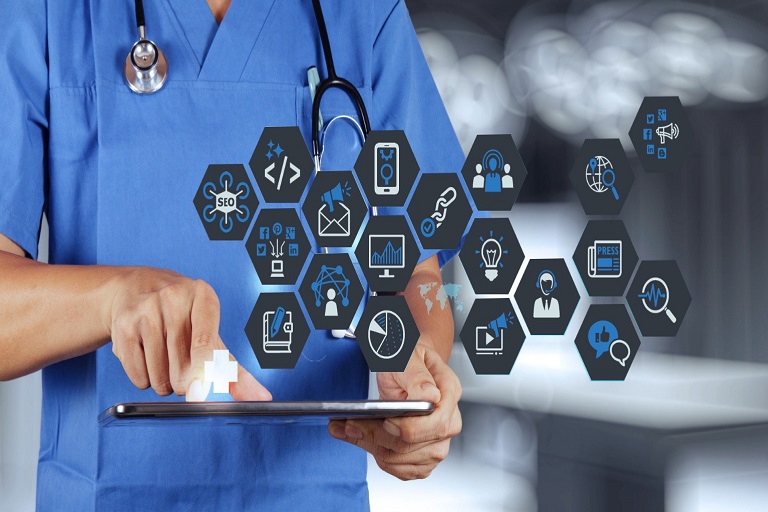
The revolution in information technology is upon us. One area where these innovations can have a uniquely beneficial impact is in the healthcare sector. Countries around the world have been exploring its application in health, with the Nordic countries emerging as the field’s industrial leaders. Consequently, implementation of a coordinated health information technology system can also have a major impact in improving the health status of populations in developing countries.

One of the most effective types of health information technology is the electronic medical record. An electronic medical record (EMR) is defined in the 1997 Institute of Medicine report titled “The Computer-Based Patient Record: An Essential Technology for Health Care” as “a type of clinical information system, which is dedicated to collecting, storing, manipulating, and making available information important to the delivery of patient care.” The goal of these records is to store clinical data, rather than to keep track of financial or billing information [1].

The vast amount of clinical data stored by electronic medical records makes healthcare delivery more efficient and therefore contributes to a rising quality of medical care [2]. A survey showed that doctors seeing patients in outpatient settings had a difficult time finding relevant information about their patient in paper-based records 80% of the time [3]. With electronic medical records, finding data from a patient’s past visits becomes much easier and allows the entire process to be streamlined in a way that does not sacrifice quality of care.

Electronic medical records also allow patient information to be stored in a safe way. Paper records require ample room for storage and are susceptible to damage from flooding or fire. On the other hand, EMRs take up limited room in the healthcare facility and can be backed up on a remote server in case of any damage to the system. Advanced versions of these records can also provide services such as reminders about vaccines that patients need to be given that are dependent on their age or medical status. These systems can also reduce medical errors that arise from handwritten orders and offer alerts if incompatible drugs are being prescribed to a patient and improve quality of care overall [4]. EMRscan even generate reports about groups of patients in order to study health outcomes of specific populations [5].

These records also have financial benefits. Although there is a high upfront capital cost to implement this system, it will create greater financial gains than the initial implementation cost if utilized effectively. In developed countries, these records can generate savings of $86,400 per year for each health care provider during a five-year period [6]. Furthermore, increasing the use of electronic medical records as opposed to paper medical records will allow healthcare facilities to reallocate money that was previously earmarked for buying paper and filing cabinets towards more purposeful expenses, such as buying new equipment in order to improve patient care. Implementation of electronic medical records will likewise create new jobs and stimulate the economy because healthcare facilities will have to hire more information technology professionals to implement and troubleshoot this advanced technology.

There are skeptics who believe that implementing information technology in the field of healthcare is too costly and not worth the benefits that the technology provides; however, this technology has the ability to transform the way that healthcare is delivered across the globe. The core of any health information system is a network of electronic medical records that capture healthcare data about a population. To improve the quality of care, healthcare professionals require information about patient outcomes and histories over a wide range of patients. Currently, healthcare data for some countries is virtually nonexistent or extremely difficult to analyze because of inconsistencies in data collection methods. Electronic medical records allow for data to be collected in a systematic way by all healthcare professionals at all levels of care including hospitals, primary care clinics and community health clinics.

Easy access to this data is key to improving outcomes and efficiency, as well as lowering healthcare costs [7]. A few countries, including India, Haiti and Uganda, have started to test this technology and have seen promising results [8]. In developing countries specifically, one of the most compelling benefits of electronic medical records is the amount of data that they can store. These records allow governments as well as international and non-governmental organizations to conduct detailed, efficient and accurate health surveys across huge swaths of the world’s population [9]and collect data needed to effectively allocate their resources for combatting health inequalities and public health concerns [10]. This information can also be used by hospitals and other health care delivery centers in developing countries to apply for grants from international aid organizations in the short run, and in the long run can allow these organizations to evaluate the impact of the assistance [11]. On a smaller scale, data stored in electronic medical records helps healthcare facilities standardize their health care services and learn the best practice techniques from one another [12].

Even though use of electronic medical records can aid developing countries immensely by improving their population health outcomes, correct implementation of the system is the key to its success. Developing countries learn important lessons about implementing a national system of electronic medical records not only from the example of developed countries, but also from micro-level electronic medical records systems that have already been implemented in their own countries. A few important considerations to take into account when developing a health information technology system are levels of: national coordination for the system’s development, involvement of important stakeholders in that development, customization allowed at the local tier of the system, and interoperability once systems have been customized.

Regardless of whether or not countries are ready for this change in healthcare delivery, it is already starting to extend its reach across the globe. Countries in the inaugural stages of this revolution should understand the ideas that they need to take into account when designing these systems and why starting this process sooner rather than later is going to going to have major benefits in the long run. Source


