






























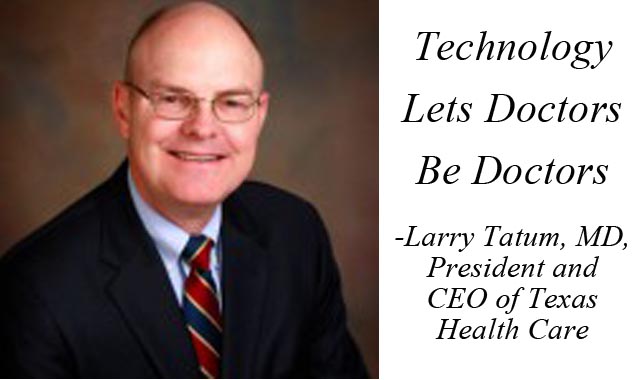
We, as physicians, typically go into medicine to treat patients—not run businesses. However, with increasing regulatory requirements, mounting patient expectations, shrinking payment margins and the ever-growing emphasis on capturing and sharing data, it is becoming harder and harder to solely focus on patient care.
Practices that leverage technology to optimize both clinical and business processes can lessen this challenge, maximizing the time spent with patients and improving the care the practice provides, along with patient—and physician—satisfaction.
Our practice—Texas Health Care— is a multi-specialty, 150-physician group practice based in Fort Worth. A key characteristic of our organization is that physicians remain autonomous in how they practice medicine—they are members of the group practice, not employees. Physicians see patients as they wish, set their own schedule and design their own workflows.

Underpinning our practice is a robust technology infrastructure, which includes a comprehensive electronic health record (EHR)/enterprise practice management (EPM) system. Using the technology is a requirement for practice membership, and we have seen significant benefits as a result of having the system. For instance, it has helped streamline and standardize business operations across the enterprise, including registration, scheduling, eligibility verification, claims submission, payment posting and denials management.
On the clinical side, the technology facilitates better documentation, which not only improves patient care but supports more thorough and timely quality reporting. In addition, the system enhances care coordination between our providers. For example, if an OBGYN in the practice shares a patient with a primary care doctor, they can seamlessly share information as both have access to the same patient record, allowing for more coordinated and appropriate care decisions. Going forward, the technology is poised to achieve greater interoperability with organizations outside the practice, helping us achieve strategic goals regarding new payment models, risk-sharing agreements and increased care quality.
In the end, leveraging technology lets us remain independent—the organization is not affiliated with any hospital or outside entity. Moreover, physicians are less focused on keeping the doors open and the lights on, and are able to devote more time and attention to the reason they got into medicine in the first place—to help people stay well.


