




























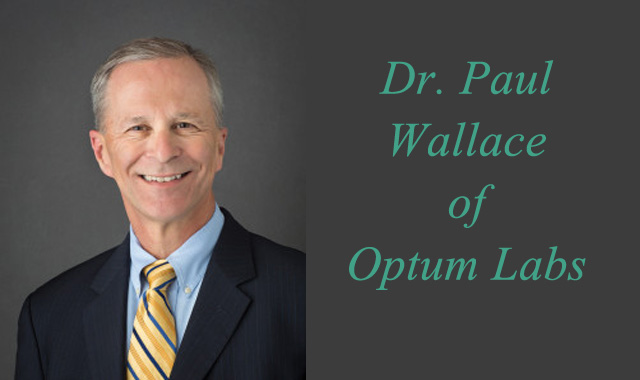
Optum Labs, an ambitious data-sharing effort between some of the biggest payers and providers, is picking up steam, gaining new partnerships that collectively could be a massive source of revealing information for nearly all corners of the healthcare sector.
What started as a collaboration between Optum, a subsidiary of UnitedHealthcare, and the Mayo Clinic has attracted about 15 total partners just this year, and the mountains of data being examined will soon be applicable to the various disciplines, according to Dr. Paul Wallace, chief medical officer of Cambridge, Mass-based Optum.
“I think things are moving ahead,” he said about how the partnership has evolved since its launch in January 2013. “Investigators can use the data. We’ve also learned a lot of what it takes to support that” while making sure “that the problems (researchers) are addressing is appropriate within the data collected.”
Partners now include the AARP, Humedica, the American Medical Group Association, Boston Scientific, Boston University School of Public Health, Lehigh Valley Health Network, Pfizer, Rensselaer Polytechnic Institute, Tufts University Medical Center and the Minnesota School of Public Nursing. Collectively, the partnerships can view insurance claims from more than 150 million people and electronic medical records of some 40 million people, according to Dr. Wallace, along with new data from pharma, biotech and consumer groups.
That sort of reach has allowed for an impressive, perhaps even unprecedented, amount of research, he said. While it’s too soon to draw any definitive conclusions, progress is being made and more data is coming available on some of the biggest health challenges, ranging from diabetes, hip and knee replacements, heart failure, Alzheimer’s and dementia.

“There are different types of studies and approaches to diabetes care, to the types of people getting hip and knee replacements, different aspect of common conditions like diabetes – we already have half a dozen different studies. One of the essentials of big data is to confront those problems, big issues like heart failure. Other convening concepts are creating some shared initiatives on things like Alzheimer’s and dementia. It’s not only looking for cures but also how can we provide better care.”
For example, with type 2 diabetes, Metformin may be one of the commonly prescribed medications, However, an observational study conducted using the Optum Labs database looked at older, sulfonylurea drugs and newer treatments and insulin. The study looked at more than 37,000 patients and compared alternative medication strategies, finding that all drugs used showed similar effects in achieving glucose control and overall quality life. But, importantly, the cost was less for patients who were treated with sulfonylurea. The drugs “were also associated with a longer interval until insulin was required than was the case when other oral agents were used,” Dr. Wallace and colleagues wrote in a recent Health Affairs article. Those findings are now being translated to potential revisions of guidelines for other providers, which can not only help produce better outcomes but also lower costs in the longer term.
Likewise with knee replacements, an Optum Labs study examined over 116,000 primary knee surgeries and nearly 10,000 revision surgeries performed on people too young for Medicare. The study showed an 84 percent increase over 10 years of such surgeries for patients between 45 and 54, as well as a general increase for the population as a whole. That’s attributed to the increase in obesity and onset of type 2 diabetes and suggests the medical care begins earlier than previously understood, based off of Medicare data. These findings are prompting further studies on differential outcomes on patients with commodities and assessment of care protocols.
That’s a key benefit of the collaboration, Dr. Wallace said.
“We called these larger studies consultations – because they bring together a variety of elements to create a bigger picture,” he said. “You do a study that helps you design the next study.”
Another possible example is looking closely at blood thinners like Coumadin. Like medications with diabetes, only a small handful of drugs are used, but newly developed anticoagulants have been introduced, and reexamining best practices could be worthwhile.
“It hasn’t been really well studied, and the Mayo Clinic looked at some studies to see where there might be some potential and what to watch for,” Dr. Wallace said.
Of course, cost is an important piece of the big puzzle here, and Dr. Wallace said that the right questions are now being studied.
“I think a driving framework is the overall triple aim – it is about overall quality, patient experience and improving care. I think it’s a little premature to say there’s been a drop (in prices),” he said. “It’s a work in progress but I guess the good news is it’s in progress.”


