






























Events Calendar

Mon
Tue
Wed
Thu
Fri
Sat
Sun
M
T
W
T
F
S
S
30
12:00 AM - Hepatology 2021
31
1
2
3
4
7
8
9
10
11
13
14
15
16
18
19
20
21
22
23
24
25
27
28
29
30
1
2
World Nanotechnology Congress 2021
2021-03-29    
All Day
Nano Technology Congress 2021 provides you with a unique opportunity to meet up with peers from both academic circle and industries level belonging to Recent [...]
Nanomedicine and Nanomaterials 2021
2021-03-29    
All Day
NanoMed 2021 conference provides the best platform of networking and connectivity with scientist, YRF (Young Research Forum) & delegates who are active in the field [...]
Smart Materials and Nanotechnology
2021-03-29 - 2021-03-30    
All Day
Smart Material 2021 clears a stage to globalize the examination by introducing an exchange amongst ventures and scholarly associations and information exchange from research to [...]
Hepatology 2021
2021-03-30 - 2021-03-31    
All Day
Hepatology 2021 provides a great platform by gathering eminent professors, Researchers, Students and delegates to exchange new ideas. The conference will cover a wide range [...]
Annual Congress on  Dental Medicine and Orthodontics
2021-04-05 - 2021-04-06    
All Day
Dentistry Medicine 2021 is a perfect opportunity intended for International well-being Dental and Oral experts too. The conference welcomes members from every driving university, clinical [...]
World Climate Congress & Expo 2021
2021-04-06 - 2021-04-07    
All Day
Climatology is the study of the atmosphere and weather patterns over time. This field of science focuses on recording and analyzing weather patterns throughout the [...]
European Food Chemistry and Drug Safety Congress
2021-04-12 - 2021-04-13    
All Day
We invite you to meet us at the Food Chemistry Congress 2021, where we will ensure that you’ll have a worthwhile experience with scholars of [...]
Proteomics, Genomics & Bioinformatics
2021-04-12 - 2021-04-13    
All Day
Proteomics 2021 is one of the front platforms for disseminating latest research results and techniques in Proteomics Research, Mass spectrometry, Bioinformatics, Computational Biology, Biochemistry and [...]
Plant Science & Physiology
2021-04-17 - 2021-04-18    
All Day
The PLANT PHYSIOLOGY 2021 theme has broad interests, which address many aspects of Plant Biology, Plant Science, Plant Physiology, Plant Biotechnology, and Plant Pathology. Research [...]
Pollution Control & Sustainable 2021
2021-04-26 - 2021-04-27    
All Day
Pollution Control 2021 conference is organizing with the theme of “Accelerating Innovations for Environmental Sustainability” Conference Series llc LTD organizes environmental conferences series 1000+ Global [...]
Events on 2021-03-30
Hepatology 2021
30 Mar 21
Events on 2021-04-06
Events on 2021-04-17
Events on 2021-04-26
Articles

Large models identify social determinants in records

Social determinants of health (SDoH) significantly influence patient outcomes, yet their documentation is frequently incomplete or absent in the structured data of electronic health records (EHRs). The utilization of large language models (LLMs) holds promise in efficiently extracting SDoH from EHRs, contributing to both research and clinical care. However, challenges such as class imbalance and data limitations arise when handling this sparsely documented yet vital information.

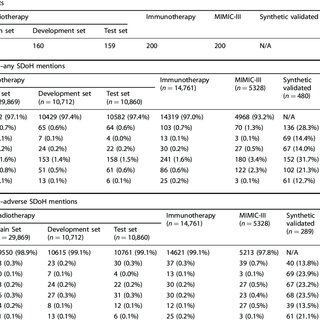
In our investigation, we explored effective approaches to leverage LLMs for extracting six distinct SDoH categories from narrative EHR text. The standout performers included the fine-tuned Flan-T5 XL, achieving a macro-F1 of 0.71 for any SDoH mentions, and Flan-T5 XXL, attaining a macro-F1 of 0.70 for adverse SDoH mentions. The incorporation of LLM-generated synthetic data during training had varying effects across models and architectures but notably improved the performance of smaller Flan-T5 models (delta F1 + 0.12 to +0.23).

Our best-fine-tuned models outperformed zero- and few-shot performance of ChatGPT-family models in their respective settings, except for GPT4 with 10-shot prompting for adverse SDoH. These fine-tuned models exhibited a reduced likelihood of changing predictions when race/ethnicity and gender descriptors were introduced to the text, indicating diminished algorithmic bias (p < 0.05). Notably, our models identified 93.8% of patients with adverse SDoH, a significant improvement compared to the mere 2.0% captured by ICD-10 codes. These results highlight the potential of LLMs in enhancing real-world evidence related to SDoH and in identifying patients who could benefit from additional resource support.


