


























Events Calendar

Mon
Tue
Wed
Thu
Fri
Sat
Sun
M
T
W
T
F
S
S
26
27
28
29
30
31
1
2
3
4
6
7
8
10
11
12
13
14
15
17
18
20
21
22
24
25
28
29
30
31
1
2
3
4
5
Food and Beverages
2021-07-26 - 2021-07-27    
12:00 am
The conference highlights the theme “Global leading improvement in Food Technology & Beverages Production” aimed to provide an opportunity for the professionals to discuss the [...]
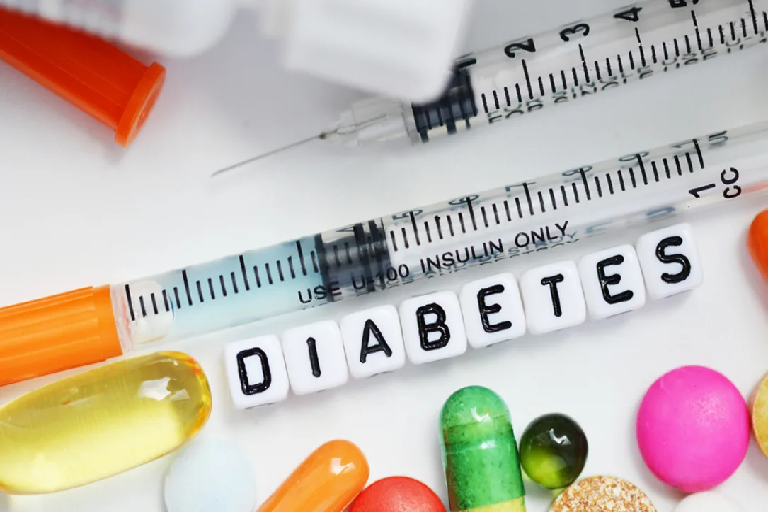
European Endocrinology and Diabetes Congress
2021-08-05 - 2021-08-06    
All Day
This conference is an extraordinary and leading event ardent to the science with practice of endocrinology research, which makes a perfect platform for global networking [...]
Big Data Analysis and Data Mining
2021-08-09 - 2021-08-10    
All Day
Data Mining, the extraction of hidden predictive information from large databases, is a powerful new technology with great potential to help companies focus on the [...]
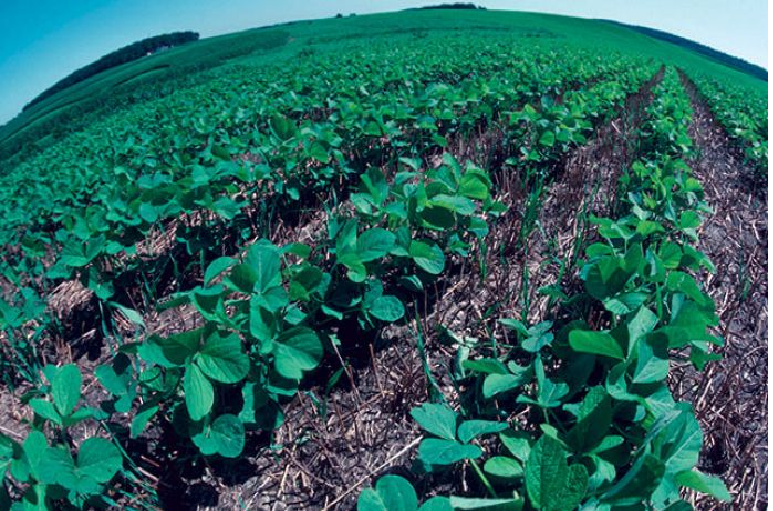
Agriculture & Horticulture
2021-08-16 - 2021-08-17    
All Day
Agriculture Conference invites a common platform for Deans, Directors, Professors, Students, Research scholars and other participants including CEO, Consultant, Head of Management, Economist, Project Manager [...]
Wireless and Satellite Communication
2021-08-19 - 2021-08-20    
All Day
Conference Series llc Ltd. proudly invites contributors across the globe to its World Convention on 2nd International Conference on Wireless and Satellite Communication (Wireless Conference [...]
Frontiers in Alternative & Traditional Medicine
2021-08-23 - 2021-08-24    
All Day
World Health Organization announced that, “The influx of large numbers of people to mass gathering events may give rise to specific public health risks because [...]
Agroecology and Organic farming
2021-08-26 - 2021-08-27    
All Day
Current research on emerging technologies and strategies, integrated agriculture and sustainable agriculture, crop improvements, the most recent updates in plant and soil science, agriculture and [...]
Agriculture Sciences and Farming Technology
2021-08-26 - 2021-08-27    
All Day
Current research on emerging technologies and strategies, integrated agriculture and sustainable agriculture, crop improvements, the most recent updates in plant and soil science, agriculture and [...]
CIVIL ENGINEERING, ARCHITECTURE AND STRUCTURAL MATERIALS
2021-08-27 - 2021-08-28    
All Day
Engineering is applied to the profession in which information on the numerical/mathematical and natural sciences, picked up by study, understanding, and practice, are applied to [...]
Diabetes, Obesity and Its Complications
2021-09-02 - 2021-09-03    
All Day
Diabetes Congress 2021 aims to provide a platform to share knowledge, expertise along with unparalleled networking opportunities between a large number of medical and industrial [...]
Events on 2021-07-26
Food and Beverages
26 Jul 21
Events on 2021-08-05
Events on 2021-08-09
Events on 2021-08-16
Events on 2021-08-19
Events on 2021-08-23
Events on 2021-09-02
Articles

Large models identify social determinants in records

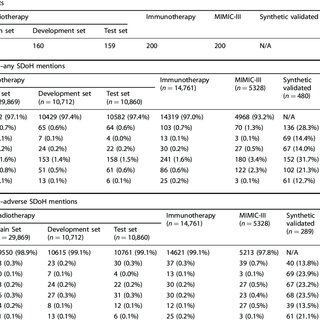
Social determinants of health (SDoH) significantly influence patient outcomes, yet their documentation is frequently incomplete or absent in the structured data of electronic health records (EHRs). The utilization of large language models (LLMs) holds promise in efficiently extracting SDoH from EHRs, contributing to both research and clinical care. However, challenges such as class imbalance and data limitations arise when handling this sparsely documented yet vital information.

In our investigation, we explored effective approaches to leverage LLMs for extracting six distinct SDoH categories from narrative EHR text. The standout performers included the fine-tuned Flan-T5 XL, achieving a macro-F1 of 0.71 for any SDoH mentions, and Flan-T5 XXL, attaining a macro-F1 of 0.70 for adverse SDoH mentions. The incorporation of LLM-generated synthetic data during training had varying effects across models and architectures but notably improved the performance of smaller Flan-T5 models (delta F1 + 0.12 to +0.23).

Our best-fine-tuned models outperformed zero- and few-shot performance of ChatGPT-family models in their respective settings, except for GPT4 with 10-shot prompting for adverse SDoH. These fine-tuned models exhibited a reduced likelihood of changing predictions when race/ethnicity and gender descriptors were introduced to the text, indicating diminished algorithmic bias (p < 0.05). Notably, our models identified 93.8% of patients with adverse SDoH, a significant improvement compared to the mere 2.0% captured by ICD-10 codes. These results highlight the potential of LLMs in enhancing real-world evidence related to SDoH and in identifying patients who could benefit from additional resource support.


