



































Wearing lead aprons during dental X-rays has been a longstanding practice, but recent recommendations from the American Dental Association (ADA) suggest that these aprons and thyroid collars are no longer necessary, even for children and pregnant individuals.
Since the 1950s, lead aprons have been a standard in dentistry and healthcare. Concerns about the potential hereditary risks of radiation exposure from X-rays led to their widespread use. However, after extensive research spanning decades, there is no evidence supporting these concerns.
Sanjay M. Mallya, BDS, MDS, PhD, the chair of oral and maxillofacial radiology at the UCLA School of Dentistry, explains that studies have shown no hereditary risks from radiation exposure in humans, challenging the initial fears.
The ADA’s recent recommendation aligns with a similar stance taken by the American Association of Physicists in Medicine in 2019. The National Commission on Radiation Protection and Measurement had also previously concluded in 2003 that lead aprons offer minimal benefits in dental imaging procedures.
Purnima Kumar, DDS, PhD, chair of the ADA Council on Scientific Affairs, emphasized that the ADA’s report and the recommendation to discontinue the use of thyroid collars reflect a well-established position supported by leading radiation protection organizations.
Is it safe to forgo the use of lead aprons during X-rays?
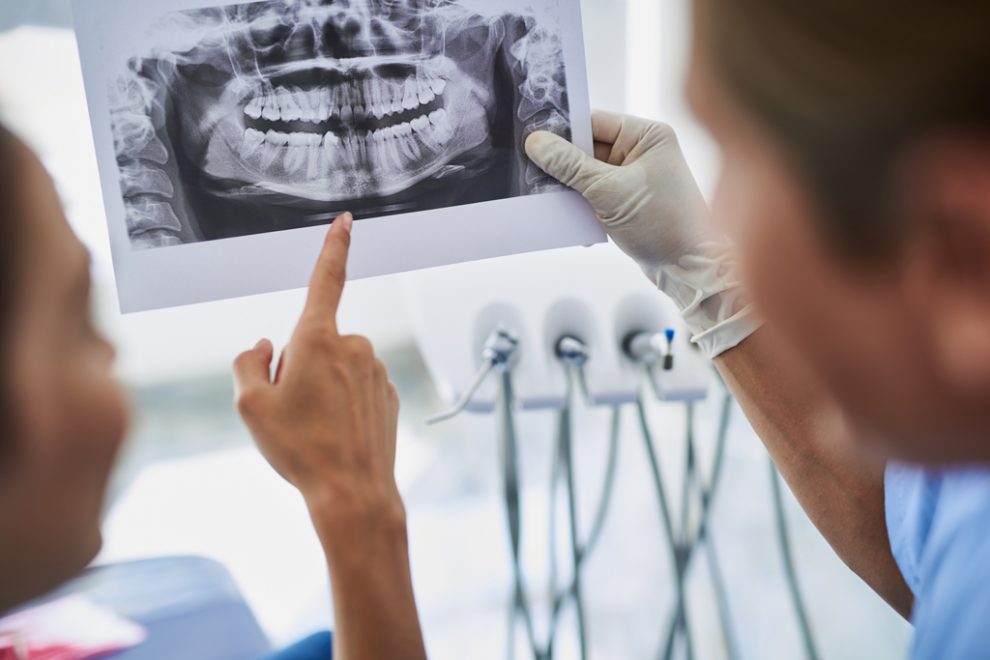
Scientists have gained a better understanding of radiation, and with advancements in X-ray technology, digital X-ray equipment now utilizes rectangular collimation. This technology confines the X-ray beam to the specific area under examination, minimizing unnecessary radiation exposure during dental X-rays. Many dental offices have transitioned to digital X-rays, although some still use traditional film, which slightly increases radiation levels. However, experts assure that the radiation from dental imaging is generally minimal.
While lead aprons and thyroid collars have been traditionally used to block the primary X-ray beam and offer a sense of protection, some concerns have been raisedUsing protective gear such as lead aprons and thyroid collars could potentially disrupt automatic exposure control settings, leading to a possible elevation in a patient’s radiation exposure.Experts emphasize the importance of avoiding unnecessary X-rays and recommend caution when using such protective gear.
Patients’ comfort is a priority, and some individuals may still prefer wearing a lead apron for peace of mind. Anxiety can impact the quality of X-ray images due to patient motion, so accommodating those with concerns is crucial. Dental providers are encouraged to stand behind barriers or wear lead aprons for their protection, although they do not directly benefit from exposure.
The use of lead aprons during dental X-rays varies by location, with Oregon discontinuing the requirement in 2016, while many states still mandate their use by law. It’s essential to note that professional medical organizations provide guidelines rather than strict regulations, and changes in laws may take time to align with evolving recommendations.
Is it accurate to say that pregnant individuals genuinely have no cause for concern?
The latest recommendations from the ADA also extend to pregnant individuals, although many healthcare providers expect them to express reservations about undergoing X-rays without the use of a lead shield to safeguard the fetus.
Dr. Mallya emphasizes that the risk for pregnant individuals is minimal, comparing the radiation exposure during a dental X-ray to the levels experienced during a 5-hour flight.
Delaying a dental X-ray during pregnancy is not advisable, as it could potentially help identify an infected tooth that requires removal. Dr. Mallya points out that allowing such an infection to spread through the body poses a greater risk to the fetus than the low radiation risk associated with a dental X-ray.


