























Others find computerized records useful diagnostic tool.
Justine Mrosak entered the exam room, laptop in hand, and began interviewing her patient about his shoulder injury, systematically checking off questions and entering medical data on the computer.
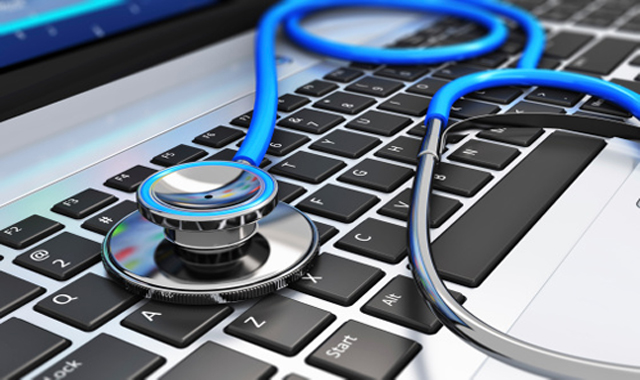
At Entira Family Clinics, where the third-year medical student was making her rounds last week, the computer has become an extension of the doctor’s arm, as essential to patient care as the stethoscope.
Dr. Cindy Firkins Smith sees things a bit differently. The Willmar dermatologist hates to put technology between her patient and herself, and finds data entry a time-consuming chore.
“You are taking the most expensive cog in the wheel,” she said, “and you are making them a computer input person.”
Electronic health records are supposed to represent the next great leap in medicine — reducing medical errors and enhancing the physician’s diagnostic powers. A 2007 state statute requires all Minnesota health care providers to adopt them by 2015, and the 2010 Affordable Care Act includes a host of incentives for their adoption.
Yet, health professionals have mixed feelings about the digital records even though they are now in place at scores of Minnesota clinics and most Minnesota hospitals. Some praise them as a teaching and diagnostic tool, while others say they clutter up the patient-doctor relationship.
Time-consuming
When Smith goes into the exam room to see her patients in Willmar, she leaves the tablet computer in her office. She wants to maintain the connection with her patient, she said, and putting technology between them prevents that.
So Smith prints out everything she needs and takes notes on paper, keeping eye contact with her patients.
When she’s done seeing patients for the day, Smith transfers her notes into the electronic system. It adds hours to her day, she said, and reduces the number of patients she can see.
One advantage, she said, is that she can easily read records from home, which allows her to finish some data entry after work. At other times, however, it just seems to make her day longer. During a recent workday, Smith finished seeing patients at 11:30 a.m. but did computer work until 2 p.m.
Bonnie Westra, a registered nurse, worked in the electronic records industry for 12 years before becoming an associate professor at the University of Minnesota. She hails the increase in quality and efficiency of patient care that electronic records bring.
Not long ago, Westra and her husband had to prepare for an appointment at the Mayo Clinic, but they were in Tucson, Ariz., at the time. Because the hospital used electronic health records, they were able to log on and see test results and a list of medications and ask the physician questions.
Electronic records give patients more control over their health care, Westra said.
“It [allows] patients to more fully participate in their care,” she said.
Learning the art
On a recent morning at the Entira Family Clinic in White Bear Lake, Mrosak was seeing James Andrea, who was in for an arm and shoulder injury. She went through the questions laid out by the electronic health record, checking family health history and medications. But whenever Andrea started talking, Mrosak turned her attention from the computer and listened.
Dr. Dave Thorson, the physician who was supervising Mrosak that day, said he and his colleagues prefer their clinic’s electronic records over paper charts, and surveys have shown his patients like them, too.
But for physicians who haven’t mastered the art of managing the digital record while giving the patient enough attention, he said, it can be difficult.
“There’s always a fear that you spend less time in eye-to-eye [contact] with the patient because you’re inputting data,” Thorson said. “Does that change that patient-physician relationship a little bit?”
Dr. Paul Kleeberg, who helps health care providers adopt electronic records systems, said some doctors can feel like “data entry clerks” instead of physicians, particularly when first inputting a patient’s history.
Kleeberg said that when he saw patients, he tried to make the electronic record a shared experience.
He would sit next to his patients and show them what he was putting in the computer, what their results were and what it meant for their health.
When a patient was telling Kleeberg her story, he would type it out on the computer without looking at the keyboard, maintaining eye contact.
“I would do a lot of cleanup later,” he said, “but at least it had the story in there.”
While some medical students adapt to the digital records faster than their older mentors, even some in the younger generation are apprehensive.
Alice Lehman, a second-year University of Minnesota medical student, said young doctors may be able to use the electronic records more efficiently because they’re more tech-savvy, but they’ll still have a lot to learn. While most Minnesota hospitals have some type of electronic records, the different systems often can’t communicate with one another, which creates just one more thing to learn.
The federal government is implementing phase two of its “meaningful use” program this year, which gives hospitals financial incentives for using electronic systems that can talk to other systems.
Federal incentives like that, Westra said, are improving digital communication among health care providers, but there’s still work to do.
“When you’re changing the health care system … nationally,” she said, “that doesn’t turn on a dime.”
Rebecca Harrington is a University of Minnesota student reporter on assignment for the Star Tribune.


