



















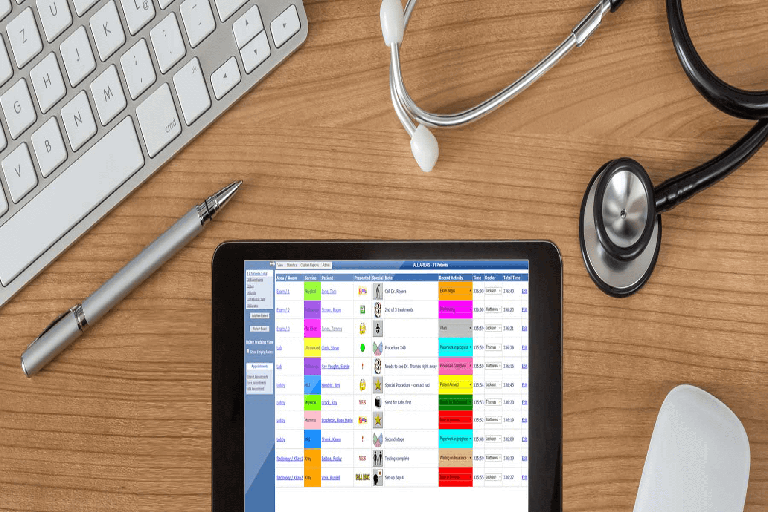









With electronic medical record (EMR) systems becoming more prevalent around the world, and many EMRs having RIS functionality, will the EMR eventually kill the RIS?
Most major EMR systems such as those form EPIC and Cerner have RIS modules. These can perform tasks that the majority of RIS systems can perform. There are many advantages of combined, or single data base EMR and RIS systems. The theoretical advantages include potentially lower cost and simpler contracts, less vendors, less user training, and less complex interfacing. The ability for radiologists to easily access the EMR record during the reporting/reading process is also advantageous.

Disadvantages of using a combined EMR/RIS is that radiology may not necessarily have “best of breed” RIS functionality and user interface/experience (no RIS is perfect). Radiology may have less say in system procurement, implementation, workflows, and data analysis (as an EMR implementation needs to take into account all relevant ‘ologies, not just radiology – although saying that a good RIS/PACS should take into account the user requirements of ‘ologies outside of radiology anyway).
So for acute care or ambulatory settings, the decision on whether to have a separate RIS and EMR, or have a combined EMR/RIS may come down to a cost/benefit of the options. For example, if the functionality lacking from a “best of breed” RIS only results in inefficiencies of $30,000 a year, and cost of having a combined EMR/RIS is saving $150,000 a year, then it is a no brainer to go for the combined EMR/RIS.
Is there still a long term future for RIS? Not all sites that perform medical imaging necessarily require a fully fledged EMR, and thus there will still be a need RIS systems in those markets. However, the combined/integrated RIS/PACS market (such as Agfa’s IMPAX Agility) may eat away at the single vendor RIS only product from the other end. If the EMR vendors cannot keep up with “best of breed” RIS systems, then there may be a continuing requirement for “radiology workflow engine” software to fill in the functionality gaps.
It will be very interesting to see how much the EMR market eats away at the RIS market during the latter half of this decade.


