










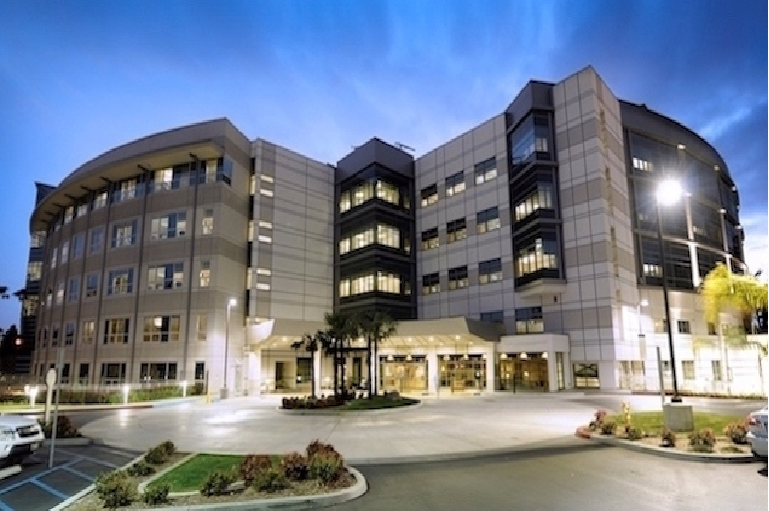
Methodist Hospital of Southern California uses automated contact tracing to contain COVID-19
The formerly two-week manual contact tracing process was reduced to minutes with new technology.
Contact tracing is a key strategy to mitigate the spread of COVID-19, but for a virus with high transmission rates and large numbers of asymptomatic carriers, traditional methods can fall short.
As was the case at Methodist Hospital of Southern California, according to Dr. Bala Chandrasekhar, the chief medical officer at Methodist.
The 348-bed hospital had experience with contact tracing before the pandemic, but it was a manual process that could take up to two weeks to get infection information.
When the pandemic hit, that response time only got worse.
“Notifying people was late, the information was based on memory so it was incomplete and very unsatisfying,” Chandrasekhar said. “And with COVID, there are quite a number of people who are asymptomatic carriers, so by the time you got all this information, you could be carrying it to other healthcare workers, to other doctors and to your family.”
The entire process was “totally unsafe,” Chandrasekhar said. This is why, when the hospital was approached by SwipeSense, a technology platform with applications for monitoring employee hand hygiene, nursing insights, contact tracing and more, Chandrasekhar jumped at the opportunity.
AUTOMATING CONTACT TRACING
SwipeSense automated contact tracing at Methodist by providing every healthcare worker and hospital staff member with a smart badge to wear alongside their employee ID badge.
“It’s sort of like ‘set it and forget it,'” Mert Iseri, CEO of SwipeSense said. “Once this gets added to your badge, that’s really all you have to do in terms of your onboarding.”
Behind the scenes, every room in the hospital is equipped with a location hub that sits in a wall outlet and creates a virtual map that can track workers as they move about the facility.
The technology can identify at-risk employees within minutes of a known positive COVID-19 test to be notified. Beyond that, it can quantify risk by detailing the number of times an employee entered an exposed room and the duration of time that they spent with the infected person. It can also monitor exposures in non-patient areas where employees may have removed their personal protective equipment, such as staff lounges.
Methodist began installing the SwipeSense technology last September and was fully automating its contact tracing by November.
What once took two weeks to trace an infected persons’ interactions, now takes between five to 10 minutes, Chandrasekhar said.
“This has been a game-changer for us,” he said. “I don’t know what other hospitals are doing, but to us, man, this was the right technology at the right time and the right place.”
One of the main factors that contribute to the effectiveness of automated contact tracing is population uptake, according to a research review from The Lancet.
Methodist requires that every hospital employee wears their badge while working, and with the SwipeSense dashboard, management can check to make sure that everyone who is on the clock has a functioning badge, Chandrasekhar said.
At a basic level, Methodist implemented this technology to give its employees and patients security that they weren’t going to get sicker at the hospital than they were before they got there, according to Cliff Daniels, the chief strategy officer at Methodist.
“We did gain a sense of confidence in the community that Methodist remained a place where they could acquire excellent patient care, clinical quality and patient safety,” he said.
Although Methodist isn’t able to quantify if its automated contact tracing solution reduced the incidence of COVID-19, Daniels said it has helped keep transmission within the hospital at a minimum.
“We’ve mitigated what could’ve been a far worse experience with in-house transmission of COVID-19 because we’ve implemented the contact tracing utility,” he said.
For Chandrasekhar, the biggest cost-savings from this implementation have been in the man-hours saved by automating the process.
“It’s so different from the days and days and days of working on a single case to a few minutes,” he said. “That’s made a huge difference in that they feel less stressed out and they’re able to do a more complete tracking and tracing and notification to relevant people about the COVID-19 exposure.”
Additionally, it has prevented the hospital from unnecessarily sending home healthy workers because of a low-risk exposure. Before, Methodist would send home anyone who was exposed to COVID-19. But now with the new technology and the Centers for Disease Control and Prevention’s updated quarantine guidelines, Methodist can discern who was in close contact with the infected individual and needs to be quarantined.
“I can’t put a dollar figure on that, but the numbers dramatically changed and we have more staff coming back and so on,” Chandrasekhar said.
While COVID-19 is occupying the majority of contact tracing at the moment, it is not the only infectious disease that requires it. Methodist plans to continue its automated contact tracing even after the public health emergency ends, according to Chandrasekhar.
Further, Daniels – as well as 90% of infectious-disease researchers and virologists surveyed by Nature – believes that the coronavirus will become endemic, meaning it will circulate for years to come.
“Containing COVID-19 is going to be a perpetual effort,” he said. “It’s going to be ever important for us to remain vigilant about contact tracing and having that capability so it doesn’t break out again to a pandemic or even an epidemic.”
Source : Healthcare