



























Events Calendar

Mon
Tue
Wed
Thu
Fri
Sat
Sun
M
T
W
T
F
S
S
30
12:00 AM - Hepatology 2021
31
1
2
3
4
7
8
9
10
11
13
14
15
16
18
19
20
21
22
23
24
25
27
28
29
30
1
2
World Nanotechnology Congress 2021
2021-03-29    
All Day
Nano Technology Congress 2021 provides you with a unique opportunity to meet up with peers from both academic circle and industries level belonging to Recent [...]
Nanomedicine and Nanomaterials 2021
2021-03-29    
All Day
NanoMed 2021 conference provides the best platform of networking and connectivity with scientist, YRF (Young Research Forum) & delegates who are active in the field [...]
Smart Materials and Nanotechnology
2021-03-29 - 2021-03-30    
All Day
Smart Material 2021 clears a stage to globalize the examination by introducing an exchange amongst ventures and scholarly associations and information exchange from research to [...]
Hepatology 2021
2021-03-30 - 2021-03-31    
All Day
Hepatology 2021 provides a great platform by gathering eminent professors, Researchers, Students and delegates to exchange new ideas. The conference will cover a wide range [...]
Annual Congress on  Dental Medicine and Orthodontics
2021-04-05 - 2021-04-06    
All Day
Dentistry Medicine 2021 is a perfect opportunity intended for International well-being Dental and Oral experts too. The conference welcomes members from every driving university, clinical [...]
World Climate Congress & Expo 2021
2021-04-06 - 2021-04-07    
All Day
Climatology is the study of the atmosphere and weather patterns over time. This field of science focuses on recording and analyzing weather patterns throughout the [...]
European Food Chemistry and Drug Safety Congress
2021-04-12 - 2021-04-13    
All Day
We invite you to meet us at the Food Chemistry Congress 2021, where we will ensure that you’ll have a worthwhile experience with scholars of [...]
Proteomics, Genomics & Bioinformatics
2021-04-12 - 2021-04-13    
All Day
Proteomics 2021 is one of the front platforms for disseminating latest research results and techniques in Proteomics Research, Mass spectrometry, Bioinformatics, Computational Biology, Biochemistry and [...]
Plant Science & Physiology
2021-04-17 - 2021-04-18    
All Day
The PLANT PHYSIOLOGY 2021 theme has broad interests, which address many aspects of Plant Biology, Plant Science, Plant Physiology, Plant Biotechnology, and Plant Pathology. Research [...]
Pollution Control & Sustainable 2021
2021-04-26 - 2021-04-27    
All Day
Pollution Control 2021 conference is organizing with the theme of “Accelerating Innovations for Environmental Sustainability” Conference Series llc LTD organizes environmental conferences series 1000+ Global [...]
Events on 2021-03-30
Hepatology 2021
30 Mar 21
Events on 2021-04-06
Events on 2021-04-17
Events on 2021-04-26
Articles

Nov 08: UPMC IT chief cites EHR “note bloat”

maureen markey joins osehra staff

Daniel Martich M.D., Chief Medical Information Officer at the University of Pittsburgh Medical Center (UPMC) and his colleagues could well make the case that they deserve to live in an ivory tower, at least with regard to the advanced use of medical technology. Why? Maybe because UPMC is ranked #1 on Information Week’s IW 500, or because UPMC has already digitized a mind-boggling 90% of patient data, or even because UPMCs Health IT platforms look after about $10 billion in revenues each year.

But, explained Martich in a session at the recent Open Minds Technology Institute in Philadelphia, the achievement of technological nirvana remains elusive. Among the key technology challenges that face medicine today is one that most people would have thought doctors had licked long ago. That challenge is documentation, the notes on a patient chart.

Before the advent of electronic health records (EHRs), the rap on doctors wasn’t that they didn’t write good notes, but that you couldn’t read their handwriting, said Martich.  The result was that illegibility led to mistakes as others tried to interpret what the notes really said. Or, the billing department couldn’t figure out, from the notes, exactly what services were rendered.

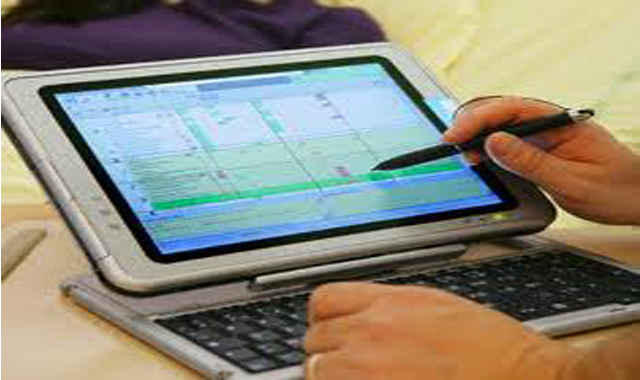
So, along came the EHR and with it a means to make every letter, number, and note legible.  Problem solved?  No says Martich. Somewhere along the way, as doctors and their colleagues struggled to do more with less, the capabilities of the EHR began to change the meaning of the medical note. Because the EHR made it so easy to add things on, people and various departments began adding things on, details that made someone’s job easier but not necessarily that of the doctor.

“Everybody wants everything in a medical note and what you end up with is a lot of extra stuff that doesn’t really do all that much – stuff for billing, research, risk management, compliance, finance . . .” The result is that notes become more of “a summative blog where quantity overwhelms quality,” and ponderous and repetitive information replaced the short, crisp updates of significant changes in a patient’s status that once characterized a good physician note.

“You get records that are legible but not often read,” he continued. Of course, that diminishes the primary purpose of notes, which is care-related communication. As the problem became more widely recognized, Martich said UPMC undertook an improvement effort keyed on separating “essential” from “inflated” requirements and focusing on note and communication quality.  source


