












































With COVID-19 bearing down on America, the Federal Communications Commission has amplified its commitment to outfit providers with telehealth devices and services. The beginning of April saw the Commission propose and approve the COVID-19 Telehealth Program, an initiative that uses $200 million appropriated by Congress to bankroll telecommunications equipment for eligible healthcare organizations.
And as the pandemic grows in size with each passing day, the FCC’s latest program has been moving at a rapid clip. The commission kicked off the application process on Monday, and just yesterday announced the first six healthcare providers approved to receive funding.
At the same time, the FCC has also been pushing steadily forward with its Connected Care Pilot Program. Introduced way back in 2018, this effort seeks to bring telemedicine care to those who are low income, veterans or people living in underserved rural areas. All five commissioners voted unanimously to move forward with the program last summer, and within the last few weeks began reviewing its final rules.
This week MbiHealthNews spoke with FCC Commissioner Brendan Carr about both of these programs: When accepted applicants should expect to receive funding, and why certain provider types are being excluded – as well as how these investments will influence the healthcare and telecommunications-technology industries.
Could you start with a quick overview of what the FCC is trying to achieve with these two telehealth programs?
Sure. I think it’s best to think of these in two buckets, and actually, the two programs you talked about I would put in the same bucket. But I’ll come back to that.
The first bucket is that, for years, the FCC has supported the buildout of internet infrastructure to brick-and-mortar health facilities. We have a lot of different funding mechanisms that serve that goal. Millions and millions of dollars a year go to that, and we’re going to keep doing that.
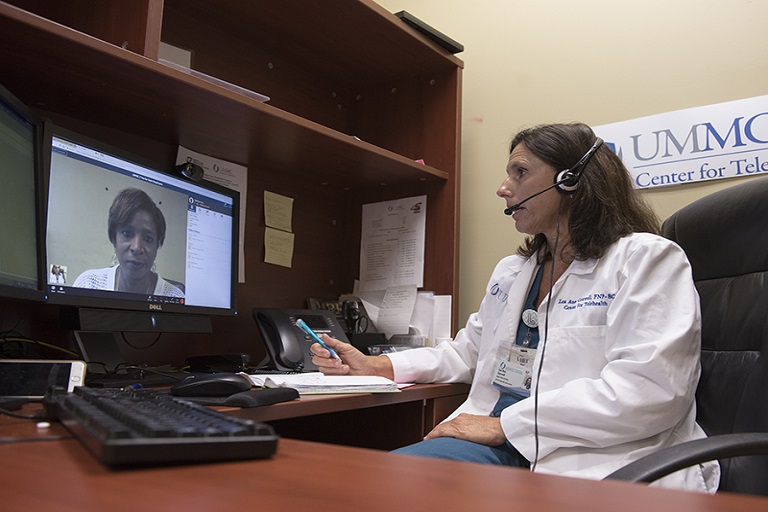
But one of the trends that I saw when I joined the commission, and this goes to the second bucket, is this trend in healthcare towards connected care, which means no longer do you have to go to a brick-and-mortar facility to receive care. You can get it right from home, it’s on your smartphone or tablet or other connected devices. So I went to our chairman, Chairman Pai, and said “Hey, we should look to support this new trend in addition to this first bucket that we’re doing.”
So that’s how we got the ball rolling a few years ago on this second bucket. And because we had done so much work in trying to stand up that second bucket, we were able to move within a matter of days when that new funding came through [in the CARES Act]. We were able to use that existing proceeding as the vehicle to get that money moving very quickly.
So that second bucket, both the $200 million and the $100 million, are serving the same purpose of how do we get care out of the hospital and to people – which is so important right now with COVID-19, because we don’t want people going to the hospital. Even the emergency COVID-19 funding isn’t just about funding for COVID-19 patients. You can have diabetes, you can have high-risk pregnancy, you can have pain management for treating opioid dependency – people you don’t want coming to your facility right now because of COVID-19. You can access this funding to keep them outside of the facility.
I see. So, the COVID-19 emergency kick-started this initiative, but the infrastructure itself can be used for a number of different conditions and use cases.
That’s right. Ultimately, we think it serves the purpose of the national response to COVID-19 by making sure that physical facilities aren’t overwhelmed, freeing up resources there to truly focus on stuff that has to be treated there right now. But the $200 million and the $100 million are very similar – although there are slight differences between the programs. For instance, the $200 million we can actually use to pay for devices the consumers might use to connect to the hospital, because it’s appropriated money, whereas the $100 million, which comes from our existing funding mechanisms, has more limitations on what you can use it for. So some slight differences, but largely they want to do the same thing, which is the shift to connected care. I always describe it to people to think of it as the shift from Blockbuster to Netflix, so you don’t have to get it delivered right to you.
Absolutely, and we see that analogy all the time in the digital health sector. Now, I saw that there’s guidance about what health organizations can do to begin applying for the $200 million program…
Yes, just [Monday] we opened up an online portal to submit applications online that’ll be processed, reviewed and granted or not on a rolling basis. [Editor’s note: So far, six healthcare providers have been approved for funding.] We’re trying to draw people’s attention to the FCC.gov website and the portal that’s on that website. And you know, we’re more than happy to work with people to determine [if] they’re eligible, if they’re not, how to go through the application. The application process runs through eligible healthcare facilities. There’s seven eligible types of healthcare facilities, and the applications have to come from them or a consortium of them. Things like skilled nursing facilities.
Do you have a rough timeline when the funds will be able to be accessed by these organizations?
I would think of these in a matter of weeks than anything else, but it’s not a firm time line, because I don’t know what the bureau is thinking. But from my perspective, we want to go now while we can make a difference. It should be days or weeks, not months.
While mostly positive, I’ve seen some mixed industry reactions to the COVID-19 program. One person I talked to said that this isn’t enough money for what a true transformation into connected health would require, and another commentator highlighted the exclusion of for-profit hospitals from that list of approved organizations. Do you have thoughts on both of those concerns?
Yes, I do. For the first one, I would say to step back and understand that this program alone is not the tip and the spear of the federal government’s response on telehealth. Obviously with healthcare and COVID-19, we’re working very closely with HHS and CMS, and there is a lot of funding that’s being provided to healthcare right now through other means. We’re talking millions in the FCC’s program, but there are billions of dollars that are going to other facilities, and my understanding is that includes telehealth.
So I would agree with someone that when you’re looking at this, it isn’t the silver bullet. It’s small, I agree, but when you think of it in the broader picture with what the government is doing and what we’re doing with other FCC programs providing millions, I think we are heading in the right direction.
The for-profit thing is interesting. I saw we had a petition filed with the FCC to reconsider our position to not allow for-profits in. The basis for the FCC’s decision on that was the seven eligible types of healthcare providers I mentioned earlier doesn’t include for-profit hospitals. Our existing telehealth programs aren’t set up to recognize and have those for-profit institutions in there. So they filed a petition and we’ll look at the arguments that are raised in there. I don’t know which way the FCC will ultimately rule, but it wasn’t so much a new decision about them. It’s more of that we have an existing list of facilities – that we’ve used for a lot of different purposes – that understand the FCC funding mechanisms, how it works. We were working from that when we set up this new program.
So it’s more about falling in line with what’s already established?
Yes and no. I mean, part of it is that there’s five of us who vote on these things, so figuring out what each of us thought when we pushed the vote button and unpacking is tough. So I don’t know if I would say if we just copied and pasted, or if people had more specific thoughts in mind about why they did or didn’t want it. So, can’t quite unpack the intent behind the commission on that, but it’s safe to say that the facilities we did put in there are the same ones that have been in similar programs before. And at least as to the non-COVID-19 portion of it, there are some legal questions about our authority extending to for-profit hospitals.
Alongside improving patient outcomes, what is the broader impact you think this type of investment will have for the industry?
The long-term vision that I have is seeing that trend in telehealth and connected care. I wanted us to do something that not only makes a difference now, but is consistent with that long-term trend. My vision ultimately is that the savings that come with telehealth will be absorbed into the healthcare system, as opposed to in the long run being funded out of the FCC. Because, in respect to the $100 million for instance, that’s money that we get through a charge on the telephone services that people pay for. So, it’s different from an appropriated fund in terms of it’s not debt-based spending.
So my vision is that the healthcare system orients better towards reimbursement issues, licensing issues, and the costs of this [are] borne by the healthcare system. That’s where the savings are going to be realized. You have chronic conditions like diabetes, heart disease – the data I see suggests that’s about 85% of the direct healthcare spending in the country, and those are the exact same conditions that are a really good fit for connected care technologies. So, people with diabetes can prick their finger and take their A1C every day from their home. It can go right on their tablet, give them instant feedback. So adherence to treatment regimens are a lot better with it, and therefore you stay out of the red zones that result in people having to go the emergency department, which is the most expensive part of healthcare.
I’m hoping that through these experiments and these pilots, the whole system is going to be reoriented and people are going to see what we’re seeing so far in limited trials: improved health outcomes and significant savings to the healthcare system. That’s where I want to go, and I think HHS, CMS – we’ve been working with all of them. The VA is very forward-leaning on this stuff, so there’s signals that we’re all heading in the right direction here.
Does this type of work complement broader technology movements pushing the capabilities of the country’s networks? For instance, 5G.
I think so. Right now with 4G it’s a very strong, very robust network, but there are limits in terms of the number of devices, for instance, that can be carried on a 4G network within a certain geographic area. And 5G is going to give you orders of magnitude more.
So what that means, among other things, is think of the internet of things, all these other healthcare applications. This upgrade to 5G is going to be the thing that enables us to connect devices where we may have run against the limits with 4G networks.
I think telehealth and healthcare generally will be a very interesting vertical when you think of 5G. That’s part of why for the $100 million we’re focusing on low-income Americans and veterans. We’re targeting them because as we shift in healthcare to connected care, we’ve got to make sure that every community, every American has a fair shot of participating in that; that it doesn’t just become a privilege of people that can afford that technology.
And that’s a component we should touch on, considering how the Connected Care Pilot is targeting rural communities that might not have the access. These types of programs seem focused on social determinants of health in their very nature.
Yeah, if you look at maps that track income levels, chronic-disease levels and internet-access levels, the three of those cluster together, not in a good way. This particular program isn’t about supporting new infrastructure builds for areas that just don’t have wireless service, but it is about affordability by targeting patients who are low income or veterans. We think we can play a role in addressing that cluster of low income, poor health conditions and lack of internet access. And obviously we have other FCC programs that are about supporting infrastructure builds themselves as part of closing that digital divide.
Brendan, is there anything regarding both of these programs, COVID-19 or telehealth we haven’t discussed?
There’s some things around the edges. We’ve added millions of dollars more to some of our programs to support that brick-and-mortar hospital facilities. We have rules so that internet providers can give free hot spots [for] connected devices to healthcare facilities where they were prohibited under our rules before. So we’re doing a lot of different steps to support telehealth in addition to stuff outside your docket, but the two telehealth programs are certainly the most newsworthy.


