



























































Events Calendar

Mon
Tue
Wed
Thu
Fri
Sat
Sun
M
T
W
T
F
S
S
1
2
6
7
9
10
11
12
13
14
18
19
20
21
23
27
28
30
12:00 AM - Hepatology 2021
31
1
2
3
4
Heart Care and Diseases 2021
2021-03-03    
All Day
Euro Heart Conference 2020 will join world-class professors, scientists, researchers, students, Perfusionists, cardiologists to discuss methodology for ailment remediation for heart diseases, Electrocardiography, Heart Failure, [...]
Gastroenterology and Digestive Disorders
2021-03-04 - 2021-03-05    
All Day
Gastroenterology Diseases is clearing a worldwide stage by drawing in 2500+ Gastroenterologists, Hepatologists, Surgeons going from Researchers, Academicians and Business experts, who are working in [...]
Environmental Toxicology and Ecological Risk Assessment
2021-03-04 - 2021-03-05    
All Day
Environmental Toxicology 2021 you can meet the world leading toxicologists, biochemists, pharmacologists, and also the industry giants who will provide you with the modern inventions [...]
Dermatology, Cosmetology and Plastic Surgery
2021-03-05 - 2021-03-06    
All Day
Market Analysis Speaking Opportunities Speaking Opportunities: We are constantly intrigued by hearing from professionals/practitioners who want to share their direct encounters and contextual investigations with [...]
World Dental Science and Oral Health Congress
2021-03-08 - 2021-03-09    
All Day
About The Webinar Conference Series LLC Ltd invites you to attend the 42nd World Dental Science and Oral Health Congress to be held in March 08-09, 2021 with the [...]
Euro Metabolomics & Systems Biology
2021-03-08 - 2021-03-09    
All Day
Euro Metabolomics 2021 will be a platform to investigate recent research and advancements that can be useful to the researchers. Metabolomics is a rapidly emerging [...]
International Summit on Industrial Engineering
2021-03-15 - 2021-03-16    
All Day
Industrial Engineering conference invites all the participants to attend International summit on Industrial Engineering during March15-16, 2021 Webinar. This has prompt keynotes, Oral talks, Poster [...]
Digital Health 2021
2021-03-15 - 2021-03-16    
All Day
The use of modern technologies and digital services is not only changing the way we communicate, they also offer us innovative ways for monitoring our [...]
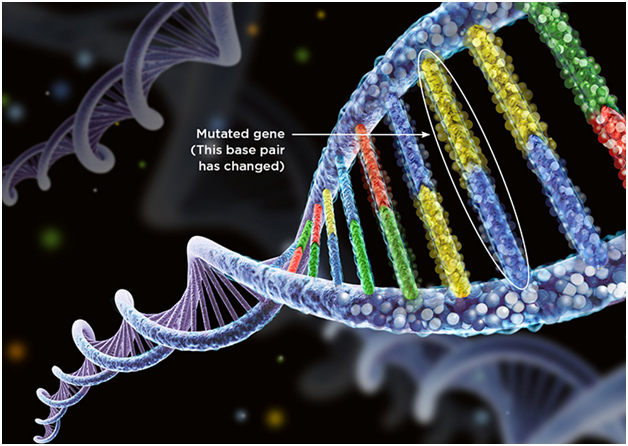
Genetics and Molecular biology 2021
2021-03-15    
All Day
Human genetics is study of the inheritance of characteristics by children from parents. Inheritance in humans does not differ in any fundamental way from that [...]
Food Science and Food Safety
2021-03-16 - 2021-03-17    
All Day
Food Safety. It also provides the premier multidisciplinary forum for researchers, professors and educators to present and discuss the most recent innovations, trends, and concerns, [...]
Traditional and Alternative Medicine
2021-03-16 - 2021-03-17    
All Day
Traditional Medicine 2021 welcomes attendees, presenters, and exhibitors from all over the world. We are glad to invite you all to attend and register for [...]
Carbon and Advanced Energy Materials
2021-03-16 - 2021-03-17    
All Day
Materials Science 2021 was an enchanted achievement. We give incredible credits to the Organizing Committee and participants of Materials Science 2021 Conference. Numerous tributes from [...]
Advancements in Tuberculosis and Lung Diseases
2021-03-17 - 2021-03-18    
All Day
Tuberculosis is a communicable disease, caused by the infectious bacterium Mycobacterium tuberculosis. It affects the lungs and other parts of the body (brain, spine). People [...]
Herbal Medicine and Acupuncture 2021
2021-03-22 - 2021-03-23    
All Day
The event offers a best platform with its well organized scientific program to the audience which includes interactive panel discussions, keynote lectures, plenary talks and [...]
Hospital Management and Health Care
2021-03-22 - 2021-03-23    
All Day
Healthcare system refers to the totality of resource that a society distributes with in organization and health facilities delivery for the aim of upholding or [...]
Hematology and Infectious Diseases
2021-03-22 - 2021-03-23    
All Day
Hematology is the discipline concerned with the production, functions, bone marrow, and diseases which are related to blood, blood proteins. The main aim of this [...]
Aquaculture & Marine Biology
2021-03-24 - 2021-03-25    
All Day
The 15th International Conference on Aquaculture & Marine Biology is delighted to welcome the participants from everywhere the planet to attend the distinguished conference scheduled [...]
Artificial Intelligence & Robotics 2021
2021-03-24 - 2021-03-25    
All Day
The Conference Series LLC Ltd organizes conferences around the world on all computer science subjects including Robotics and its related fields. Here we are happy [...]
Tissue Engineering & Regenerative Medicine
2021-03-24 - 2021-03-25    
All Day
Tissue Engineering & Regenerative Medicine mainly focuses on Stem Cell Research and Tissue Engineering. Stem cell Research includes stem cell treatment for various disease and [...]
Nursing Research and Evidence Based Practice
2021-03-25 - 2021-03-26    
12:00 am
Global Nursing Practice 2021 has been circumspectly organized with various multi and interdisciplinary tracks to accomplish the middle objective of the gathering that is to [...]
Earth & Environmental Science 2021
2021-03-26 - 2021-03-27    
All Day
Earth Science 2021 is the integration of new technologies in the field of environmental science to help Environmental Professionals harness the full potential of their [...]
Earth & Environmental Science 2021
2021-03-26 - 2021-03-27    
All Day
Earth Science 2021 is the integration of new technologies in the field of environmental science to help Environmental Professionals harness the full potential of their [...]
Nanomaterials and Nanotechnology
2021-03-26 - 2021-03-27    
All Day
Nanomaterials are the elements which have at least one spatial measurement in the size range of 1 to 100 nanometre. Nanomaterials can be produced with [...]
Smart Materials and Nanotechnology
2021-03-29 - 2021-03-30    
All Day
Smart Material 2021 clears a stage to globalize the examination by introducing an exchange amongst ventures and scholarly associations and information exchange from research to [...]
World Nanotechnology Congress 2021
2021-03-29    
All Day
Nano Technology Congress 2021 provides you with a unique opportunity to meet up with peers from both academic circle and industries level belonging to Recent [...]
Nanomedicine and Nanomaterials 2021
2021-03-29    
All Day
NanoMed 2021 conference provides the best platform of networking and connectivity with scientist, YRF (Young Research Forum) & delegates who are active in the field [...]
Hepatology 2021
2021-03-30 - 2021-03-31    
All Day
Hepatology 2021 provides a great platform by gathering eminent professors, Researchers, Students and delegates to exchange new ideas. The conference will cover a wide range [...]
Events on 2021-03-03
Events on 2021-03-05
Events on 2021-03-17
Events on 2021-03-25
Events on 2021-03-30
Hepatology 2021
30 Mar 21
Latest News

Scientists engineer way to prevent immune response to gene therapy in mice

Stanford University School of Medicine researchers have demonstrated that gene therapy can be effective without causing a dangerous side effect common to all gene therapy: an autoimmune reaction to the normal protein, which the patient’s immune system is encountering for the first time.

The researchers showed this in a mouse model that accurately recapitulates Duchenne  muscular dystrophy. One in every 5,000 boys is born with this crippling disease, which leaves patients wheelchair-bound by mid-adolescence and is typically fatal by young adulthood. It stems from a genetic defect that deprives skeletal and cardiac muscles of a working version of a protein called dystrophin.

“Gene therapy is on the cusp of becoming a mainstream approach for treating single-gene disorders,” said Lawrence Steinman, MD, professor of neurology and neurological sciences and of pediatrics at Stanford. “But there’s a catch: If you give a gene that’s a recipe for a normal protein to someone with a faulty version of the gene, whose body never made the normal protein before, that person’s immune system will mount a reaction — in some cases, a lethal one — to the normal protein, just as it would to any foreign protein. We think we’ve solved that problem.”

The findings are described in a study published online Sept. 3 in the Proceedings of the National Academy of Sciences. Steinman, who holds the George A. Zimmermann Professorship, is the study’s senior author. The lead author is senior research scientist Peggy Ho, PhD.

Going viral

Duchenne muscular dystrophy is the result of a single defective gene, making it an excellent candidate for gene therapy in which a patient’s faulty gene is replaced with the correct version. One way to do this is by co-opting viruses, which are simple entities that are adept at infecting cells and then forcing every invaded cell’s reproductive machinery to copy their own viral genes. For gene therapy, viruses are modified by ridding them of unwanted genes, retaining the ones necessary for infectivity and adding the therapeutic gene to be delivered to a patient.

The gene encoding dystrophin is far too big for a gene-hauling virus to take onboard.  Fortunately, a mere fraction of the entire gene is enough to generate a reasonably functional version of dystrophin, called microdystrophin. The abridged gene fits snugly into a viral delivery vehicle designed some time ago by Jeffrey Chamberlain, PhD, a co-author of the study and a professor of neurology, medicine and biochemistry at the University of Washington.

Inducing tolerance

But there’s still that sticky autoimmunity problem. To get around it, Steinman and his colleagues spliced the gene for microdystrophin into a different kind of delivery vehicle called a plasmid.

Plasmids are tiny rings of DNA that bacteria often trade back and forth to disseminate important traits, such as drug resistance, among one another. The particular bacterial plasmid the investigators co-opted ordinarily contains several short DNA sequences, or motifs, that the immune system recognizes as suspicious and to which it mounts a strong response.

But some years ago, Steinman and a few other Stanford scientists — including Ho and study co-author William Robinson, MD, PhD, professor of immunology and rheumatology — figured out how to replace those troublesome DNA motifs with another set of DNA sequences that, far from exacerbating the immune response, subdue it. This immune-tolerance-inducing plasmid has been deployed in clinical trials for two different autoimmune conditions, with promising results.

For the new study, the researchers used a one-two punch to deliver gene therapy and protection against autoimmunity to the mice: viral delivery of the microdystrophin gene, followed by the plasmid-assisted induction of tolerance to microdystrophin.

ifteen 6-week-old mice — an age roughly equivalent to that of a young child —bioengineered to lack functioning dystrophin were injected with the virus carrying microdystrophin. Starting a week later, they were divided into three groups and given weekly injections for 32 weeks of either a dummy solution; the dummy solution plus the tolerance-inducing plasmid absent the microdystrophin gene; or the plasmid with the microdystrophin gene.

At the end of the 32-week period, by which time the mice were the human equivalent of young adults, the ones that got the microdystrophin-loaded plasmid had significantly greater muscular strength and substantially more dystrophin-producing muscle fibers. They had lower levels of key bloodborne signaling chemicals that carry inflammatory messages between immune cells, and they had weakened antibody responses to normally immunogenic portions of microdystrophin.

“It’s still early days here — this was, after all, a mouse experiment — but it seems we can induce tolerance to a wide assortment of formerly immunogenic proteins by inserting the gene for the protein of interest into the plasmid,” Steinman said. “We’ve seen this with the insulin precursor, in people who have Type 1 diabetes, and with myelin, in people who have multiple sclerosis. It now looks as if the concept may hold for gene therapy, too.”

Steinman is a member of Stanford Bio-X, the Stanford Child Health Research Institute and the Stanford Neurosciences Institute.

Steinman is also chair of the board of Tolerion Inc., a biotechnology company that shares rights to the tolerance-inducing plasmid with Stanford University’s Office of Technology Licensing. He said he is seeking partners to move the tolerance-inducing plasmid into clinical trials as an adjunct to gene therapy.

Other Stanford co-authors of the study are graduate students Lauren Lahey and Klas Magnusson; senior research scientist Antonio Filareto, PhD; life science research professional Peggy Kraft; and Helen Blau, PhD, professor of microbiology and immunology.

Researchers at the University of Washington, the University of Pennsylvania and the University of Mainz, in Germany, also contributed to the work.

The study was funded by the National Institutes of Health (grant HL122332) and the Muscular Dystrophy Association.

Stanford’s Department of Neurology and Neurological Sciences also supported the work

Source

