













































Events Calendar

Mon
Tue
Wed
Thu
Fri
Sat
Sun
M
T
W
T
F
S
S
1
2
6
7
9
10
11
12
13
14
18
19
20
21
23
27
28
30
12:00 AM - Hepatology 2021
31
1
2
3
4
Heart Care and Diseases 2021
2021-03-03    
All Day
Euro Heart Conference 2020 will join world-class professors, scientists, researchers, students, Perfusionists, cardiologists to discuss methodology for ailment remediation for heart diseases, Electrocardiography, Heart Failure, [...]
Gastroenterology and Digestive Disorders
2021-03-04 - 2021-03-05    
All Day
Gastroenterology Diseases is clearing a worldwide stage by drawing in 2500+ Gastroenterologists, Hepatologists, Surgeons going from Researchers, Academicians and Business experts, who are working in [...]
Environmental Toxicology and Ecological Risk Assessment
2021-03-04 - 2021-03-05    
All Day
Environmental Toxicology 2021 you can meet the world leading toxicologists, biochemists, pharmacologists, and also the industry giants who will provide you with the modern inventions [...]
Dermatology, Cosmetology and Plastic Surgery
2021-03-05 - 2021-03-06    
All Day
Market Analysis Speaking Opportunities Speaking Opportunities: We are constantly intrigued by hearing from professionals/practitioners who want to share their direct encounters and contextual investigations with [...]
World Dental Science and Oral Health Congress
2021-03-08 - 2021-03-09    
All Day
About The Webinar Conference Series LLC Ltd invites you to attend the 42nd World Dental Science and Oral Health Congress to be held in March 08-09, 2021 with the [...]
Euro Metabolomics & Systems Biology
2021-03-08 - 2021-03-09    
All Day
Euro Metabolomics 2021 will be a platform to investigate recent research and advancements that can be useful to the researchers. Metabolomics is a rapidly emerging [...]
International Summit on Industrial Engineering
2021-03-15 - 2021-03-16    
All Day
Industrial Engineering conference invites all the participants to attend International summit on Industrial Engineering during March15-16, 2021 Webinar. This has prompt keynotes, Oral talks, Poster [...]
Digital Health 2021
2021-03-15 - 2021-03-16    
All Day
The use of modern technologies and digital services is not only changing the way we communicate, they also offer us innovative ways for monitoring our [...]
Genetics and Molecular biology 2021
2021-03-15    
All Day
Human genetics is study of the inheritance of characteristics by children from parents. Inheritance in humans does not differ in any fundamental way from that [...]
Food Science and Food Safety
2021-03-16 - 2021-03-17    
All Day
Food Safety. It also provides the premier multidisciplinary forum for researchers, professors and educators to present and discuss the most recent innovations, trends, and concerns, [...]
Traditional and Alternative Medicine
2021-03-16 - 2021-03-17    
All Day
Traditional Medicine 2021 welcomes attendees, presenters, and exhibitors from all over the world. We are glad to invite you all to attend and register for [...]
Carbon and Advanced Energy Materials
2021-03-16 - 2021-03-17    
All Day
Materials Science 2021 was an enchanted achievement. We give incredible credits to the Organizing Committee and participants of Materials Science 2021 Conference. Numerous tributes from [...]
Advancements in Tuberculosis and Lung Diseases
2021-03-17 - 2021-03-18    
All Day
Tuberculosis is a communicable disease, caused by the infectious bacterium Mycobacterium tuberculosis. It affects the lungs and other parts of the body (brain, spine). People [...]
Herbal Medicine and Acupuncture 2021
2021-03-22 - 2021-03-23    
All Day
The event offers a best platform with its well organized scientific program to the audience which includes interactive panel discussions, keynote lectures, plenary talks and [...]
Hospital Management and Health Care
2021-03-22 - 2021-03-23    
All Day
Healthcare system refers to the totality of resource that a society distributes with in organization and health facilities delivery for the aim of upholding or [...]
Hematology and Infectious Diseases
2021-03-22 - 2021-03-23    
All Day
Hematology is the discipline concerned with the production, functions, bone marrow, and diseases which are related to blood, blood proteins. The main aim of this [...]
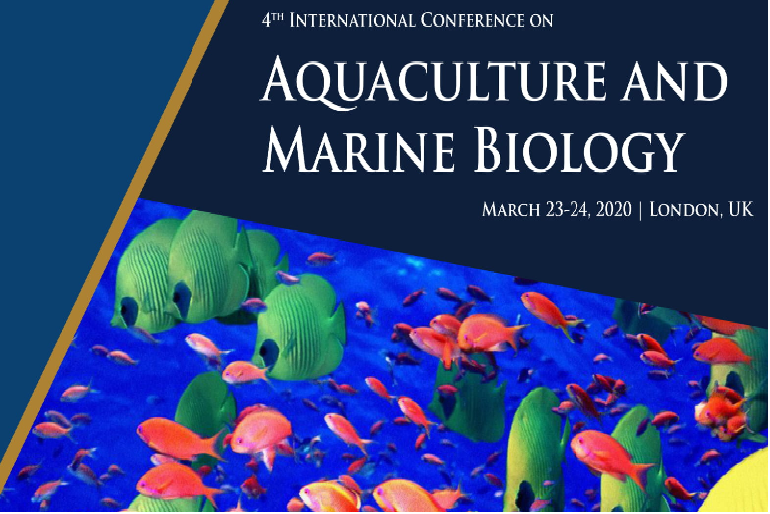
Aquaculture & Marine Biology
2021-03-24 - 2021-03-25    
All Day
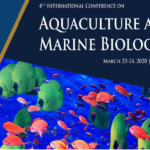
The 15th International Conference on Aquaculture & Marine Biology is delighted to welcome the participants from everywhere the planet to attend the distinguished conference scheduled [...]
Artificial Intelligence & Robotics 2021
2021-03-24 - 2021-03-25    
All Day
The Conference Series LLC Ltd organizes conferences around the world on all computer science subjects including Robotics and its related fields. Here we are happy [...]
Tissue Engineering & Regenerative Medicine
2021-03-24 - 2021-03-25    
All Day
Tissue Engineering & Regenerative Medicine mainly focuses on Stem Cell Research and Tissue Engineering. Stem cell Research includes stem cell treatment for various disease and [...]
Nursing Research and Evidence Based Practice
2021-03-25 - 2021-03-26    
12:00 am
Global Nursing Practice 2021 has been circumspectly organized with various multi and interdisciplinary tracks to accomplish the middle objective of the gathering that is to [...]
Earth & Environmental Science 2021
2021-03-26 - 2021-03-27    
All Day
Earth Science 2021 is the integration of new technologies in the field of environmental science to help Environmental Professionals harness the full potential of their [...]
Earth & Environmental Science 2021
2021-03-26 - 2021-03-27    
All Day
Earth Science 2021 is the integration of new technologies in the field of environmental science to help Environmental Professionals harness the full potential of their [...]
Nanomaterials and Nanotechnology
2021-03-26 - 2021-03-27    
All Day
Nanomaterials are the elements which have at least one spatial measurement in the size range of 1 to 100 nanometre. Nanomaterials can be produced with [...]
Smart Materials and Nanotechnology
2021-03-29 - 2021-03-30    
All Day
Smart Material 2021 clears a stage to globalize the examination by introducing an exchange amongst ventures and scholarly associations and information exchange from research to [...]
World Nanotechnology Congress 2021
2021-03-29    
All Day
Nano Technology Congress 2021 provides you with a unique opportunity to meet up with peers from both academic circle and industries level belonging to Recent [...]
Nanomedicine and Nanomaterials 2021
2021-03-29    
All Day
NanoMed 2021 conference provides the best platform of networking and connectivity with scientist, YRF (Young Research Forum) & delegates who are active in the field [...]
Hepatology 2021
2021-03-30 - 2021-03-31    
All Day
Hepatology 2021 provides a great platform by gathering eminent professors, Researchers, Students and delegates to exchange new ideas. The conference will cover a wide range [...]
Events on 2021-03-03
Events on 2021-03-05
Events on 2021-03-17
Events on 2021-03-25
Events on 2021-03-30
Hepatology 2021
30 Mar 21
Latest News

Sea invertebrate sheds light on evolution of human blood, immune systems

Sea invertebrate sheds light

A lowly sea creature may provide a way to understand our own blood-forming system, improve our immune function and find new immune-associated tools for biological discovery, Stanford researchers say.

Botryllus schlosseri, a marine invertebrate that lives in underwater colonies resembling clusters of tiny petals clinging to rocks, has a blood-forming system with uncanny similarities to that of humans, according to scientists at Stanford University.

In a study published online Dec. 5 in Nature, the researchers report that these lowly sea creatures are scientific “treasure boxes” that may provide a way to understand our own blood-forming system, improve our immune function and find new immune-associated tools for biological discovery.

“The mammalian and Botryllus blood-forming systems also share hundreds of homologous genes, even though the two species are separated by over 500 million years of evolution,” said former postdoctoral scholar Benyamin Rosental, PhD.

Rosental shares lead authorship of the study with graduate student Mark Kowarsky. The senior authors are Irving Weissman, MD, the Virginia and D.K. Ludwig Professor for Clinical Innovation in Cancer Research and professor of pathology and of developmental biology; Stephen Quake, PhD, the Lee Otterson Professor in the School of Engineering and professor of bioengineering and of applied physics; and senior research scientist Ayelet Voskoboynik, PhD.

The researchers isolated the Botryllus stem cells that are the foundation of its blood and immune system, as well as the progenitor cells they make on their way to becoming adult blood and immune cells. “Out of all the invertebrates, the Botryllus blood stem cells and progenitors are the most similar to vertebrate blood cells, so it is possible, if not likely, that they are the ‘missing link’ between vertebrates and invertebrates,” said Weissman, who also directs the Stanford Institute for Stem Cell Biology and Regenerative Medicine and the Ludwig Cancer Center at Stanford.

Odd characteristics

Botryllus is an organism with many odd characteristics. It lives part of its life as a free-swimming chordate “tadpole” — an animal without vertebrae but with a spinal bundle called a notochord. Then it attaches itself to a rock, undergoes metamorphosis to lose its notochord, tail, body muscles and one of its two brains, and settles down to live in colonies with other Botryllus organisms on the subtidal surface.

Under the microscope, a Botryllus colony looks like a bouquet of flowers, although in reality each “petal” is a separate organism with its own heart, gills, digestive system, brain and blood cells. The separate Botryllus organisms in the colony share a common blood supply, and even exchange cells. This blood sharing allows stem cells for sperm and eggs and stem cells for body tissues to be shared throughout the growing colony.

The researchers showed that there are close parallels between the blood systems in Botryllus and in mammals. They found that Botryllus has a sort of incubator of specialized cells, called a niche, that holds and supports blood stem cells and is a lot like the blood stem cell niche in mammalian bone marrow. They also found that Botryllus blood stem cells will find their own way from blood vessels to the niche, exactly as they do in mammals. And they found 327 genes involved in blood cell formation in Botryllus that are similar to genes involved in blood formation in mammals.

Previously, researchers in the Weissman lab showed that a single variant of a gene called BHF regulated whether separate Botryllus organisms would send out blood vessels from their own bodies and merge with adjacent individuals, or undergo an immune rejection, preventing blood cell exchanges.The new study identifies how BHF regulates whether organisms fuse together in the colony: If the protein produced by the gene is recognized as compatible by the other colony, it prevents the activation of a rejection process that is similar to the way that the human immune system’s natural killer cells attacks tissues that are not “self.” 

An excellent model

The discovery of such strong parallels between the two systems offers researchers an excellent model for studying many biological phenomena in mammals, the researchers said. “Blood stem cells in mammals are hard to find and, when found, it’s very hard to follow what is going on in the blood stem cell niche,” Voskoboynik said. “Botryllus is a translucent organism, so we can easily spot the niche and visually follow the migration of each type of cell from one part of their body to the other.”

It’s also easy to observe how the cells in individual organisms interact when one mounts an immune attack against the other, or the two individuals fuse blood vessels. This could provide scientists with a better understanding of why an organism accepts or rejects foreign cells, knowledge that could give insights into organ transplant acceptance and rejection, Voskoboynik said.

“With its primitive but effective immune system, Botryllus may also give us insights into how we can boost our own immune responses to pathogens and cancer,” Voskoboynik said. “But in addition to any practical benefits this research may produce, we are delighted to explore this important guidepost on the path to understanding the evolution of vertebrates, and of their blood-forming and immune systems. Isn’t that what curiosity-driven science is supposed to do?”

Other Stanford authors are Garry Nolan, PhD, professor of microbiology and immunology; Aaron Newman, PhD, assistant professor of biomedical data science; Rahul Sinha, PhD, instructor at the Institute for Stem Cell Biology and Regenerative Medicine; former postdoctoral scholars Daniel Corey, MD, PhD, Norma Neff, PhD, and Jun Seita, PhD; former graduate students Jonathan Tsai, MD, PhD, Nathaniel Clarke, PhD, and Shih-Yu Chen, PhD; research funding associate Tal Raveh, PhD; research associates Karla Palmeri and Katherine Ishizu; and former research associates Jennifer Okamoto and Gary Mantalas. 

The research was supported by the National Institutes of Health (grants R56AI089968, R01AG037968, RO1GM100315, 5T32AI07290 and T325T32AI07290), the Virginia and D.K. Ludwig Fund for Cancer Research, the Siebel Stem Cell Institute, the Stinehart Reed Foundation and the Human Frontier Science Program.

Stanford’s departments of Pathology, of Developmental Biology, of Bioengineering and of Applied Physics also supported the work.


