



























































mrosbach@yakimaherald.com
Technology has enabled major breakthroughs in medicine in recent years. Scientists can grow body parts in petri dishes, surgeons can operate via robot, and an individual genome can be mapped for just a few thousand dollars.
But with electronic medical records, a crucial piece of health care reform going forward, doctors are still waiting for the technology to deliver on its promises. Meanwhile, they face penalties if they do not adequately implement electronic systems.
Electronic medical records, called EMR for short, were hyped as a solution to inefficiencies in processing patients through medical situations as well as safety concerns. No more worrying about interpreting doctors’ chicken-scratch handwriting with electronic prescriptions. Doctors would be able to predict which patients were at risk for conditions like diabetes by analyzing medical history amid vast new stores of data. Patients and their providers would have access to the appropriate records in an emergency room, a doctor’s office or a hospital.
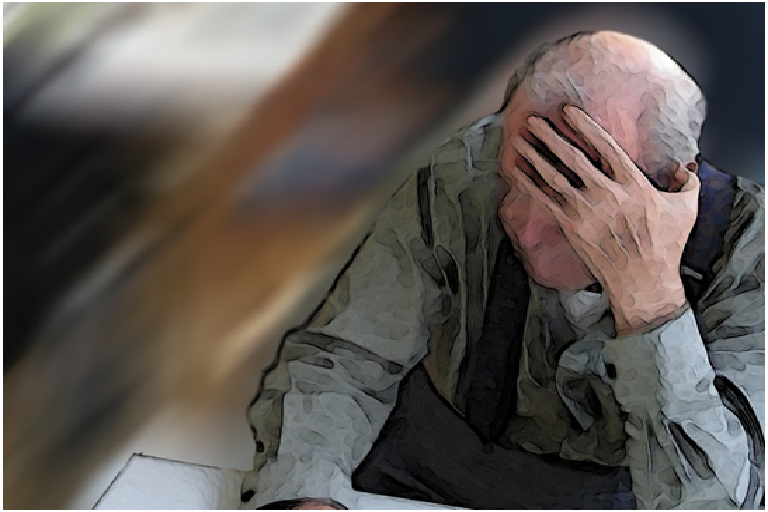
Instead, at least in Yakima, many doctors are frustrated by interfaces that don’t allow them to input or receive information the way they want, which slows them down.
“Time is very valuable, and right now, when you talk to patients who are being seen by providers, they feel that … the provider’s spending more than half of the visit with the computer, not the patient,” said Dr. Michael Schaffrinna, chief medical officer at Community Health of Central Washington. “And that’s not right. It’s not fair to our patients.”
Part of the problem is the transition. Most doctors today are still used to paper charts, or at least dictating notes to be transcribed later. Many are poor typists. They’re used to writing patient notes in sentences, not scrolling through endless lists to click boxes on a screen for each complaint and symptom.
“It reads like a translated Russian novel,” Schaffrinna said of the stilted, computer-generated notes. “It doesn’t flow. And that means it takes a lot longer for people to find the information they’re looking for to care for the patient.”
Schaffrinna has been involved with electronic medical records in some form for the past 24 years with different organizations.
The real push toward electronic medical records came in 2009 with the federal HITECH Act, which includes incentives for providers to employ EMR systems that meet certain “meaningful use” requirements. In other words, it’s not enough to simply install an EMR system; it has to improve results for patients and collect relevant data.
“There is both a carrot and a stick incentive structure,” says Ian Corbridge, the new policy director for clinical issues at the Washington State Hospital Association. He comes to the organization after working on quality metrics and meaningful use in the Health Resources and Services Administration, part of the federal Department of Health and Human Services.
The carrot side, Corbridge said, is federal financial support to providers who implement EMR. But that support is by no means sufficient to cover the exorbitant cost of implementation, nor was it meant to be. For a small organization, Schaffrinna says, the patient portal alone costs $100,000; the cost of the entire EMR, including hardware and software, can be in the millions or tens of millions depending on the size of the organization.
Starting in January, however, the carrot becomes more of a stick because financial penalties kick in for providers who have not met specific “meaningful use” benchmarks, Corbridge said. The penalty is a 1 percent reduction in Medicare reimbursement rates each year.
Meaningful use requirements — think improved patient results and data collection — are set in stages, so once providers are up to snuff on certain measures, they are then required to address the next tier. Stage 1 includes providers ordering medications electronically, logging certain patient information such as allergies and vital signs electronically, and using EMR to check for drug interactions, among many others.
Stage 2 includes many of the same measures, then adds more: generating lists of patients with specific conditions to compare for quality improvement; using the EMR to identify patients who need reminders for follow-up treatment; and communicating with patients electronically about health issues, to name a few.
At Yakima Valley Memorial Hospital, physicians are meeting “pretty much all” of the 22 Stage 2 benchmarks set by the Center for Medicare and Medicaid Services, said Jeff Yamada, vice president and chief information officer. The list includes using EMR to order medications and lab studies, patient access to their medical record prior to discharge and the availability of images to physicians, among many others.
“Currently, we look very good to be able to attest for meaningful use Stage 2, which we’ll do Oct. 1,” Yamada said.
If Memorial doesn’t make it, he said, the hospital could lose the financial incentive payments, and after that, face penalties.
The incentive payments and the financial penalties are a big deal, providers say, because the cost of EMR is so high. Some smaller hospitals and providers around the country are affiliating just to share in the cost of implementation.
Schaffrinna sees the financial penalty as a double-whammy, considering how problematic Community Health’s EMR system has been so far.
Experts acknowledge that doctors see a significant drop in productivity during implementation of an EMR system and for the next six or eight months, at least, as they become accustomed to the digital format.
“They say you’ll recover. Well, not really,” Schaffrinna said. “You have to hire new people to do the work, change the workflow so the system can work for you.”
The unfortunate reality, he said, is that “these systems force people to bend to the system rather than having the system bend to the workflow or the people,” in part because the EMR systems available today are not designed by physicians currently working with patients.
That hurts the bottom line, both because of lost patient time as providers struggle to complete the electronic records quickly, and because organizations often have to hire extra information technology staff members to keep the system running.
Ease of EMR implementation depends a lot on the system, too, and almost every organization in the Yakima Valley is on a different system.
That wasn’t always the case. Yakima was far ahead of the curve when local physician Dr. Victor Sharpe and technology developer Greg Jewell created ChartConnect in 2000. Many providers used the system, so everyone could share patient information. But with the requirements of the HITECH Act, providers found that ChartConnect did not suit their evolving needs and chose new systems more specifically tailored to their practice.
“It was kind of like the Tower of Babel — everyone went to different systems,” Schaffrinna said. “So now we’re trying to achieve what we had in the past.”
One technology still promised for the future: “health information exchanges,” not to be confused with the state insurance exchanges. These new electronic exchanges will allow different systems to talk to each other, and with that hopefully comes sharing of patient information when medically necessary, eliminating redundant procedures (and forms for patients) and lowering the risk that crucial data slips through the cracks between multiple providers.
At Yakima Regional Medical and Cardiac Center, hospitalist program director Dr. Mark Silverstein says the system implemented under previous owner Health Management Associates works well. (HMA was bought earlier this year by Community Health Systems.) But he doesn’t bring a computer into the exam room; he enters notes at computer stations after he talks with patients. Doing the data entry with the patient present would detract from the personal interaction, he says. And medical staff still take some paper notes, though that will eventually be phased out.
As a hospitalist responsible for multiple patients each day, Silverstein said, paper records were more cumbersome and time-consuming. And riskier:
“If I’m going to order something new for a patient, when I input it, the warning prompts come up — oh, there’s an interaction, an allergy — it all works well to keep me from doing harm.”
Dr. Carl Olden, a practitioner at Memorial’s Pacific Crest Family Medicine, sees a lot of good in EMR, too. The efficiencies inherent in the technology — reviewing lab work in real time, prescriptions sent to the pharmacy automatically — can enhance patient relationships and improve care, he said — if they work as intended.
“But it takes more work to do that,” Olden said.
“People laugh at you when you type with two fingers. But if you don’t want to change, you won’t, and any change is going to be painful. If you’re willing to embrace change, you figure out how to make the system work.”
• Molly Rosbach can be reached at 509-577-7728 or mrosbach@yakimaherald.com.


