
























































Understanding when and where proteins bind to DNA may be the ticket to identifying cancer at the cellular level, according to researchers at Stanford.
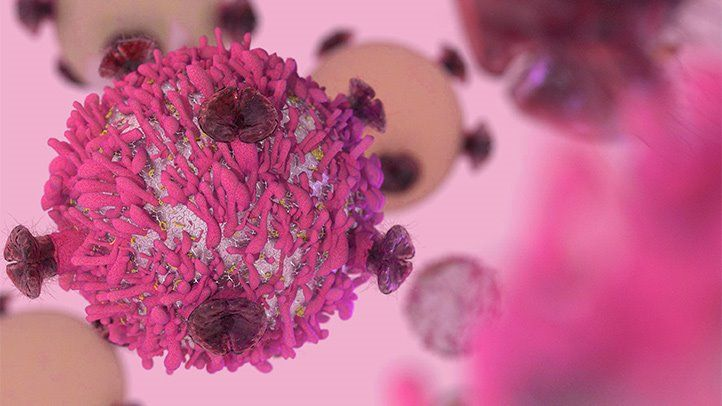
Researchers at the Stanford University School of Medicine and their collaborators at other institutions have identified a link between how proteins bind to our DNA and how cancer develops. This finding may allow researchers to predict cancer pathways and long-term patient outcomes.
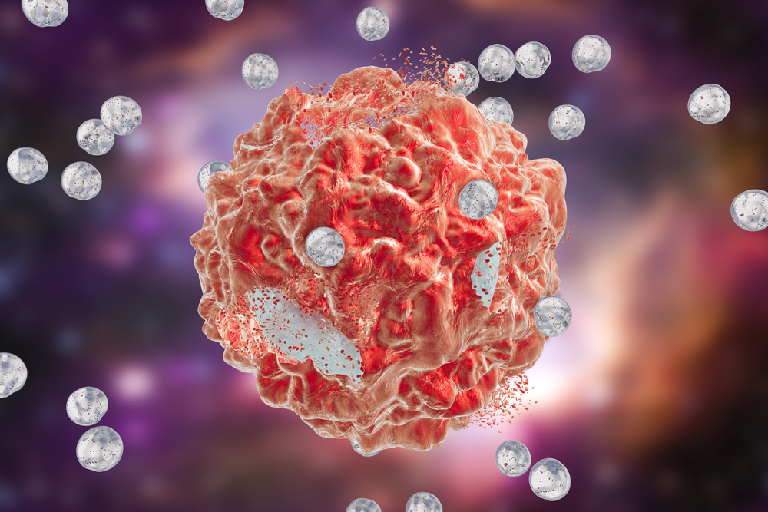
The research focuses on chromatin, the DNA-protein complex where all genes reside. Specifically, it evaluates chromatin’s relationship to transcription factors — proteins that play a crucial role in managing which genes are activated within cells. Certain genes are turned on or off based on how transcription factors bind to specific parts of the chromatin. The study found that these binding patterns and the resulting gene activation act like a key to different cancer types, allowing the researchers to understand the biology of cancer at its most basic level.
A paper detailing the research was published Oct. 26 in Science. The senior authors are Howard Chang, MD, PhD, professor of dermatology and of genetics, and William Greenleaf, PhD, associate professor of genetics. Postdoctoral scholar Ryan Corces, PhD, and graduate student Jeffrey Granja share lead authorship.
Cancer causes a massive burden on society and is among the leading causes of death worldwide. According to the National Cancer Institute, there will be more than 1.7 million new cancer cases by the end of 2018 in the United States. Our total health care expenditures for cancer care in 2014 alone was $87.8 billion — a number that continues to increase as the years go by.
However, diseases that once seemed intractable now have functional treatments, said Chang, who is also the Virginia and D.K. Ludwig Professor of Cancer Genomics. “So, with continued work, cancer is something we can actually make sense of,” he added.
A disease of genes gone awry
Corces said that cancer is “a disease of genes gone awry.” But in order to understand where these harmful genes come from, the researchers had to look inside the nucleus to the cell’s transcription process.
Transcription occurs when the cell takes information encoded in a gene and rewrites it in the form of messenger RNA. The DNA within a cell’s nucleus is tightly wound together with certain proteins into a threadlike structure known as chromatin, and that chromatin is further coiled to form a larger structure called a chromosome. Because of this coiling, only certain areas of the chromatin sequence are accessible to the cell’s transcription machinery. When a transcription factor finds an available section of chromatin and binds to it, that region of the DNA sequence unzips, allowing transcription to occur. However, in the case of cancer, the transcription process malfunctions, resulting in a change in gene activation.
These switches that determine gene activity were our missing component.
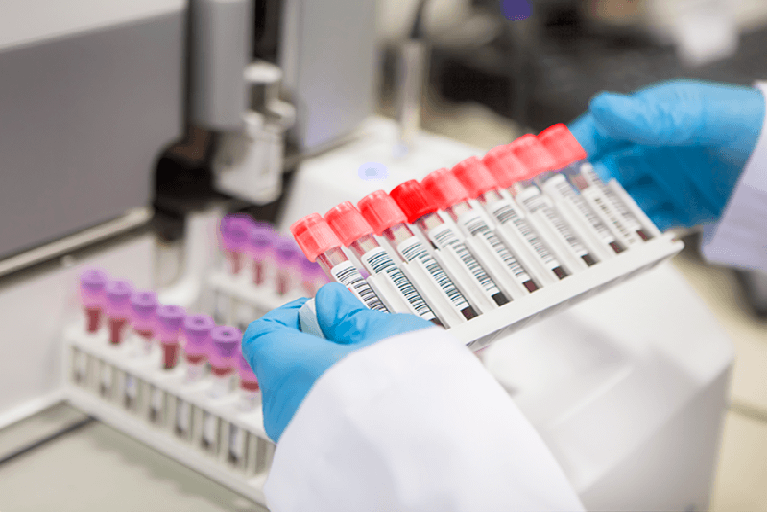
To understand exactly what goes wrong during this critical stage, the researchers used 410 tumor samples, representing 23 different cancer types, from The Cancer Genome Atlas and a newly developed technique called assay for transposase-accessible chromatin using sequencing, or ATAC-seq. As Chang explained, ATAC-seq is like spray-painting your DNA but only the accessible chromatin gets painted, giving researchers a fast and easy way to identify key protein-binding areas.
One finding showed that mutations can occur within the chromatin sequence, thereby creating a new and accessible site where a transcription factor can bind. Once the protein attaches to the site, a new gene is expressed, causing significant biological changes.
An example of this occurred with bladder cancer tissue that the researchers examined. When the team performed ATAC-seq on the tissue, they noticed that a chromatin mutation created a new protein-binding site that was associated with a strong increase in the activity of a neighboring genethat regulates cell size, motility and shape — all of which are classic factors in cancer growth. Even more interesting was that this particular mutation was not present in the other cancer tissues analyzed in the study, suggesting that different cancer types may arise from different chromatin mutations.
“These switches that determine gene activity were our missing component,” Chang said. “We can now find how these switches are changing cancer, including mutations that make the switch get stuck in the on position.”
The tip of the iceberg
The vast amount of genetic research is focused on the 2 percent of our DNA that is used to create proteins. In the current study, Chang wanted to explore the other 98 percent. Called the “noncoding” section, this part of our DNA is used to make crucial regulatory components that control gene behavior and activation. It also includes information that is pertinent to cancer.
Through this work, Chang hopes to open the door to understanding the breadth of the human genome, and of cancer itself. Moving forward, the team expects far more research aimed at discovering and understanding the effects of these noncoding sequences.
Although the team’s findings have yet to be applied in a clinical setting, the researchers believe their work will be useful in the development of better cancer prognoses, more information on patient susceptibility to cancer and new treatments that are more localized and effective.
Beyond its potential clinical impact, Corces said he believes the research provides valuable knowledge about cancer gene regulation.“Other people are undoubtedly going to use this chromatin accessibility data to further understand how networks of genes effect cancer,” he said.
Other Stanford co-authors of the paper are postdoctoral scholar Seung Woo Cho, PhD; graduate student Maxwell Mumbach; research associate Shadi Shams; technician Bryan Louie; research scientists Jose Seoane, PhD, and Ansuman Satpathy, PhD; and assistant professor Christina Curtis, PhD.
Researchers from several other institutions were co-authors of the work and are listed in the paper.
Chang is a Howard Hughes Medical Institute investigator, and Greenleaf is a Chan-Zuckerberg Biohub investigator. They are both members of Stanford Bio-X, the Stanford Cancer Institute, the Stanford Neurosciences Instituteand the Stanford Child Health Research Institute.
The research was supported by the National Institutes of Health (grants R35Ca209919, P50HG007735, K99AG059918, 1U24CA210974, 1U24CA210949, 1U24CA210978, 1U24CA210952, 1U24CA210989, 1U24CA210990, 1U24CA210950, 1U24CA210969 and 1U24CA210988) and the Parker Institute for Cancer Immunotherapy.
Stanford’s departments of Genetics and of Dermatology also supported this work.


