




















































Events Calendar

Mon
Tue
Wed
Thu
Fri
Sat
Sun
M
T
W
T
F
S
S
1
2
6
7
9
10
11
12
13
14
18
19
20
21
23
27
28
30
12:00 AM - Hepatology 2021
31
1
2
3
4
Heart Care and Diseases 2021
2021-03-03    
All Day
Euro Heart Conference 2020 will join world-class professors, scientists, researchers, students, Perfusionists, cardiologists to discuss methodology for ailment remediation for heart diseases, Electrocardiography, Heart Failure, [...]
Gastroenterology and Digestive Disorders
2021-03-04 - 2021-03-05    
All Day
Gastroenterology Diseases is clearing a worldwide stage by drawing in 2500+ Gastroenterologists, Hepatologists, Surgeons going from Researchers, Academicians and Business experts, who are working in [...]
Environmental Toxicology and Ecological Risk Assessment
2021-03-04 - 2021-03-05    
All Day
Environmental Toxicology 2021 you can meet the world leading toxicologists, biochemists, pharmacologists, and also the industry giants who will provide you with the modern inventions [...]
Dermatology, Cosmetology and Plastic Surgery
2021-03-05 - 2021-03-06    
All Day
Market Analysis Speaking Opportunities Speaking Opportunities: We are constantly intrigued by hearing from professionals/practitioners who want to share their direct encounters and contextual investigations with [...]
World Dental Science and Oral Health Congress
2021-03-08 - 2021-03-09    
All Day
About The Webinar Conference Series LLC Ltd invites you to attend the 42nd World Dental Science and Oral Health Congress to be held in March 08-09, 2021 with the [...]
Euro Metabolomics & Systems Biology
2021-03-08 - 2021-03-09    
All Day
Euro Metabolomics 2021 will be a platform to investigate recent research and advancements that can be useful to the researchers. Metabolomics is a rapidly emerging [...]
International Summit on Industrial Engineering
2021-03-15 - 2021-03-16    
All Day
Industrial Engineering conference invites all the participants to attend International summit on Industrial Engineering during March15-16, 2021 Webinar. This has prompt keynotes, Oral talks, Poster [...]
Digital Health 2021
2021-03-15 - 2021-03-16    
All Day
The use of modern technologies and digital services is not only changing the way we communicate, they also offer us innovative ways for monitoring our [...]
Genetics and Molecular biology 2021
2021-03-15    
All Day
Human genetics is study of the inheritance of characteristics by children from parents. Inheritance in humans does not differ in any fundamental way from that [...]
Food Science and Food Safety
2021-03-16 - 2021-03-17    
All Day
Food Safety. It also provides the premier multidisciplinary forum for researchers, professors and educators to present and discuss the most recent innovations, trends, and concerns, [...]
Traditional and Alternative Medicine
2021-03-16 - 2021-03-17    
All Day
Traditional Medicine 2021 welcomes attendees, presenters, and exhibitors from all over the world. We are glad to invite you all to attend and register for [...]
Carbon and Advanced Energy Materials
2021-03-16 - 2021-03-17    
All Day
Materials Science 2021 was an enchanted achievement. We give incredible credits to the Organizing Committee and participants of Materials Science 2021 Conference. Numerous tributes from [...]
Advancements in Tuberculosis and Lung Diseases
2021-03-17 - 2021-03-18    
All Day
Tuberculosis is a communicable disease, caused by the infectious bacterium Mycobacterium tuberculosis. It affects the lungs and other parts of the body (brain, spine). People [...]
Herbal Medicine and Acupuncture 2021
2021-03-22 - 2021-03-23    
All Day
The event offers a best platform with its well organized scientific program to the audience which includes interactive panel discussions, keynote lectures, plenary talks and [...]
Hospital Management and Health Care
2021-03-22 - 2021-03-23    
All Day
Healthcare system refers to the totality of resource that a society distributes with in organization and health facilities delivery for the aim of upholding or [...]
Hematology and Infectious Diseases
2021-03-22 - 2021-03-23    
All Day
Hematology is the discipline concerned with the production, functions, bone marrow, and diseases which are related to blood, blood proteins. The main aim of this [...]
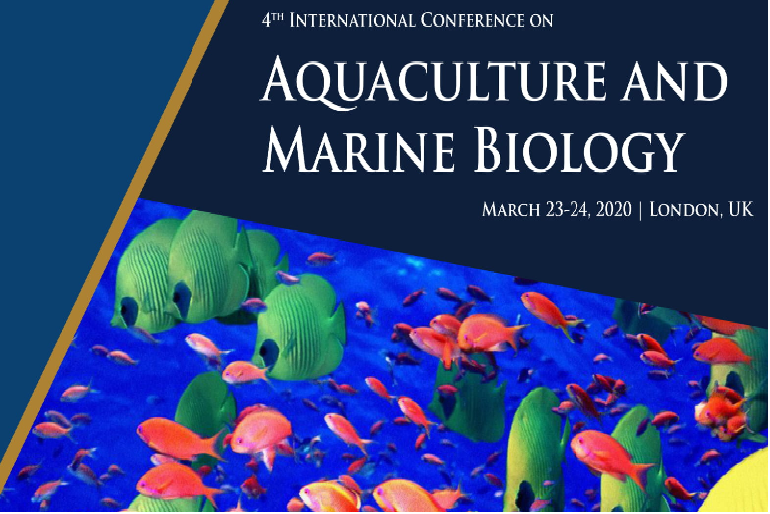
Aquaculture & Marine Biology
2021-03-24 - 2021-03-25    
All Day
The 15th International Conference on Aquaculture & Marine Biology is delighted to welcome the participants from everywhere the planet to attend the distinguished conference scheduled [...]
Artificial Intelligence & Robotics 2021
2021-03-24 - 2021-03-25    
All Day
The Conference Series LLC Ltd organizes conferences around the world on all computer science subjects including Robotics and its related fields. Here we are happy [...]
Tissue Engineering & Regenerative Medicine
2021-03-24 - 2021-03-25    
All Day
Tissue Engineering & Regenerative Medicine mainly focuses on Stem Cell Research and Tissue Engineering. Stem cell Research includes stem cell treatment for various disease and [...]
Nursing Research and Evidence Based Practice
2021-03-25 - 2021-03-26    
12:00 am
Global Nursing Practice 2021 has been circumspectly organized with various multi and interdisciplinary tracks to accomplish the middle objective of the gathering that is to [...]
Earth & Environmental Science 2021
2021-03-26 - 2021-03-27    
All Day
Earth Science 2021 is the integration of new technologies in the field of environmental science to help Environmental Professionals harness the full potential of their [...]
Earth & Environmental Science 2021
2021-03-26 - 2021-03-27    
All Day
Earth Science 2021 is the integration of new technologies in the field of environmental science to help Environmental Professionals harness the full potential of their [...]
Nanomaterials and Nanotechnology
2021-03-26 - 2021-03-27    
All Day
Nanomaterials are the elements which have at least one spatial measurement in the size range of 1 to 100 nanometre. Nanomaterials can be produced with [...]
Smart Materials and Nanotechnology
2021-03-29 - 2021-03-30    
All Day
Smart Material 2021 clears a stage to globalize the examination by introducing an exchange amongst ventures and scholarly associations and information exchange from research to [...]
World Nanotechnology Congress 2021
2021-03-29    
All Day
Nano Technology Congress 2021 provides you with a unique opportunity to meet up with peers from both academic circle and industries level belonging to Recent [...]
Nanomedicine and Nanomaterials 2021
2021-03-29    
All Day
NanoMed 2021 conference provides the best platform of networking and connectivity with scientist, YRF (Young Research Forum) & delegates who are active in the field [...]
Hepatology 2021
2021-03-30 - 2021-03-31    
All Day
Hepatology 2021 provides a great platform by gathering eminent professors, Researchers, Students and delegates to exchange new ideas. The conference will cover a wide range [...]
Events on 2021-03-03
Events on 2021-03-05
Events on 2021-03-17
Events on 2021-03-25
Events on 2021-03-30
Hepatology 2021
30 Mar 21
Latest News

Study solves mystery of genetic-test results for patient with suspected heart condition

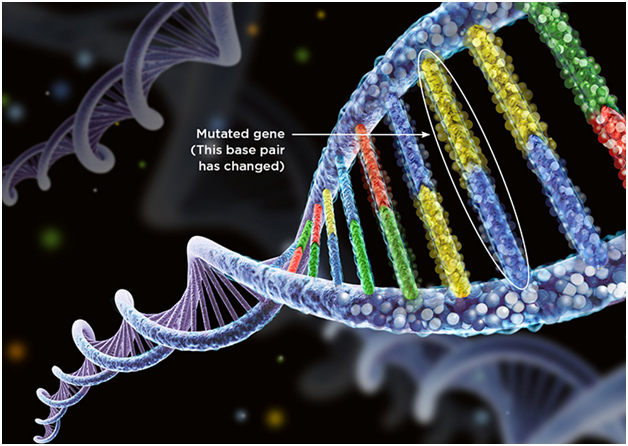
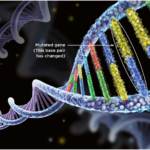
Although DNA testing is becoming increasingly quick, cheap and easy to perform, the results are sometimes ambiguous: Gene mutations called “variants of uncertain significance” can create uncertainty about a patient’s risk for a disease.

“This is a really big problem,” said Joseph Wu, MD, PhD, professor of cardiovascular medicine and of radiology at the Stanford University School of Medicine. “If someone tells me I have a genetic variant that could cause sudden cardiac death, I’m going to be very scared. The result could be a lifetime of unnecessary worry for a patient when, in fact, the variant may be completely benign.”

Now, Wu and a team of researchers have developed a technique that could shed light on the significance of such variants. In a new paper, they discuss how they used advanced genetic-editing tools and stem cell technology to determine whether a 39-year-old patient with one of these mysterious mutations was at increased risk for a heart-rhythm condition called long QT syndrome, which can cause erratic heartbeats, fainting and sudden cardiac death.

“This is one of the first cases of using stem cells and genomics for precision cardiovascular medicine,” said Wu, who is also the Simon H. Stertzer, MD, Professor and director of Stanford’s Cardiovascular Institute.

The paper was published June 26 in the Journal of the American College of Cardiology. Wu is the senior author, and Stanford postdoctoral scholar Priyanka Garg, PhD, is the lead author.

Heart palpitations and lightheadedness

The patient, who had a history of heart palpitations and lightheadedness, contacted a doctor worried about these symptoms. His family history showed he had a cousin who died of a heart attack playing soccer, a brother with a history of fainting and a grandfather who had four brothers die suddenly before the age of 40.  A doctor ordered several electrocardiograms to test his heart function.

The results of those tests were cause for concern and, although ultimately inconclusive, his doctor chose to be cautious and prescribed the patient beta-blockers, a medication often used to treat mild cases of long QT syndrome. Genetic tests were inconclusive, as well, but showed the patient had a variant of uncertain significance on the KCNH2 gene. This was worrisome because several other mutations on this gene are known to cause long QT syndrome type 2, one of the most common types of the disorder.

The patient was referred to Wu and his colleagues, who set out to determine whether the variant was pathogenic or benign.

Their first step was to generate induced pluripotent stem cells — or iPS cells, which can develop into any type of cell — from cells obtained from the patient’s blood. The iPS cells were differentiated into cardiomyocytes, or heart cells that actually beat spontaneously in the culture dish like a heart. They had the exact genetic makeup of the patient, including the variant of the KCNH2 gene.

These kinds of cells, which are grown in the lab, are what researchers refer to as a “disease in a dish” or a “patient in a dish.” They can be used for a variety of tests, including many that may not be feasible to conduct on patients themselves. The researchers also developed heart cells from a healthy patient for comparison.

“An advantage of generating patient-specific iPS heart cells is that you don’t have to use any invasive procedures on the patient to get them,” Garg said. “You can generate a patient’s heart cells in a dish and study them just from a simple blood sample.”

The researchers used a gene-editing tool known as CRISPR to correct the mutation, a faulty nucleotide in the KCNH2 gene, and also to introduce the same faulty nucleotide into the healthy control gene.

Tests of the heart cells with the mutation showed the hallmark features of long QT syndrome, including electrical disturbances that delay heartbeats and a mild propensity for arrhythmias compared with the cells from the healthy patient, the study said. These results did not show up in tests on the cells in which the mutation was turned off or in unaltered cells from the healthy patient.

The results confirmed that the patient did have a mild case of long QT syndrome, the study said.

In another study published recently in Circulation and also led by Wu, the researchers used the same genetic-editing tools and stem cell technology to determine that a variation of uncertain significance, which doctors worried could have been an indication of a dangerous heart condition known as hypertrophic cardiomyopathy, was actually benign.

“We were able tell the patient not to worry about it,” Wu said.

The success of using these same methods to determine whether two different patients were at risk for two completely different diseases suggests that this platform is a promising risk-assessment tool for variants of uncertain significance in general, Wu said. “The results of these studies are particularly exciting to me because we used precision health methods to address an unmet need for a patient,” he said. “This means we now have the ability to go deeper and tell a patient what a variant of uncertain significance means.”

The work is an example of Stanford Medicine’s focus on precision health, the goal of which is to anticipate and prevent disease in the healthy and precisely diagnose and treat disease in the ill.

The study’s other Stanford authors are instructors Angelos Oikonomopoulos, PhD, and Yingxin Li, PhD; former postdoctoral scholar Haodong Chen, PhD; postdoctoral scholar Chi Keung Lam, PhD; Karim Sallam, MD, clinical assistant professor of cardiovascular medicine; and Marco Perez, MD, assistant professor of cardiovascular medicine.

Researchers from the University of Utah also contributed to the study.

The research was funded by grants from the National Institutes of Health (grants T32EB009035, R01HL113006, R01HL141371, R01HL128170 and R01HL130020) and the American Heart Association.

Stanford’s Department of Medicine also supported the work

Source

