




































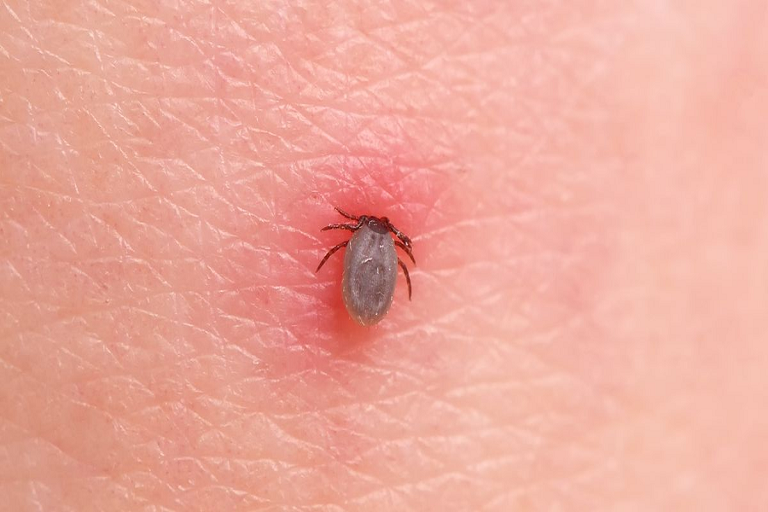
The Best Way to Treat a Tick Bite, According to Dermatologists
Even when you do everything in your power to prevent tick bites, they can still happen—the disease-carrying pests are super tiny, after all.
While the look and feel of a tick bite varies from person to person, you can develop a reaction to it like any other insect bite. Don’t be surprised if it turns into a small red bump or feels tender and itchy, especially right after the initial bite.
And even though you can find a tick attached to any part of your body, they gravitate toward tucked-away areas that tend to be warm and moist, like the armpits, behind the knees, and around the groin.
Happen to find one on you? Before you can treat the bite, it’s important to understand how to properly remove a tick. The Centers for Disease Control and Prevention (CDC) has very specific directions:
Remove the tick as soon as possible. The longer it stays attached, the bigger it gets as it feeds on your blood—and the greater the risk of disease transmission.
Use fine-tipped tweezers to grasp the tick as close to the skin as you can.
Pull upward with steady, even pressure. (Don’t twist or jerk the tick to avoid leaving mouthparts behind.)
Dispose of the tick by flushing it down the toilet. If you want to bring the tick to your doctor to help ID it, put it in rubbing alcohol or place the tick in a sealed bag or container.
How to treat a tick bite after removal
Once the tick is removed, the CDC recommends cleaning the bite area with rubbing alcohol or soap and water. “This keeps the area clean and prevents bacteria or other irritants from spreading to other areas of your skin,” says board-certified dermatologist Ife J. Rodney, M.D., founding director of Eternal Dermatology + Aesthetics in Fulton, MD. You’ll also want to wash your hands thoroughly with soap and water afterward.
Then, Dr. Rodney says that “it would help if you covered the tick bite with a light bandage to protect the area from dirt and bacteria.”
You shouldn’t panic if it ends up looking like a mosquito bite for a few days afterward. But if the bite becomes further inflamed or crusted, applying “an antibiotic cream may be helpful” toward lowering the risk of infection and tamping down lingering inflammation, says board-certified dermatologist Gary Goldenberg, M.D., an assistant clinical professor of dermatology at the Icahn School of Medicine at Mount Sinai in New York City.
The bite can take up to two weeks to heal. While you’re tending to the area, the CDC specifically recommends looking out for symptoms of tickborne illness, like Lyme disease, for the next 30 days. Those can include but are not limited to:
Rash extending beyond the bite
Fever
Fatigue
Headache
Muscle pain
Joint swelling and pain
When to see a doctor for a tick bite
There are two potential things you’ll want to look out for: a full-on infection of the actual tick bite and signs of tickborne illness.
An infected tick bite will cause discharge, swelling, and pain, Dr. Goldenberg says, and it may be growing in size. If you suspect that your tick bite is infected, you’ll want to contact your dermatologist or primary care doctor about treating the bite itself.
“If you get some flu-like symptoms such as body aches, fatigue, fever, and chills, this could be an indication that you may have been infected by the bacteria that causes Lyme disease [or another tickborne illness],” Dr. Rodney says, noting that this also warrants a trip to your doctor immediately.
From there, they will ask more specific questions about your symptoms and tick exposure history, and give you a blood test to ensure a proper diagnosis. Luckily, most tickborne illnesses can be treated with a short course of antibiotics.


