




























EXCLUSIVE at EMRIndustry.com
By Donald M. Voltz,MD, Aultman Hospital, Department of Anesthesiology, Medical Director of the Main Operating Room, Assistant Professor of Anesthesiology, Case Western Reserve University and Northeast Ohio Medical University.
Board-certified in anesthesiology and clinical informatics, Dr. Voltz is a researcher, medical educator, and entrepreneur. With more than 15 years of experience in healthcare, Dr. Voltz has been involved with many facets of medicine. He has performed basic science and clinical research and has experience in the translation of ideas into viable medical systems and devices.
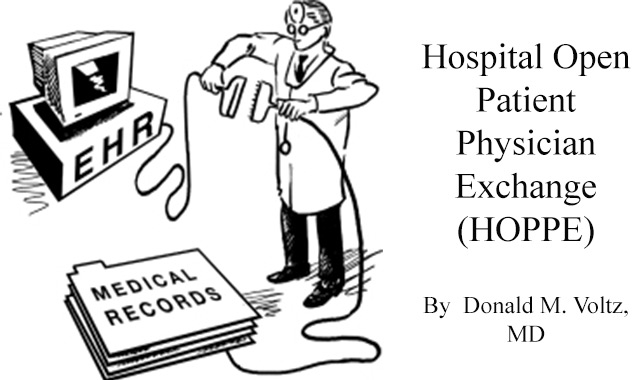
I am tired of waiting. Millions of medical professionals and patients are tired of waiting. We have been waiting for EHR interoperability since the dawn of EHRs in the 1960s. Enough is enough! I am forming an organization, the Hospital Open Patient Physician Exchange (HOPPE) to end our suffering. Our goal is to achieve EHR interoperability through a grass roots coalition of medical professionals and patients who are tired of waiting.
The simple life-saving ability of hospital EHRs to connect to one another so healthcare providers can easily and readily access patient data is not being addressed. This type of issue is traditionally solved by industry or government initiatives. But so far they have not, and apparently will not solve it so I have decided to raise this issue through an outpouring of angry citizens, hospital patients, physicians and others being impacted.
Petition on Change.org
On March 16th, I am posting a petition on Change.org to demand EHR operability. Please visit the site and sign it if you are tired of waiting and want change now. This is not a political issue, but an issue that affects all U.S. Citizens. My goal is gather 25,000 signatures so the petition is reviewed by the White House and acted upon. I don’t care is this is done through an executive order, a law passed in Congress or industry initiative, as long as it is done.
By signing the petition, we are telling the President and Congress that we need a direct path of communication between all EHR systems through a specific and comprehensive policy of interoperability.
1,000 Die Daily
At a recent senate subcommittee hearing, it was revealed that more than 1,000 people are killed and 10,000 injured every day due to medical errors largely caused by technology mistakes. Approximately 40% of these errors are directly related to information omissions and miscommunications. Why do these errors occur?
Many of these errors are a direct result of a technological communication disconnect within the electronic medical record system. Simply put, these programs designed to make access to crucial medical information easier do the opposite.
The average hospital operates competing EMR’s systems; none of which can share information with each other and all of which present that information in completely different ways, causing confusion by healthcare providers and taking away time with patients. The result are misread charts and forgotten results. Patients are also put at risk by healthcare providers who might not receive timely data in a life threatening crisis.
6th in the U.S. for Deaths
If the Center for Disease Control reported a category for erroneous medical deaths, it would rank 6th in the U.S. And the cost? A cool trillion dollars a year. Sadly, this figure is not too far from similar statistics found 15 years ago. By implementing an EHR connectivity solution, hospitals and medical professionals would save billions in lower insurance premiums as there will be fewer medical death and error lawsuits. These actions will lower medical costs and will benefit everyone.
The medical industry has had many opportunities to bring about interoperability. The January 2009 passage of the Health Information Technology for Economic and Clinical Health Act (HITECH), a $30 billion effort to transform healthcare delivery through widespread use of EHR technology. Also, “meaningful use” EHR Incentive Program requirements have helped to create greater commonality in basic EHR functions across systems at a much faster pace than would have otherwise occurred.


