



































What Is Melioidosis, the Rare Bacterial Infection the CDC Is Warning About?
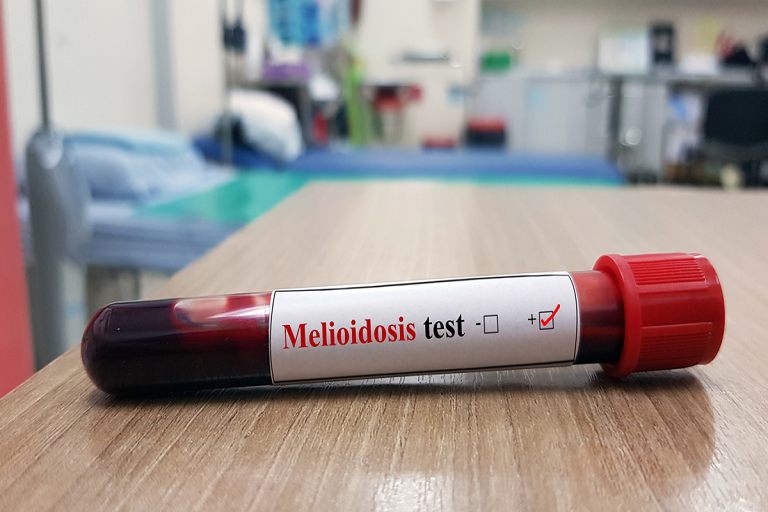
The Centers for Disease Control and Prevention (CDC) has released a statement warning of the rare disease melioidosis. On August 9, the agency announced that there have been four cases of the tropical illness in adults and children in four different states: Georgia, Kansas, Texas, and Minnesota. Two people had no known risk factors for the disease and two have died.
A CDC analysis found that the bacterial strains behind the illnesses closely match each other, which suggests there is a common source for the infections. They seem to be most closely related to strains found in South Asia, but none of the patients had traveled internationally.
It’s “unheard of” for people who live in the U.S. to develop melioidosis without traveling, says William Schaffner, M.D., an infectious disease specialist and professor at the Vanderbilt University School of Medicine. “This is, at the moment, a conundrum for public health epidemiologists to try to figure out what’s going on here,” he says. “It’s certainly a scientific and public health curiosity.”
More than 100 samples from products, soil, and water in and around the patients’ homes have been collected, but no samples have tested positive for the bacteria Burkholderia pseudomallei, which causes melioidosis.
As a result, the CDC suspects that the most likely cause is an imported good, like a food, drink, personal care product, cleaning product, or medicine. “The bacteria normally lives in moist soil and water,” the CDC’s statement says. “However, in rare cases, it has also been found to contaminate wet or moist products in the areas where the bacteria are common.”
Doctors are now being urged to keep an eye out for an any acute bacterial infections in patients that don’t respond to normal antibiotics and to consider melioidosis as a possible cause, regardless of whether the patient recently traveled.
Still, the disease is considered very rare in the U.S., so how concerned about it should you be? Here’s what you need to know, according to experts.
How does melioidosis spread?
Melioidosis (Whitmore’s disease) is mostly a disease of tropical climates, particularly in Southeast Asia and northern Australia where it’s widespread. The bacteria that causes melioidosis is found in contaminated water and soil, and it’s spread to humans and animals through direct contact with the contaminated source.
People are thought to get infected by inhaling contaminated dust or water droplets, drinking contaminated water, eating food that has contaminated soil on it, or having other contact with contaminated soil, like through cuts on the skin, the CDC says.
“The vast majority of cases in United States are in individuals who travel to areas where this infection is common,” says infectious disease expert Amesh A. Adalja, M.D., a senior scholar at the Johns Hopkins Center for Health Security.
Treatment for melioidosis is intense, and it usually begins with an IV antimicrobial therapy for a minimum of two weeks—possibly up to eight weeks if someone has a severe form of the condition. That’s followed by three to six months of oral antimicrobial therapy.
What are the symptoms of melioidosis?
There is actually a wide range of symptoms of melioidosis, and they can be categorized by whether someone has a localized infection, a lung infection, a bloodstream infection, or a widespread infection.
For instance, a localized infection can cause pain or swelling in a specific part of your body, a lung infection could lead to chest pain or coughing, a bloodstream infection could lead to a headache, joint point, or abdominal pain, and a widespread infection is associated with weight loss, fever, muscle pain, and headaches. (You can find an in-depth list on the CDC’s site.)
While the pulmonary symptoms of melioidosis can overlap with COVID-19, Dr. Schaffner says it’s highly unlikely that you have melioidosis if you develop a cough and fever in our current climate. “At the moment, we’re thinking about a number of other respiratory infections, including RSV and COVID,” he says.
How concerned should you be about melioidosis cases in the U.S.?
Despite the uncertainty of how these patients in the U.S. got melioidosis, infectious disease experts say you shouldn’t be too worried about this. “Most of us infectious disease doctors have never seen a case,” says John Sellick, D.O., an infectious disease expert and professor of medicine at the University at Buffalo/SUNY.
However, given that melioidosis can be used for bioterrorism (when viruses, bacteria, or other pathogens are released intentionally), Dr. Adalja says “all cases outside of endemic regions require thorough investigation.”


