


























































What Is Remote Patient Monitoring?
In an age when just about everyone is digitally connected in some way or the other, it only makes sense that the healthcare industry is seeing digital transformations too. Remote patient monitoring (RPM) technology is spearheading this digital innovation.
Berg Insight estimates the total number of remotely monitored patients will grow at a compound annual growth rate of 48.9% through 2020, reaching an estimated 36.1 million patients.
However, before taking a deep dive into launching a remote patient monitoring program, let’s first understand what remote patient monitoring is all about and how it can benefit your healthcare organization.
What is Remote Patient Monitoring?
Remote patient monitoring is a method of healthcare delivery that leverages technology to move care delivery out of the traditional healthcare settings to the patient’s location. Using Internet of medical things and healthcare wearables, fitness trackers and medical devices for collection of a patient’s data, RPM allows the healthcare providers to care in the at-home settings. Real-time accessibility to data through cloud architecture and high speed internet connectivity makes RPM an effective virtual healthcare delivery model.
Is Remote Patient Monitoring Same as Telehealth?
Remote Patient monitoring is not the same as telehealth, but is rather a subset of telehealth.
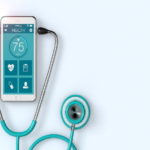
RPM relies on the use of devices such as smartphones, tablets, healthcare wearables and other medical devices to collect and collate data about the patient’s health in real-time, enabling the healthcare providers to make data driven decisions and provide virtual care remotely.
Benefits of Remote Patient Monitoring
RPM is beneficial for both patients as well as healthcare providers. For the patients, it offers enhanced access to care, improved quality of healthcare services availed, and the convenience of availing healthcare services from the comfort of their homes. For healthcare providers, it ensures access to quality data, higher patient engagement, flexibility to manage their schedule and enhanced workflow effectiveness.
7 Crucial considerations before launching a RPM program
1) Using RPM in Conjunction with a Personalized Patient Care Plan
Remote patient monitoring can help position control of your patient’s wellness directly into their hands while also keeping them informed of their plan of care at all times. RPM devices can also help your patient feel connected to their care team and empowered, further strengthening their relationship with the provider.
Keeping these things in mind, it is extremely crucial to formulate a protocol for prioritizing which patients should be monitored to amplify patient benefit. Consider systematizing patients who are at an increased risk or have been hospitalized earlier for conditions related to diabetes, blood pressure, heart failure, or COPD.
Even though monitoring vital measurements alone can be instrumental, remote patient monitoring is most efficacious when used simultaneously with a customized patient care plan. A lot of medical practitioners have realized this and are now providing RPM care management plans that are designed to suit the patient’s personal needs and condition.
2) Consolidating your Practice by Choosing the Right RPM Technology
Technology can be the biggest asset for streamlining practice management. However, discovering the right technology partner that remains mindful of your team’s technological aptitude and best suits your intended goals is the key to successful RPM implementation. With RPM rapidly gaining grip on the frontlines of healthcare, several companies in the niche are now providing technology solutions that present an array of devices and services. You must figure out whether your practice will require a partner to keep track of billable time and submit claims each month or if that can be done in-house.
You should also look at how your remote patient monitoring platform would relate to your current Electronic Medical Records (EMR) and other related technology. Some RPM platforms amalgamate well with EMR systems while others function separately. Based on cost and other components, you may want to contemplate what level of EMR integration you need and then narrow your search accordingly.
When it comes to remote patient monitoring, the function and quality of patient devices is as significant as the doctor-facing software platform. Integrating easy-to-use devices will ensure patient participation and support the overall success of your RPM investment. On the basis of your willingness to provide technical support and the tech savviness of your patient base, you can decide on what mix of device connectivity to offer.
3) Keeping your Model Budget-Realistic
Healthcare service providers are under constant pressure to lower down IT costs due to the increasing operational efficiency and rapidly shrinking IT budgets.
An RPM program will need new technology that frequently requires an investment ahead of time. Before jumping headfirst into the decision of implementing RPM within your practice, aptly think about whether your practice is seeing enough patients to support an RPM program.
Some remote patient monitoring platforms demand that lease the devices or incorporate device costs into their platform fees, while others demand that you pay for patient devices up front. One best practice here would be to draw a rough estimate of your potential total annual income from RPM and then begin your search for a technology and platform that fits well into your practice’s needs and budget.
4) Leveraging Cloud Solutions for Robust Security
Cloud-based solutions are extensively benefiting healthcare today in implementing flexible cost-effective and on-demand security models. This is majorly because Cloud-based security has better monitoring and can track attacks faster than non-cloud based security solutions. They generate real-time firewalls and signature updates blocking all unwanted traffic.
These Cloud platforms also greatly aid in storing medical images and other data such as angiograms and echocardiograms, which can then be accessed from any other location and used by physicians to provide consultation via telehealth or other virtual platforms. It also eradicates the need for patients to frequently visit hospitals for post-medication consultation services.
A variety of Cloud security solutions are available in the market today that have different pricing as well as features. When finalizing a security solution, try looking at your organization’s needs and then choose the one that best suits them. Also, pay utmost attention to ensure that the solution you choose provides you adequate monitoring and support.
An important tip here would be deciding upon the right cloud hosting service since it can go a long way in providing a supplementary layer of security when it comes to hackers.
5) Staying Compliant
It is crucial that you understand all requirements and guidelines for providing as well as billing RPM services as well as the charges associated with delivering these services. Not only are you going to be submitting your billable time to Medicare and other private payers for payment, but you are also most going to be paying your RPM technology partner based on patient count under normal circumstances.
If you lack an overall understanding of how the entire billing process of RPM works, choose a technology partner that can precisely monitor your billable time and help you through the claims submission process. Some technology partners offer billing and platform solutions as an all-in-one package to make the process less troublesome for organizations.
It also is important to ensure your technology partner recognizes security and other regulatory requirements inherent innate to a remote patient monitoring program. Not getting paid for time spent is substandard, however being audited for time spent incorrectly is even worse.
6) Making the Platform Interoperable
Industry leaders across the globe today greatly agree with the claim that to implement an effective connected care program, interoperability is a must. For programs to be functional, patient-generated health data (PGHD) from apps, wearables, and home health devices – and the programs leveraging this data – need to be integrated into the electronic health records (EHR) system. This enables clinicians to track patients within their existing workflow, enabling care teams to step in far more quickly when necessary and making for more efficient care processes.
The benefits that come alongside the use of remote patient monitoring aren’t limited to the ongoing measurement of a pre-identified patient’s vitals between check-ups or after a procedure but can extend to those treated in the field. Take for instance Avive Solutions’ promising new automated external defibrillator (AED) which is currently in the FDA’s PMA process.
The company’s AED unit hopes to record and wirelessly share vital patient information, such as their electrocardiogram (ECG) and response to defibrillation therapy, with interoperable systems, allowing physicians to make unprecedented clinical decisions, heretofore thought impossible.
With more interoperable systems and the presence of standardized PGHD within existing clinical workflows, providers are able to utilize information alongside other clinical data. This offers a more holistic understanding of a patient’s health – and the ability for providers to act more proactively.
7) Buy In: Gaining Staff and Patient Support
One last factor before you can successfully launch an RPM program is – identifying if your practice has team members committed to figuring out the new puzzle the implementation gets along. There are no two opinions when it comes to determining whether staff buy-in and training are important for implementing and running a successful RPM program — of course, they are! Not only does this help your staff understand the logistics of RPM, but aids them in explaining the program to patients.
In addition to staff support, patient buy-in will make or break your RPM program. The last thing you want is an expensive connected device sitting unutilized in a patient’s house while not delivering any benefits.
To stop a scenario like this from arising, you need to make sure the RPM patient onboarding process clearly explains the program, what is expected of the patient, the benefits for the patient, and information on co-pays as needed. If a patient is recalcitrant, explain the benefits of RPM, however do not proceed with enrollment if you determine the patient is uninterested.


