































IoT Technology in Healthcare: Prospects, Benefits, and Real-Life Examples
Like many other spheres of life, healthcare is getting smarter. Innovative solutions help automatize many working processes bringing their efficiency to a new level. One of the most promising technologies for the healthcare industry is the Internet of Things.
Why Is IoT Perfect for Implementing in the Healthcare Industry?
IoT technology suggests collecting information, processing, and/or transferring it for further use without people’s participation. Healthcare offers a lot of possibilities for using this technology. For example, continuous automatic health data collection and its instant transferring to doctors help with making an early diagnosis. Another popular solution is the EHR software development. This software lets systematize and automatize medical records collecting, storage, and processing.
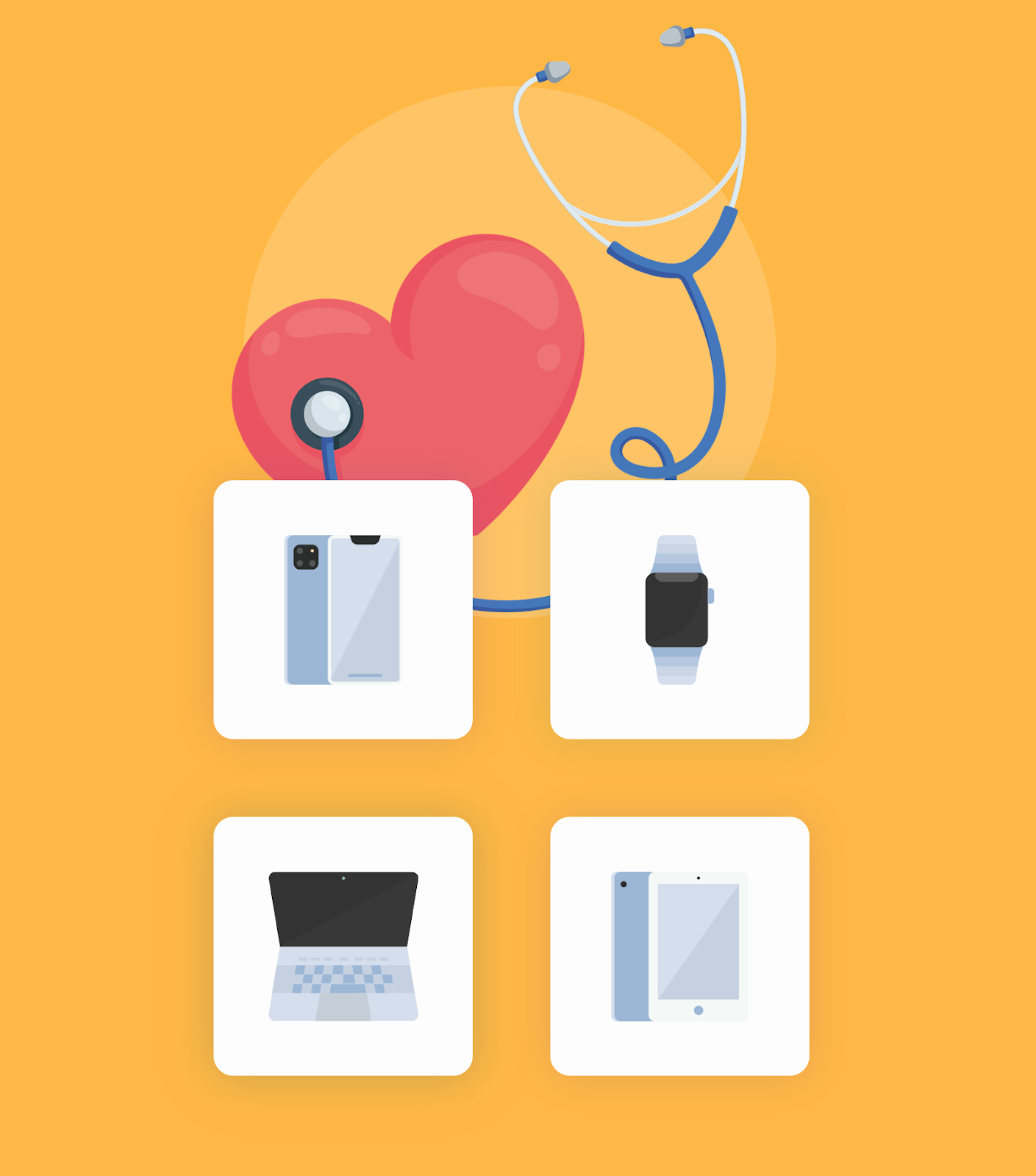
IoMT a.k.a. Internet of Medical Things
Internet of Medical Things is a self-acting network consisting of various devices. It can include sensors, wearables, monitoring devices, drug-tracking systems, and so on. All these devices form an entirely independently functioning system. Commonly, IoMT systems fulfill one of the two tasks: collecting data or monitoring.
Benefits of Using IoT in Healthcare
Medical IoT offers some important benefits to both medical specialists/administrators and patients. The top-five advantages are as follows.
- Non-stop monitoring, which helps timely detect dangerous conditions and send signals to doctors.
- Improved patients’ experience. Automatized hospital management systems make the interaction between doctors and patients more comfortable and convenient.
- Effective management of drug intake. The smart systems provide the most precise control of drug amounts.
- Optimization of the daily workflow of healthcare workers. IoT solutions help minimize the share of manual routine labor.
- Preventive care. It is a well-known fact that prevention is the best treatment. IoT-based devices allow to detect early symptoms of dangerous diseases before it is too late.
Problems of IoT Implementation
Implementation of healthcare IoT solutions is frequently associated with certain challenges. In particular, there are three major pitfalls to consider.
- High security requirements. The healthcare industry is associated with large amounts of sensitive data storage and processing. This data needs to be reliably protected. A healthcare software development company working on IoT products must think of compliance with certain security standards.
- Integration of protocols. Medical Internet of Things is a complicated system, which includes a lot of devices, using different protocols. To make the system function smoothly one needs to align these protocols.
- Huge volumes of information. Healthcare apps must process large amounts of information, which can’t but affects its accuracy.
Examples of IoT Solutions in Healthcare
Being one of the promising economic sectors, IoT in healthcare attracts serious investors, including such giants as Apple and Google. Both corporations are readily investing in innovative medical IoT solutions. Here are some real examples.
- HIMS, which stands for Hospital Information Management Systems. These are apps that help manage all the hospital departments, in particular, personal data of patients and employees, medical records, appointments, etc.
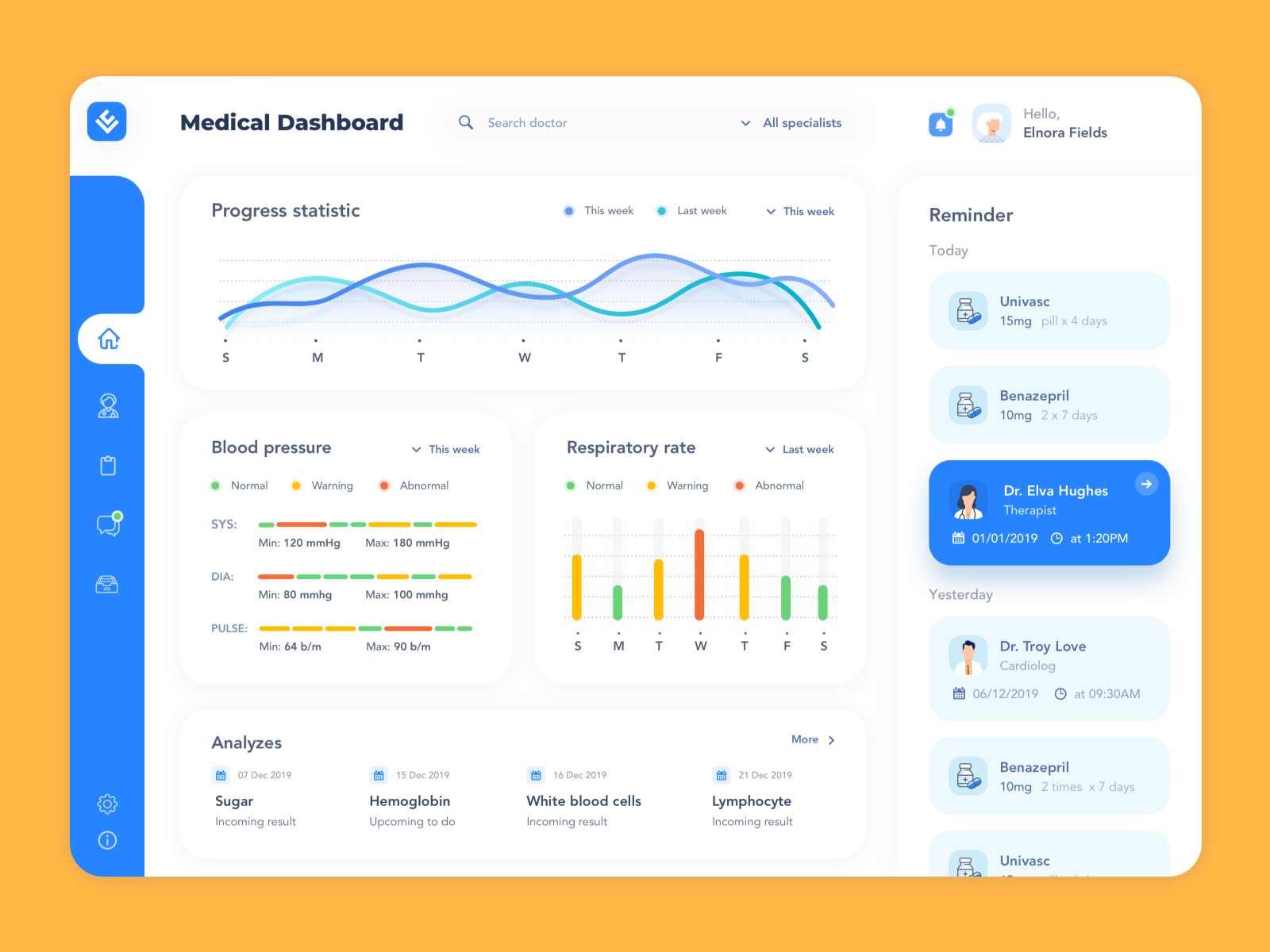
- EHR, which stands for Electronic Healthcare Records Systems. As the name implies, these apps are intended for the storage and processing of medical records. It is convenient, as all the authorized users can get instant access to the required information.
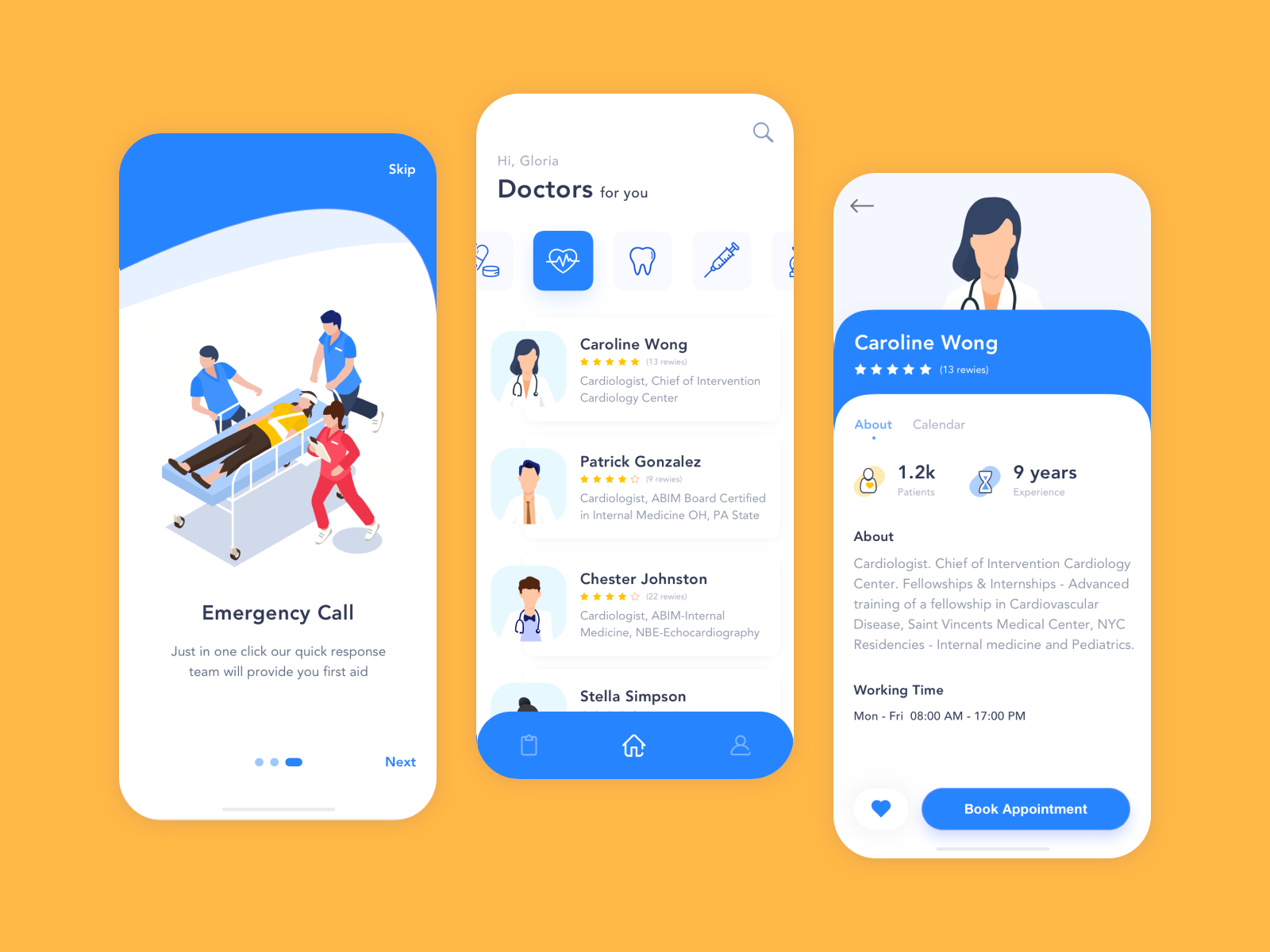
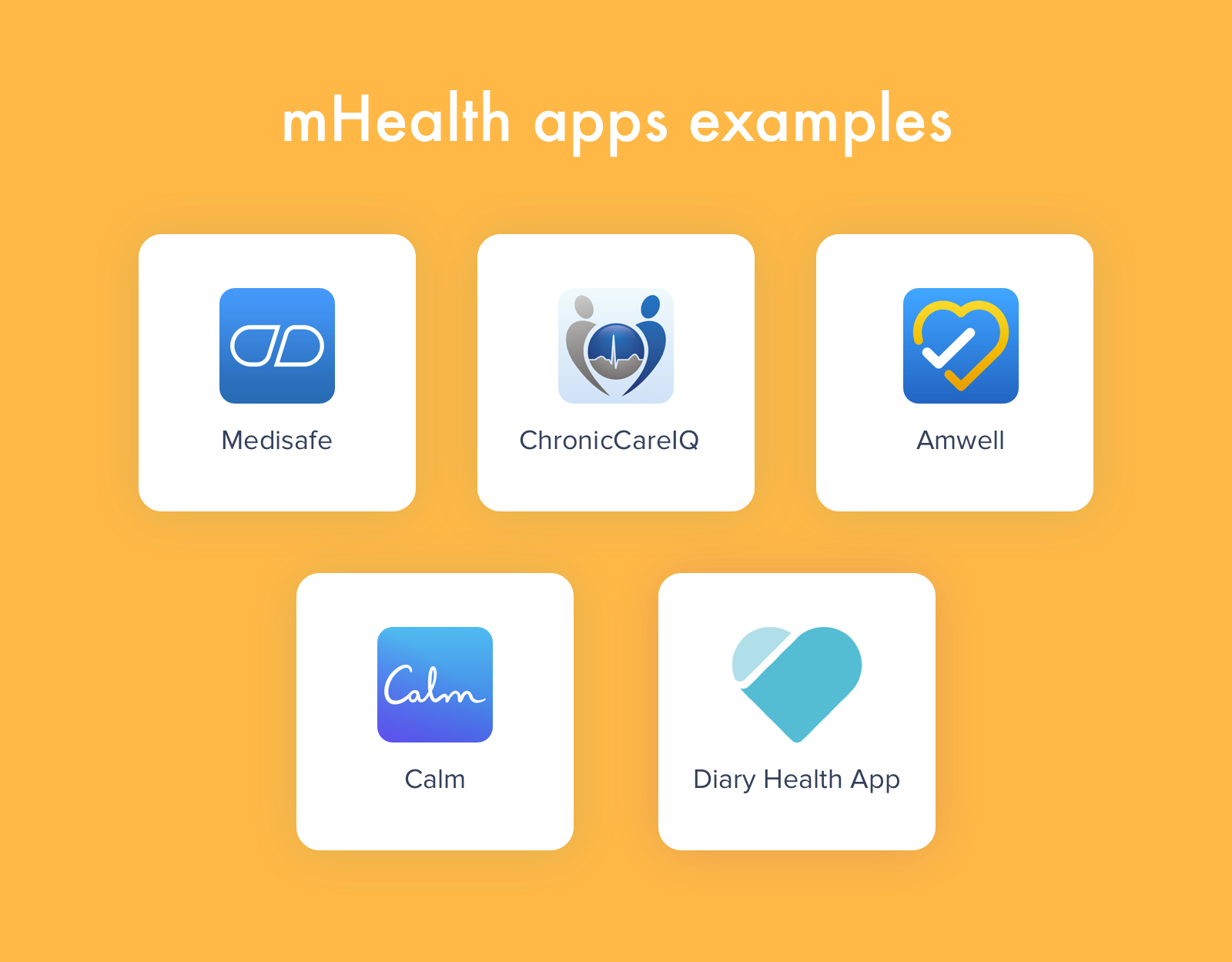
- mHealth apps. These are customizable apps for personal use. Many of them work in combination with wearables. Some mHealth apps are for collecting health data, while others are used for emergency purposes.
IoT technology in healthcare offers a range of top-notch solutions for both patients and doctors. It helps automatize routine working processes and make the interaction of health professionals and their clients more effective.


