




























Exclusive article at EMRIndustry.com
Hearing loss affects millions of people worldwide and can be a result of a variety of conditions. There are many different types of hearing loss which can all be experienced in varying degrees. With proper diagnosis, treatment and care, many hearing impairments can be successfully treated and often almost completely nullified.
Cochlear implants have helped thousands of people, many of whom are children growing up with hearing loss and impairment. Read on to learn more about the types of hearing loss, how hearing impairment can affect a child’s learning and how Cochlear implants may help.
Three Main Types of Hearing Loss
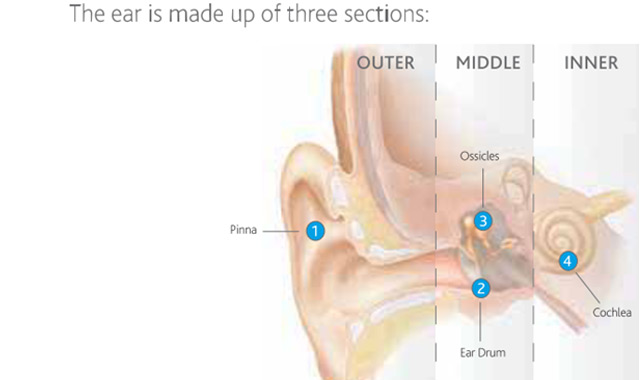
- Sensory Hearing Loss – This type of hearing loss is a result of problems experienced in the inner ear and is also commonly referred to as nerve-related hearing loss, technically known as sensorineural hearing loss (SNHL). Usually related to loud noise exposure head trauma, disease or degenerative conditions, SNHL is often developed in early childhood.
- Conductive Hearing Loss – Conductive hearing loss can be related to misshaping of the outer ear, fluid in the middle ear or unchecked ear infections. Issues related to problems with the ear drum, ear canal or middle ear and its components can also be categorized under Conductive Hearing Loss.
- Mixed Hearing Loss – Mixed hearing loss can manifest in several different ways, with impairments to the outer, middle or inner ear that resemble sensorineural hearing loss or conductive hearing loss. Causes and treatments will vary based on the specifics of each case.
Hearing Loss & Childhood Development
Hearing loss or impairment can affect children either from birth, or develop later in a child’s life due to trauma, disease or environmental factors. Such impairments could cause serious roadblocks to a child’s development. Speech, communication and language could be disrupted by hearing loss, which in turn may lead to serious developmental and socialization issues.
How Does a Cochlear Implant Help?
A cochlear implant helps people with severe to profound sensorineural hearing loss. Cochlear implants may address many types of hearing loss and are tailored to a child’s specific needs and diagnosis. It enables the sound to be transferred to the hearing nerve enabling the impaired to hear. Whether a child suffers from sensory hearing loss due to noise exposure, or conductive hearing loss stemming from an infection, Cochlear provides an implant solution that will aid hearing. Click here to learn more.

How does A Cochlear Implant Work?
Cochlear implants function in many different ways and has two parts – an internal part called the cochlear implant and an external part called the speech processor.
The external part i.e. the speech processor uses two small microphones to pick up sounds. It turns those sounds into signals and sends them to a transmitter. The transmitter then sends these signals through the skin to the internal implant. The internal implant converts the signal codes into electrical energy and sends them to the electrode array. This stimulates the nerve fibers in the cochlea and the signals are received, processed, and analyzed by the brain as sound. Regardless of the treatment method, Cochlear implants can address most of the hearing impairment.


