






























What To Expect From Smart Ambulances
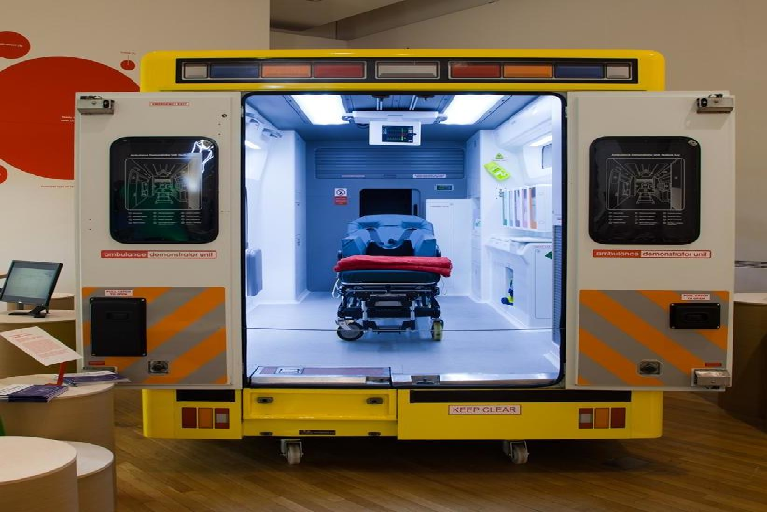
Healthcare is changing rapidly, with advances in technology and unforeseen obstacles to normal care increasing the need for innovation. One recent innovation is the development of smart ambulances, which use AI to make the paramedic’s job easier, and to help the patient receive the best possible care. This article will help you understand the benefits of smart ambulances, and what to expect should you ever need to use one.
1. Why Smart Ambulances?
Ambulances are one of the most routinely updated pieces of medical “equipment”, decked out with all the latest and greatest medical technology that might come in handy in emergencies. So why the sudden need for Artificial Intelligence? After all, if it’s not broken, surely there’s no reason to bring in new and possibly scary technology. But imagine a hospital in the center of a densely populated area. The ambulance will have to navigate traffic, pedestrians, and all sorts of other obstacles in order to bring a patient to the hospital.
https://www.airambulance1.com/
These unavoidable delays can often mean the difference between life and death. Using a smart ambulance, however, you’ll be able to access real-time routing that will get you to the hospital more quickly, as well as increased communication between the hospital and the paramedics for better preparedness upon arrival. Plus, as early as 2013, smart ambulances were being fitted with a solar panel system to take over a large portion of battery charging for medical devices on board. This innovation means saving costs, as well as benefiting the environment, and that’s a win-win from any perspective.
2. On-Site Treatment
One of the many benefits of smart ambulances is their increased capability for dealing with data in real-time. If you were to be injured in a car accident, for instance, the paramedics could simply take pictures at the sight and upload them to the hospital’s cloud. This will allow anyone involved in your care post-injury to see and assess your injuries, preparing them much better to provide optimal care in an emergency. Smart ambulances come loaded with 5G capability, making this two-way flow of data and information possible.
Plus, being equipped with all the information they’ll need to care for you directly, paramedics will no longer have to do so much guesswork when arriving on scene. Their ability to communicate with doctors and surgeons miles away, even as they pull up to the accident, means that patients will be more likely to receive the critical care they need within a shorter amount of time.
3. Traffic Control
As mentioned previously, one of the biggest innovations used by smart ambulances is their intelligent traffic control system. This allows paramedics to set and forget their navigation system, knowing it will automatically calculate the best possible route to the hospital. No more swerving in and out of traffic jams or waiting for clueless drivers to make a path. Now it will be possible for traffic lights to be programmed specifically in response to the ambulance’s needs, reducing the chance for collisions along its path while speeding through intersections.
4. Technical Glitches
Of course, when a society relies so heavily on technology for something as vital as healthcare, there are natural fears that will arise concerning system crashes or technical glitches. This might scare you away from wanting to be put on a smart ambulance, as a technical glitch under such circumstances could mean the difference between life and death. This is why the NHS, among other organizations, are taking their time ensuring every aspect of their new smart technology can be totally reliable. Every detail, from patient privacy to ease of communication, has to be worked out ahead of time, and experts are doing everything in their power to ensure that this essential work is completed.
These kinds of changes can be incredibly jarring to a population accustomed to a certain kind of care, but it’s necessary for the betterment of public and private healthcare that patients become more comfortable receiving care in a number of forms.


